Ch.9 - Chemical Bonding I: The Lewis Model
Tro - Chemistry: A Molecular Approach 4th Edition
Tro4th EditionChemistry: A Molecular ApproachISBN: 9780134112831당신이 사용하는 게 아니라요?교과서 변경
9장, 문제 53c

Write the Lewis structure for each molecule. c. HCOOH (both O bonded to C)

검증된 단계별 안내
1
Identify the total number of valence electrons in the molecule. Hydrogen (H) has 1 valence electron, carbon (C) has 4, and oxygen (O) has 6. Calculate the total for HCOOH.
Determine the central atom. Carbon (C) is typically the central atom in organic molecules, so place C in the center.
Arrange the other atoms around the central carbon atom. In HCOOH, both oxygen atoms are bonded to the carbon atom, and the hydrogen atoms are bonded to the oxygen and carbon atoms.
Draw single bonds between the central carbon atom and the surrounding atoms. Connect C to each O and H, ensuring each bond uses 2 electrons.
Distribute the remaining valence electrons to satisfy the octet rule for each atom, starting with the outer atoms (Oxygen) and then the central atom (Carbon). Adjust bonds to form double bonds if necessary to satisfy the octet rule.

비슷한 문제에 대한 검증된 영상 답변:

이 영상 해법은 위 문제에 도움이 된다고 튜터들이 추천한 것입니다.
영상 길이:
2m
도움이 되었나요?

주요 개념

질문에 올바르게 답하기 위해 반드시 이해해야 하는 핵심 개념들은 다음과 같습니다.

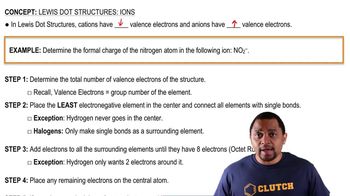
Lewis Structures

Lewis structures are diagrams that represent the bonding between atoms in a molecule and the lone pairs of electrons that may exist. They use dots to represent electrons and lines to represent bonds between atoms. Understanding how to draw Lewis structures is essential for visualizing molecular geometry and predicting the behavior of molecules in chemical reactions.
추천 영상:
가이드 코스
04:28
Lewis Dot Structures: Ions

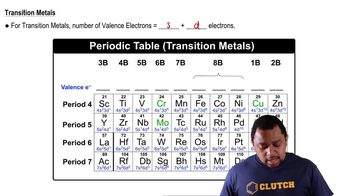
Valence Electrons

Valence electrons are the outermost electrons of an atom and are crucial in determining how atoms bond with each other. The number of valence electrons influences the molecule's structure and reactivity. For example, in HCOOH (formic acid), the carbon atom has four valence electrons, which it uses to form bonds with hydrogen and oxygen atoms.
추천 영상:
가이드 코스
02:12
Transition Metals Valence Electrons

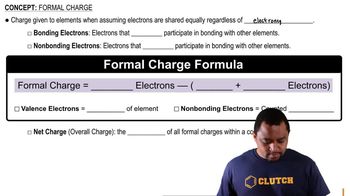
Formal Charge

Formal charge is a concept used to determine the distribution of electrons in a molecule and assess the stability of a Lewis structure. It is calculated by comparing the number of valence electrons in the free atom to the number of electrons assigned to it in the Lewis structure. A structure with the lowest formal charges on atoms is generally more stable, guiding the correct representation of molecules like HCOOH.
추천 영상: