
A reaction in which A, B, and C react to form products is zero order in A, one-half order in B, and second order in C. c. By what factor does the reaction rate change if [A] is doubled (and the other reactant concentrations are held constant)? d. By what factor does the reaction rate change if [B] is doubled? e. By what factor does the reaction rate change if [C] is doubled? f. By what factor does the reaction rate change if [C] is doubled (and the other reactant concentrations are held constant)?
A reaction in which A, B, and C react to form products is zero order in A, one-half order in B, and second order in C. a. Write a rate law for the reaction.
검증된 단계별 안내
비슷한 문제에 대한 검증된 영상 답변:
주요 개념
Order of Reaction
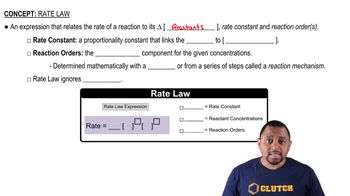
Rate Law
Rate Constant (k)
A reaction in which A, B, and C react to form products is first order in A, second order in B, and zero order in C c. By what factor does the reaction rate change if [A] is doubled (and the other reactant concentrations are held constant)? d. By what factor does the reaction rate change if [B] is doubled (and the other reactant concentrations are held constant)? e. By what factor does the reaction rate change if [C] is doubled? f. By what factor does the reaction rate change if the concentrations of all three reactants are doubled?
A reaction in which A, B, and C react to form products is first order in A, second order in B, and zero order in C. b. What is the overall order of the reaction?
A reaction in which A, B, and C react to form products is first order in A, second order in B, and zero order in C.
a. Write a rate law for the reaction.
