

Ch.14 - Chemical Kinetics
Tro - Chemistry: A Molecular Approach 4th Edition
Tro4th EditionChemistry: A Molecular ApproachISBN: 9780134112831당신이 사용하는 게 아니라요?교과서 변경
14장, 문제 79

Many heterogeneous catalysts are deposited on high-surfacearea supports. Why?

검증된 단계별 안내
1
Understand that a catalyst is a substance that increases the rate of a chemical reaction without being consumed in the process.
Recognize that heterogeneous catalysts are in a different phase than the reactants, often solid catalysts with liquid or gas reactants.
Consider the role of surface area in catalysis: the reaction occurs at the surface of the catalyst, so a larger surface area provides more active sites for the reaction.
Realize that high-surface-area supports help to disperse the catalyst material, maximizing the exposure of active sites to the reactants.
Conclude that depositing catalysts on high-surface-area supports enhances the efficiency and effectiveness of the catalytic process by increasing the number of available active sites.

비슷한 문제에 대한 검증된 영상 답변:

이 영상 해법은 위 문제에 도움이 된다고 튜터들이 추천한 것입니다.
영상 길이:
2m

주요 개념

질문에 올바르게 답하기 위해 반드시 이해해야 하는 핵심 개념들은 다음과 같습니다.

Heterogeneous Catalysis

Heterogeneous catalysis involves reactions where the catalyst is in a different phase than the reactants, typically solid catalysts interacting with gaseous or liquid reactants. This type of catalysis is advantageous because it allows for easier separation of the catalyst from the products and can enhance reaction rates due to increased surface area for reactant interaction.
추천 영상:
가이드 코스
01:59
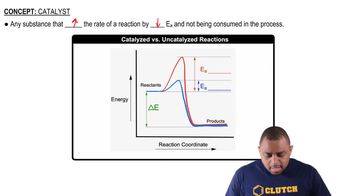
Catalyzed vs. Uncatalyzed Reactions

Surface Area and Reaction Rate

The surface area of a catalyst is crucial because it determines the amount of active sites available for reactants to interact. A higher surface area increases the likelihood of collisions between reactants and the catalyst, thereby enhancing the overall reaction rate. This is why catalysts are often supported on materials with high surface areas.
추천 영상:
가이드 코스
02:03
Average Rate of Reaction

Support Materials in Catalysis

Support materials are substances onto which catalysts are deposited to improve their effectiveness and stability. High-surface-area supports, such as activated carbon or alumina, provide a large area for the catalyst to adhere to, which not only maximizes catalytic activity but also helps in distributing the catalyst evenly, preventing sintering and deactivation during reactions.
추천 영상:
가이드 코스
08:12
Laboratory Materials 2