
Ch.16 - Acids and Bases
Tro - Chemistry: A Molecular Approach 4th Edition
Tro4th EditionChemistry: A Molecular ApproachISBN: 9780134112831당신이 사용하는 게 아니라요?교과서 변경
16장, 문제 126b,c

Identify the Lewis acid and Lewis base from among the reactants in each equation. b. AlBr3 + NH3 ⇌ H3NAlBr3 c. F(aq) + BF3(aq) ⇌ BF4(aq)

검증된 단계별 안내
1
Identify the reactants in the equation: AlBr3 and NH3.
Recall the definition of a Lewis acid: a species that can accept an electron pair.
Recall the definition of a Lewis base: a species that can donate an electron pair.
Determine which reactant can accept an electron pair: AlBr3, as it has an empty orbital to accept electrons.
Determine which reactant can donate an electron pair: NH3, as it has a lone pair of electrons on the nitrogen atom.

비슷한 문제에 대한 검증된 영상 답변:

이 영상 해법은 위 문제에 도움이 된다고 튜터들이 추천한 것입니다.
영상 길이:
55s
도움이 되었나요?

주요 개념

질문에 올바르게 답하기 위해 반드시 이해해야 하는 핵심 개념들은 다음과 같습니다.

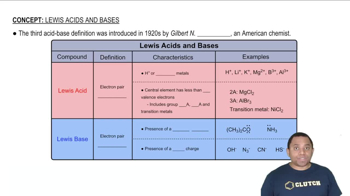
Lewis Acids and Bases

Lewis acids are substances that can accept an electron pair, while Lewis bases are those that can donate an electron pair. This definition expands the concept of acids and bases beyond protons, focusing instead on electron pair interactions. Understanding this distinction is crucial for identifying the roles of reactants in chemical reactions.
추천 영상:
가이드 코스
05:04
Lewis Acids and Bases

Electron Pair Donation

In the context of Lewis theory, electron pair donation refers to the process by which a Lewis base donates a pair of electrons to a Lewis acid. This interaction forms a coordinate covalent bond, where both electrons in the bond originate from the base. Recognizing which reactant donates the electron pair is essential for determining the Lewis base in a reaction.
추천 영상:
가이드 코스
00:47
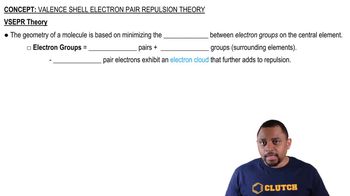
Valence Shell Electron Pair Repulsion Theory

Coordination Complex Formation

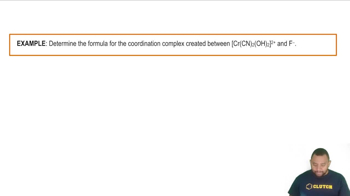
Coordination complexes are formed when a Lewis acid and a Lewis base interact, resulting in a new compound where the acid accepts an electron pair from the base. This concept is fundamental in understanding many chemical reactions, particularly in transition metal chemistry, where such complexes play a significant role in reactivity and stability.
추천 영상:
가이드 코스
00:43
Coordination Complexes Example