
교과서 질문
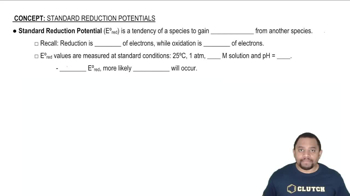
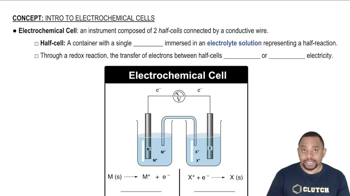
Determine whether or not each metal dissolves in 1 M HCl. For those metals that do dissolve, write a balanced redox reaction showing what happens when the metal dissolves. a. Al b. Ag c. Pb
3515
views
6
rank

 검증된 단계별 안내
 01:10
01:10
 02:46
02:46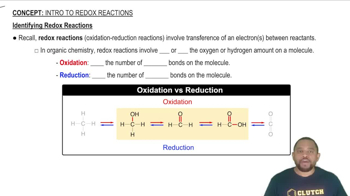 03:12
03:12Determine whether or not each metal dissolves in 1 M HCl. For those metals that do dissolve, write a balanced redox reaction showing what happens when the metal dissolves. a. Al b. Ag c. Pb
Determine whether or not each redox reaction occurs spontaneously in the forward direction.
a. Ca2+(aq) + Zn(s) → Ca(s) + Zn2+(aq)
b. 2 Ag+(aq) + Ni(s) → 2 Ag(s) + Ni2+(aq)
c. Fe(s) + Mn2+(aq) → Fe2+(aq) + Mn(s)
d. 2 Al(s) + 3 Pb2+(aq) → 2 Al3+(aq) + 3 Pb(s)
Which metal can be oxidized with an Sn2+ solution but not with an Fe2+ solution?
Determine whether or not each metal dissolves in 1 M HCl. For those metals that do dissolve, write a balanced redox reaction showing what happens when the metal dissolves. a. Cu b. Fe c. Au
Determine whether or not each redox reaction occurs spontaneously in the forward direction.
a. Ni(s) + Zn2+(aq) → Ni2+(aq) + Zn(s)
b. Ni(s) + Pb2+(aq) → Ni2+(aq) + Pb(s)
c. Al(s) + 3 Ag+(aq) → Al3+(aq) + 3 Ag(s)
d. Pb(s) + Mn2+(aq) → Pb2+(aq) + Mn(s)