Ch.2 - Atoms & Elements
Tro - Chemistry: A Molecular Approach 4th Edition
Tro4th EditionChemistry: A Molecular ApproachISBN: 9780134112831당신이 사용하는 게 아니라요?교과서 변경
2장, 문제 61

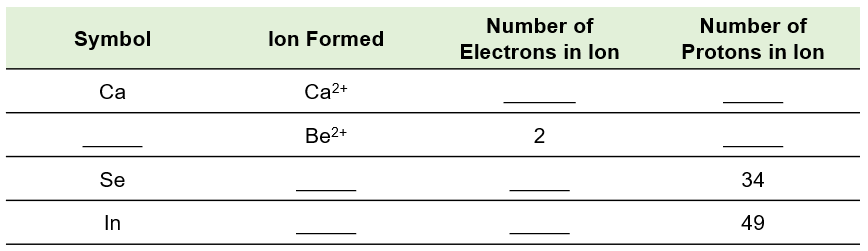
Fill in the blanks to complete the table. Symbol Ion Formed Number of Electrons in Ion Number of Protons in Ion Ca Ca2+ ______ ______ ______ Be2+ 2 ______ Se ______ ______ 34 In ______ ______ 49

검증된 단계별 안내
1
Identify the atomic number of each element to determine the number of protons in the neutral atom. For example, calcium (Ca) has an atomic number of 20, so it has 20 protons.
For each ion, determine the number of electrons by considering the charge. A Ca2+ ion has lost 2 electrons, so it has 18 electrons (20 - 2).
For Be2+, the atomic number of Be is 4, so it has 4 protons. The ion has 2 electrons, indicating it has lost 2 electrons.
For Se, the atomic number is 34, so it has 34 protons. To find the ion formed, consider common oxidation states; Se typically forms Se2- by gaining 2 electrons, resulting in 36 electrons.
For In, the atomic number is 49, so it has 49 protons. Determine the ion formed by considering common oxidation states; In typically forms In3+ by losing 3 electrons, resulting in 46 electrons.

비슷한 문제에 대한 검증된 영상 답변:

이 영상 해법은 위 문제에 도움이 된다고 튜터들이 추천한 것입니다.
영상 길이:
3m
도움이 되었나요?

주요 개념

질문에 올바르게 답하기 위해 반드시 이해해야 하는 핵심 개념들은 다음과 같습니다.

Ionic Charge

Ionic charge refers to the electrical charge that an atom acquires when it loses or gains electrons to form an ion. For example, calcium (Ca) loses two electrons to form Ca²⁺, resulting in a positive charge. Understanding ionic charge is crucial for determining the number of electrons in an ion and how it relates to the number of protons.
추천 영상:

Protons and Electrons

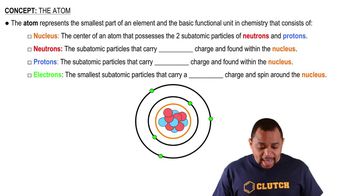
Protons are positively charged particles found in the nucleus of an atom, and their number defines the atomic number of an element. Electrons are negatively charged particles that orbit the nucleus. In a neutral atom, the number of protons equals the number of electrons, but in ions, this balance is disrupted, leading to a net charge that must be accounted for when filling in the table.
추천 영상:
가이드 코스
02:14
Neutron-Proton Ratio

Atomic Structure

Atomic structure refers to the arrangement of protons, neutrons, and electrons within an atom. The atomic number, which is the number of protons, determines the element's identity. For example, selenium (Se) has 34 protons, and understanding this structure helps in identifying the number of electrons in its ion form, which is essential for completing the table accurately.
추천 영상: