Ch.8 - Periodic Properties of the Elements
Tro - Chemistry: A Molecular Approach 4th Edition
Tro4th EditionChemistry: A Molecular ApproachISBN: 9780134112831당신이 사용하는 게 아니라요?교과서 변경
8장, 문제 48

Use the periodic table to determine each quantity. a. the number of 3s electrons in Mg b. the number of 3d electrons in Cr c. the number of 4d electrons in Y d. the number of 6p electrons in Pb

검증된 단계별 안내
1
Identify the atomic number of each element from the periodic table: Magnesium (Mg), Chromium (Cr), Yttrium (Y), and Lead (Pb).
Write the electron configuration for each element based on their atomic numbers. Use the Aufbau principle, Hund's rule, and the Pauli exclusion principle to fill the orbitals.
For Magnesium (Mg), focus on the 3s orbital and count the number of electrons in this orbital.
For Chromium (Cr), look at the 3d orbital and count the number of electrons present in this orbital.
For Yttrium (Y) and Lead (Pb), repeat the process by focusing on the 4d orbital for Yttrium and the 6p orbital for Lead, respectively, and count the electrons in each specified orbital.

비슷한 문제에 대한 검증된 영상 답변:

이 영상 해법은 위 문제에 도움이 된다고 튜터들이 추천한 것입니다.
영상 길이:
2m

주요 개념

질문에 올바르게 답하기 위해 반드시 이해해야 하는 핵심 개념들은 다음과 같습니다.

Electron Configuration

Electron configuration describes the distribution of electrons in an atom's orbitals. It follows the Aufbau principle, which states that electrons fill orbitals starting from the lowest energy level to the highest. Understanding electron configuration is essential for determining the number of electrons in specific subshells, such as 3s, 3d, 4d, and 6p, as asked in the question.
추천 영상:
가이드 코스
01:33
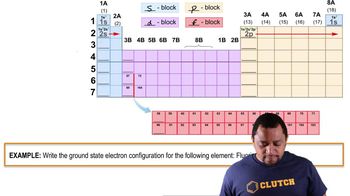
Electron Configuration Example

Periodic Table Structure

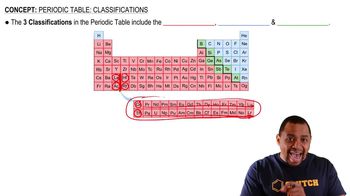
The periodic table organizes elements based on their atomic number and electron configurations. Elements are arranged in rows (periods) and columns (groups) that reflect similar chemical properties. By knowing an element's position in the periodic table, one can infer its electron configuration and the number of electrons in specific subshells, which is crucial for answering the question.
추천 영상:
가이드 코스
02:40
Periodic Table Classifications

Subshells and Orbitals

Subshells are divisions of electron shells that contain orbitals, where electrons are likely to be found. Each subshell (s, p, d, f) can hold a specific number of electrons: s holds 2, p holds 6, d holds 10, and f holds 14. Identifying the number of electrons in subshells like 3s, 3d, 4d, and 6p requires understanding these capacities and the electron configurations of the respective elements.
추천 영상:
가이드 코스
03:06
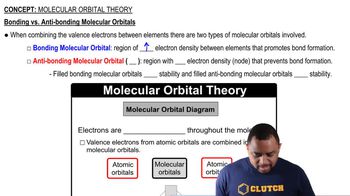
Molecular Orbital Theory