Ch.9 - Chemical Bonding I: The Lewis Model
Tro - Chemistry: A Molecular Approach 4th Edition
Tro4th EditionChemistry: A Molecular ApproachISBN: 9780134112831당신이 사용하는 게 아니라요?교과서 변경
9장, 문제 105c

If hydrogen were used as a fuel, it could be burned according to this reaction: H2(g) + 1/2 O2(g) → H2O(g) Which fuel yields more energy per mole?

검증된 단계별 안내
1
Identify the reaction given and the products formed. In this case, the reaction is the combustion of hydrogen gas (H2) with oxygen gas (O2) to form water vapor (H2O).
Understand that the energy yield from a reaction can be determined by looking at the enthalpy change (ΔH) of the reaction. For combustion reactions, this is typically exothermic, meaning it releases energy.
Consult standard enthalpy of formation tables or reliable chemical data sources to find the ΔH values for the reactants and products involved in the reaction.
Calculate the net energy yield by using the formula: ΔH = ΣΔHproducts - ΣΔHreactants. This will give the energy released or absorbed per mole of reaction.
Compare the energy yield of hydrogen combustion with that of other common fuels (like methane, propane, etc.) using their respective ΔH values for combustion to determine which fuel yields more energy per mole.

비슷한 문제에 대한 검증된 영상 답변:

이 영상 해법은 위 문제에 도움이 된다고 튜터들이 추천한 것입니다.
영상 길이:
12m

주요 개념

질문에 올바르게 답하기 위해 반드시 이해해야 하는 핵심 개념들은 다음과 같습니다.

Combustion Reactions

Combustion reactions involve the chemical reaction of a fuel with an oxidant, typically oxygen, resulting in the release of energy in the form of heat and light. In the case of hydrogen, the reaction with oxygen produces water vapor and releases energy, making it a highly efficient fuel. Understanding the stoichiometry of combustion reactions is essential for calculating energy yields.
추천 영상:
가이드 코스
02:24
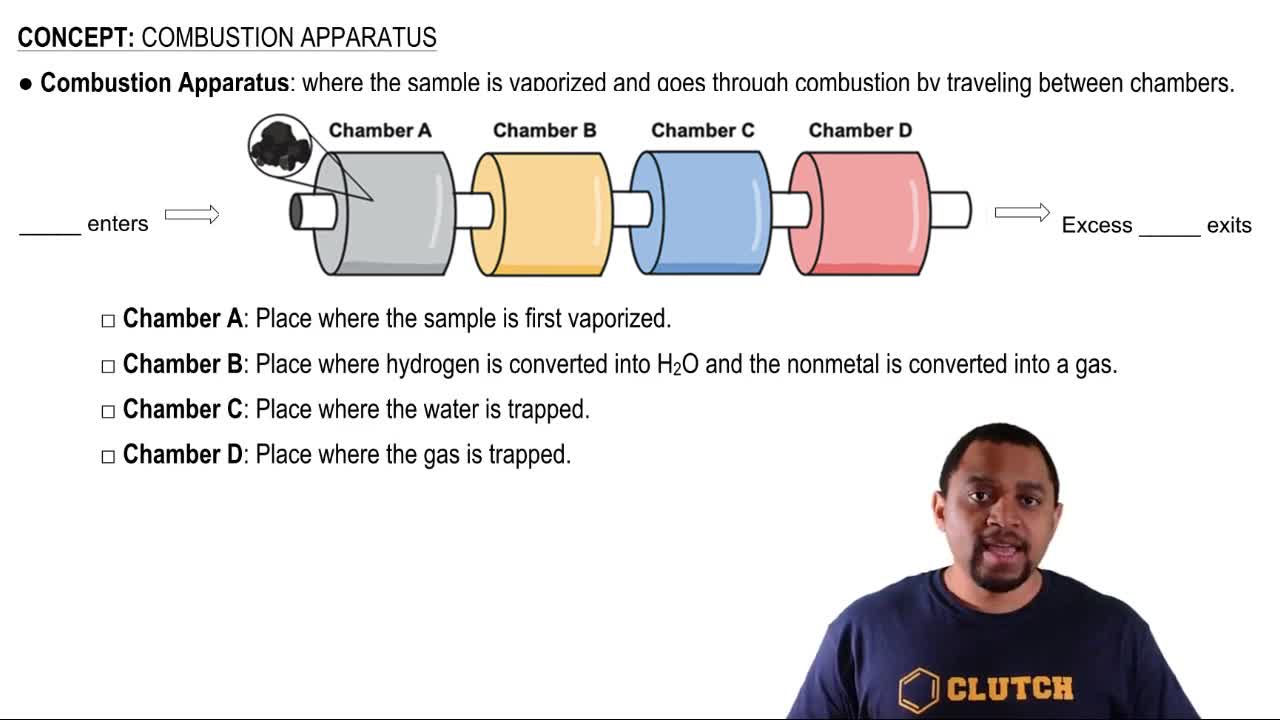
Combustion Apparatus

Enthalpy of Combustion

The enthalpy of combustion is the amount of energy released when one mole of a substance is completely burned in oxygen. This value is crucial for comparing the energy output of different fuels. For hydrogen, the enthalpy of combustion is significantly high, indicating that it releases a large amount of energy per mole when combusted.
추천 영상:
가이드 코스
02:24
Combustion Apparatus

Molar Mass and Energy Density

Molar mass refers to the mass of one mole of a substance, which affects the energy density of fuels. Energy density is the amount of energy stored in a given volume or mass of fuel. When comparing fuels, it is important to consider both the molar mass and the energy released per mole to determine which fuel is more efficient in terms of energy output.
추천 영상:
가이드 코스
02:11
Molar Mass Concept
관련 실천
교과서 질문

If hydrogen were used as a fuel, it could be burned according to this reaction: H2(g) + 1/2 O2(g) → H2O(g) Use average bond energies to calculate ΔHrxn for this reaction.

676
views

교과서 질문

If hydrogen were used as a fuel, it could be burned according to this reaction: H2(g) + 1/2 O2(g) → H2O(g) Which fuel yields more energy per gram?

828
views
교과서 질문

Free radicals are important in many environmentally significant reactions (see the Chemistry in the Environment box on free radicals in this chapter). For example, photochemical smog— smog that results from the action of sunlight on air pollutants— forms in part by these two steps:

The product of this reaction, ozone, is a pollutant in the lower atmosphere. (Upper atmospheric ozone is a natural part of the atmosphere that protects life on Earth from ultraviolet light.) Ozone is an eye and lung irritant and also accelerates the weathering of rubber products. Rewrite the given reactions using the Lewis structure of each reactant and product. Identify the free radicals.

552
views
교과서 질문

Calculate ΔHrxn for the combustion of octane (C8H18), a component of gasoline, by using average bond energies and then calculate it using enthalpies of formation from Appendix IIB. What is the percent difference between your results? Which result would you expect to be more accurate?

2412
views
교과서 질문

If hydrogen were used as a fuel, it could be burned according to this reaction: H2(g) + 1/2 O2(g) → H2O(g) Use average bond energies to calculate ΔHrxn for the combustion of methane (CH4).

756
views