Ch.13 - Solids & Modern Materials
Tro - Chemistry: A Molecular Approach 5th Edition
Tro5th EditionChemistry: A Molecular ApproachISBN: 9780134874371당신이 사용하는 게 아니라요?교과서 변경
13장, 문제 53c

Classify each of the following as a component of a silicate ceramic, an oxide ceramic, or a nonoxide ceramic. c. MoSi2

검증된 단계별 안내
1
Identify the chemical formula given: MoSi_{2}.
Recognize that MoSi_{2} consists of molybdenum (Mo) and silicon (Si).
Understand that silicate ceramics typically contain silicon and oxygen, forming silicate structures.
Note that oxide ceramics are composed of metal oxides, which include oxygen in their structure.
Determine that MoSi_{2} does not contain oxygen, classifying it as a nonoxide ceramic.

비슷한 문제에 대한 검증된 영상 답변:

이 영상 해법은 위 문제에 도움이 된다고 튜터들이 추천한 것입니다.
영상 길이:
1m
도움이 되었나요?

주요 개념

질문에 올바르게 답하기 위해 반드시 이해해야 하는 핵심 개념들은 다음과 같습니다.

Silicate Ceramics

Silicate ceramics are materials primarily composed of silicon and oxygen, often combined with various metal oxides. They are known for their high melting points, chemical stability, and mechanical strength. Common examples include clay and glass, which are widely used in construction and pottery.
추천 영상:
가이드 코스
01:26
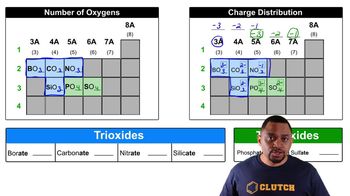
Polyatomic Oxyanion Names

Oxide Ceramics

Oxide ceramics are made from metal oxides, such as alumina (Al2O3) and zirconia (ZrO2). These materials exhibit excellent thermal and chemical stability, making them suitable for high-temperature applications. They are often used in electrical insulators and cutting tools due to their hardness and resistance to wear.
추천 영상:
가이드 코스
00:58
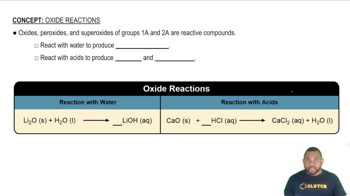
Oxide Reactions

Nonoxide Ceramics

Nonoxide ceramics include materials that do not contain oxygen in their primary composition, such as carbides, nitrides, and borides. These ceramics are typically characterized by their high hardness, thermal conductivity, and resistance to wear. An example is molybdenum disilicide (MoSi2), which is used in high-temperature applications due to its ability to withstand extreme conditions.