Ch.2 - Atoms & Elements
Tro - Chemistry: A Molecular Approach 5th Edition
Tro5th EditionChemistry: A Molecular ApproachISBN: 9780134874371당신이 사용하는 게 아니라요?교과서 변경
2장, 문제 70

Which pair of elements do you expect to be most similar? Why? a. nitrogen and oxygen b. titanium and gallium c. lithium and sodium d. germanium and arsenic e. argon and bromine

검증된 단계별 안내
1
1. The similarity between elements is determined by their position in the periodic table. Elements in the same group (vertical column) of the periodic table have similar properties because they have the same number of valence electrons. These are the electrons in the outermost shell of an atom that are involved in chemical reactions.
2. Nitrogen and oxygen are in the same period (horizontal row) but not in the same group. They have different numbers of valence electrons, so they have different chemical properties.
3. Titanium and gallium are in different periods and different groups. They have different numbers of valence electrons and different chemical properties.
4. Lithium and sodium are in the same group (Group 1: Alkali metals). They have the same number of valence electrons (1 electron in the outermost shell), so they have similar chemical properties.
5. Germanium and arsenic are in the same period but not in the same group. They have different numbers of valence electrons and different chemical properties.
6. Argon and bromine are in the same period but not in the same group. They have different numbers of valence electrons and different chemical properties.
7. Therefore, based on the periodic table and the concept of valence electrons, the pair of elements that are most similar are lithium and sodium because they are in the same group and have the same number of valence electrons.

비슷한 문제에 대한 검증된 영상 답변:

이 영상 해법은 위 문제에 도움이 된다고 튜터들이 추천한 것입니다.
영상 길이:
4m
도움이 되었나요?

주요 개념

질문에 올바르게 답하기 위해 반드시 이해해야 하는 핵심 개념들은 다음과 같습니다.

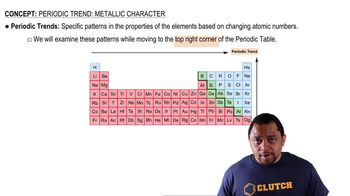
Periodic Trends

Periodic trends refer to the predictable patterns observed in the properties of elements as you move across or down the periodic table. These trends include atomic radius, electronegativity, ionization energy, and reactivity. Understanding these trends helps in predicting the behavior and similarities between elements based on their positions in the periodic table.
추천 영상:
가이드 코스
00:38
Periodic Trends

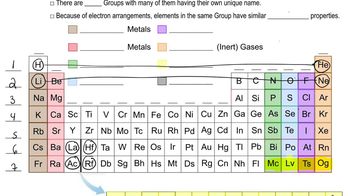
Group vs. Period Similarities

Elements in the same group (column) of the periodic table share similar chemical properties due to having the same number of valence electrons. This similarity often leads to comparable reactivity and bonding characteristics. In contrast, elements in the same period (row) may have different properties as they have different valence electron configurations.
추천 영상:
가이드 코스
05:33
Periodic Table: Group Names

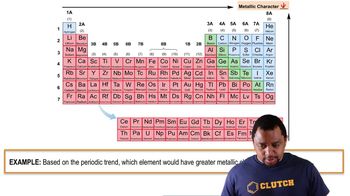
Metallic vs. Nonmetallic Character

The metallic and nonmetallic character of elements influences their properties and reactivity. Metals, typically found on the left side of the periodic table, are good conductors of heat and electricity, while nonmetals, located on the right, are generally poor conductors and have higher electronegativities. Understanding this distinction is crucial for predicting how elements will interact with one another.
추천 영상:
가이드 코스
00:56
Metallic Character Example