뒤로
뒤로
문제 84a,b,d
What is the mass, in grams, of each elemental sample? a. 2.3×10⁻³ mol Sb b. 0.0355 mol Ba d. 1.3 mol W
문제 84c
What is the mass, in grams, of each elemental sample? c. 43.9 mol Xe
문제 85
How many silver atoms are there in 3.78 g of silver?
문제 86
What is the mass of 4.91×10²¹ platinum atoms?
문제 87
Calculate the number of atoms in each sample. a. 5.18 g P
문제 88
Calculate the number of atoms in each sample. a. 14.955 g Cr
문제 89a,b
Calculate the mass, in grams, of each sample. a. 1.1×10²³ gold atoms b. 2.82×10²² helium atoms
문제 89c
Calculate the mass, in grams, of each sample. c. 1.8×10²³ lead atoms
문제 89d
Calculate the mass, in grams, of each sample. d. 7.9×10²¹ uranium atoms
문제 90
Calculate the mass, in kg, of each sample. a. 7.55×1026 cadmium atoms b. 8.15×1027 nickel atoms c. 1.22×1027 manganese atoms d. 5.48×1029 lithium atoms
문제 91
How many carbon atoms are there in a diamond (pure carbon) with a mass of 52 mg?
문제 92
How many helium atoms are there in a helium blimp containing 536 kg of helium?
문제 93
Calculate the average mass, in grams, of one platinum atom.
문제 94
Using scanning tunneling microscopy, scientists at IBM wrote the initials of their company with 35 individual xenon atoms (as shown below). Calculate the total mass of these letters in grams.
문제 95
A 7.83 g sample of HCN contains 0.290 g of H and 4.06 g of N. Find the mass of carbon in a sample of HCN with a mass of 3.37 g.
문제 96
The ratio of sulfur to oxygen by mass in SO2 is 1.0:1.0. a. Find the ratio of sulfur to oxygen by mass in SO3. b. Find the ratio of sulfur to oxygen by mass in S2O.
문제 97
The ratio of oxygen to carbon by mass in carbon monoxide is 1.33:1.00. Find the formula of an oxide of carbon in which the ratio by mass of oxygen to carbon is 2.00:1.00.
문제 98
The ratio of the mass of a nitrogen atom to the mass of an atom of 12C is 7:6, and the ratio of the mass of nitrogen to oxygen in N2O is 7:4. Find the mass of 1 mol of oxygen atoms.
문제 99
An a particle, 4He2 + , has a mass of 4.00151 amu. Find the value of its charge-to-mass ratio in C/kg.
문제 100
Naturally occurring iodine has an atomic mass of 126.9045 amu. A 12.3849 g sample of iodine is accidentally contaminated with an additional 1.00070 g of 129I, a synthetic radioisotope of iodine used in the treatment of certain diseases of the thyroid gland. The mass of 129I is 128.9050 amu. Find the apparent 'atomic mass' of the contaminated iodine.
문제 101
Use the mass spectrum of lead to estimate the atomic mass of lead. Estimate the mass and percent intensity values from the graph to three significant figures.

문제 102
Use the mass spectrum of mercury to estimate the atomic mass of mercury. Estimate the masses and percent intensity values from the graph to three significant figures.
문제 103
Nuclei with the same number of neutrons but different mass numbers are called isotones. Write the symbols of four isotones of 236Th.
문제 104
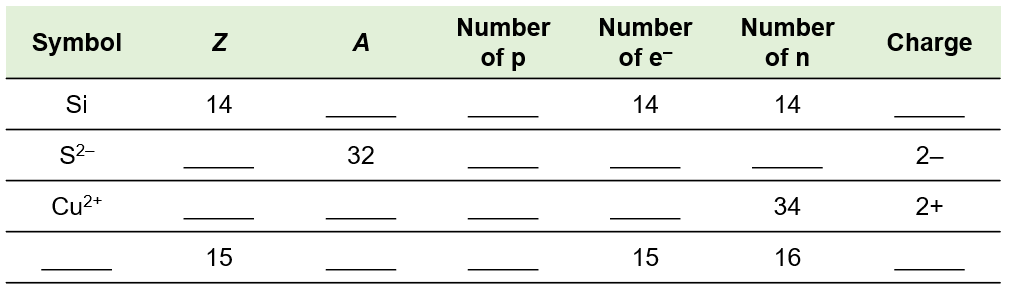
Fill in the blanks to complete the table. Symbol Z A Number of p_x001E_ Number of e_x001D_ Number of n Charge Si 14 ____ ____ 14 14 ____ S2- ____ 32 ____ ____ ____ 2- Cu2+ ____ ____ ____ ____ 34 2+ ____ 15 ____ ____ 15 16 ____
문제 105
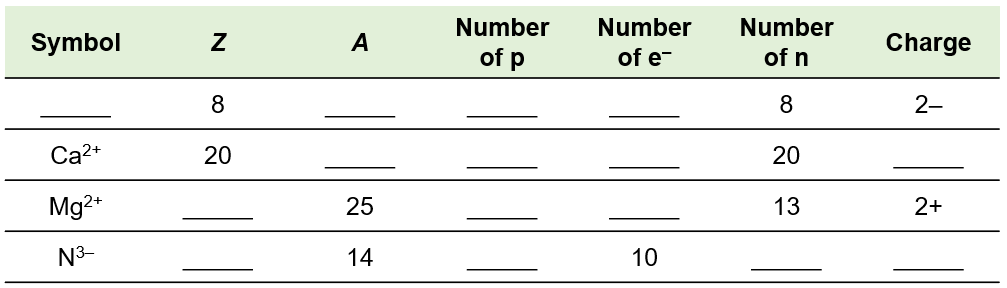
Fill in the blanks to complete the table. Symbol Z A Number of p Number of e− Number of n Charge ______ 8 ______ ______ ______ 8 2- Ca2 + 20 ______ ______ ______ 20 ______ Mg2 + ______ 25 ______ ______ 13 2+ N3 - ______ 14 ______ 10 ______ ______
문제 106
Neutron stars are composed of solid nuclear matter, primarily neutrons. Assume the radius of a neutron is approximately 1.0×10⁻¹³ cm. Calculate the density of a neutron. [Hint: For a sphere V = (4/3)πr3.] Assuming that a neutron star has the same density as a neutron, calculate the mass (in kg) of a small piece of a neutron star the size of a spherical pebble with a radius of 0.10 mm.
문제 107a
Carbon-12 contains six protons and six neutrons. The radius of the nucleus is approximately 2.7 fm (femtometers) and the radius of the atom is approximately 70 pm (picometers). Calculate the volume of the nucleus and the volume of the atom.
문제 107b
Carbon-12 contains six protons and six neutrons. The radius of the nucleus is approximately 2.7 fm (femtometers) and the radius of the atom is approximately 70 pm (picometers). What percentage of the carbon atom's volume is occupied by the nucleus? (Assume two significant figures.)
문제 108
A penny has a thickness of approximately 1.0 mm. If you stacked Avogadro's number of pennies one on top of the other on Earth's surface, how far would the stack extend (in km)? [For comparison, the sun is about 150 million km from Earth and the nearest star (Proxima Centauri) is about 40 trillion km from Earth.]
문제 109
Consider the stack of pennies in the previous problem. How much money (in dollars) would this represent? If this money were equally distributed among the world's population of 7.0 billion people, how much would each person receive? Would each person be a millionaire? A billionaire? A trillionaire?