Ch.3 - Molecules and Compounds
Tro - Chemistry: A Molecular Approach 5th Edition
Tro5th EditionChemistry: A Molecular ApproachISBN: 9780134874371당신이 사용하는 게 아니라요?교과서 변경
3장, 문제 52a

Name each acid. a. HCl(aq)

검증된 단계별 안내
1
Identify the type of acid: HCl is a binary acid, which consists of hydrogen and one other nonmetal element.
Recognize the naming pattern for binary acids: Binary acids are named using the prefix 'hydro-', followed by the root of the nonmetal element, and ending with the suffix '-ic acid'.
Determine the root of the nonmetal element: In HCl, the nonmetal is chlorine, so the root is 'chlor'.
Apply the naming pattern: Combine the prefix 'hydro-', the root 'chlor', and the suffix '-ic acid' to name the acid.
Conclude the name: The name of the acid HCl(aq) is 'hydrochloric acid'.

비슷한 문제에 대한 검증된 영상 답변:

이 영상 해법은 위 문제에 도움이 된다고 튜터들이 추천한 것입니다.
영상 길이:
2m
도움이 되었나요?

주요 개념

질문에 올바르게 답하기 위해 반드시 이해해야 하는 핵심 개념들은 다음과 같습니다.

Acids and Bases

Acids are substances that can donate protons (H⁺ ions) in a solution, while bases can accept protons. The Brønsted-Lowry theory defines acids as proton donors, which is essential for understanding the behavior of substances like HCl in aqueous solutions.
추천 영상:
가이드 코스
02:00
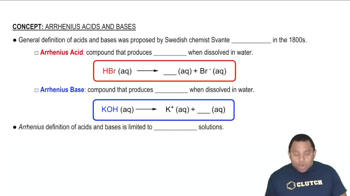
Arrhenius Acids and Bases

Strong Acids

Strong acids are those that completely dissociate in water, releasing all of their protons. HCl, or hydrochloric acid, is a classic example of a strong acid, meaning it fully ionizes in solution, making it highly effective in chemical reactions.
추천 영상:
가이드 코스
01:09
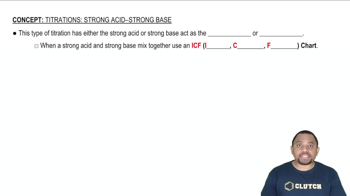
Strong Acid-Strong Base Titration

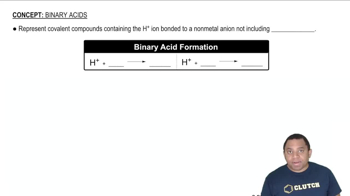
Nomenclature of Acids

The naming of acids depends on their composition and the presence of oxygen. For binary acids like HCl, the name is derived from the nonmetal part (chlorine) and is prefixed with 'hydro-' and suffixed with '-ic', resulting in hydrochloric acid.
추천 영상: