Ch.3 - Molecules and Compounds
Tro - Chemistry: A Molecular Approach 5th Edition
Tro5th EditionChemistry: A Molecular ApproachISBN: 9780134874371당신이 사용하는 게 아니라요?교과서 변경
3장, 문제 51a

Name each acid. a. HI(aq) b. HNO3(aq) c. H2CO3(aq)

검증된 단계별 안내
1
1. Identify the type of acid. In this case, HI(aq) is a binary acid because it consists of two elements: hydrogen and iodine.
2. For binary acids, the name starts with 'hydro-', followed by the root of the nonmetal's name, and ends with '-ic acid'.
3. The nonmetal in this acid is iodine. The root of 'iodine' is 'iod'.
4. Therefore, the name of the acid HI(aq) is 'hydroiodic acid'.

비슷한 문제에 대한 검증된 영상 답변:

이 영상 해법은 위 문제에 도움이 된다고 튜터들이 추천한 것입니다.
영상 길이:
2m
도움이 되었나요?

주요 개념

질문에 올바르게 답하기 위해 반드시 이해해야 하는 핵심 개념들은 다음과 같습니다.

Acids and Bases

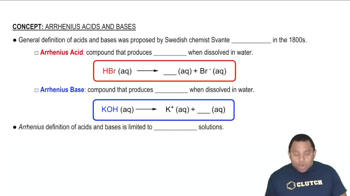
Acids are substances that can donate protons (H+) in a solution, while bases can accept protons. The strength of an acid is determined by its ability to dissociate in water, producing H+ ions. Understanding the properties of acids and bases is fundamental in identifying and naming them.
추천 영상:
가이드 코스
02:00
Arrhenius Acids and Bases

Strong Acids

Strong acids are those that completely dissociate in water, releasing all of their protons. Hydroiodic acid (HI) is a strong acid, meaning it ionizes fully in aqueous solution. Recognizing strong acids helps in predicting their behavior in chemical reactions and their naming conventions.
추천 영상:
가이드 코스
01:09
Strong Acid-Strong Base Titration

Nomenclature of Acids

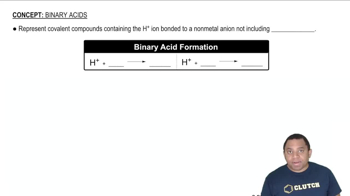
The nomenclature of acids involves specific rules for naming based on their composition. Binary acids, like HI, are named using the prefix 'hydro-' followed by the root of the nonmetal and the suffix '-ic.' This systematic approach is essential for accurately identifying and naming various acids in chemistry.
추천 영상: