Ch.13 - Solids & Modern Materials
Tro - Chemistry: A Molecular Approach 6th Edition
Tro6th EditionChemistry: A Molecular ApproachISBN: 9780137832217당신이 사용하는 게 아니라요?교과서 변경
13장, 문제 44a

Identify each solid as molecular, ionic, or atomic. a. Ru(s)

검증된 단계별 안내
1
Step 1: Understand the different types of solids. Molecular solids are composed of molecules held together by intermolecular forces. Ionic solids are composed of positive and negative ions held together by electrostatic forces. Atomic solids are composed of atoms bonded to each other.
Step 2: Look at the given solid. In this case, it's Ru(s), which stands for solid Ruthenium. Ruthenium is a chemical element, and it's represented by a single symbol, which means it's a single type of atom.
Step 3: Since Ruthenium is a single type of atom and it's a metal, it forms metallic bonds with other Ruthenium atoms. Metals typically form atomic solids.
Step 4: Therefore, Ru(s) is an atomic solid.

비슷한 문제에 대한 검증된 영상 답변:

이 영상 해법은 위 문제에 도움이 된다고 튜터들이 추천한 것입니다.
영상 길이:
1m
도움이 되었나요?

주요 개념

질문에 올바르게 답하기 위해 반드시 이해해야 하는 핵심 개념들은 다음과 같습니다.

Types of Solids

Solids can be classified into three main categories: molecular, ionic, and atomic. Molecular solids consist of molecules held together by intermolecular forces, ionic solids are composed of ions held together by ionic bonds, and atomic solids consist of atoms connected by covalent bonds or metallic bonds. Understanding these categories helps in identifying the nature of a solid based on its composition and bonding.
추천 영상:
가이드 코스
01:31
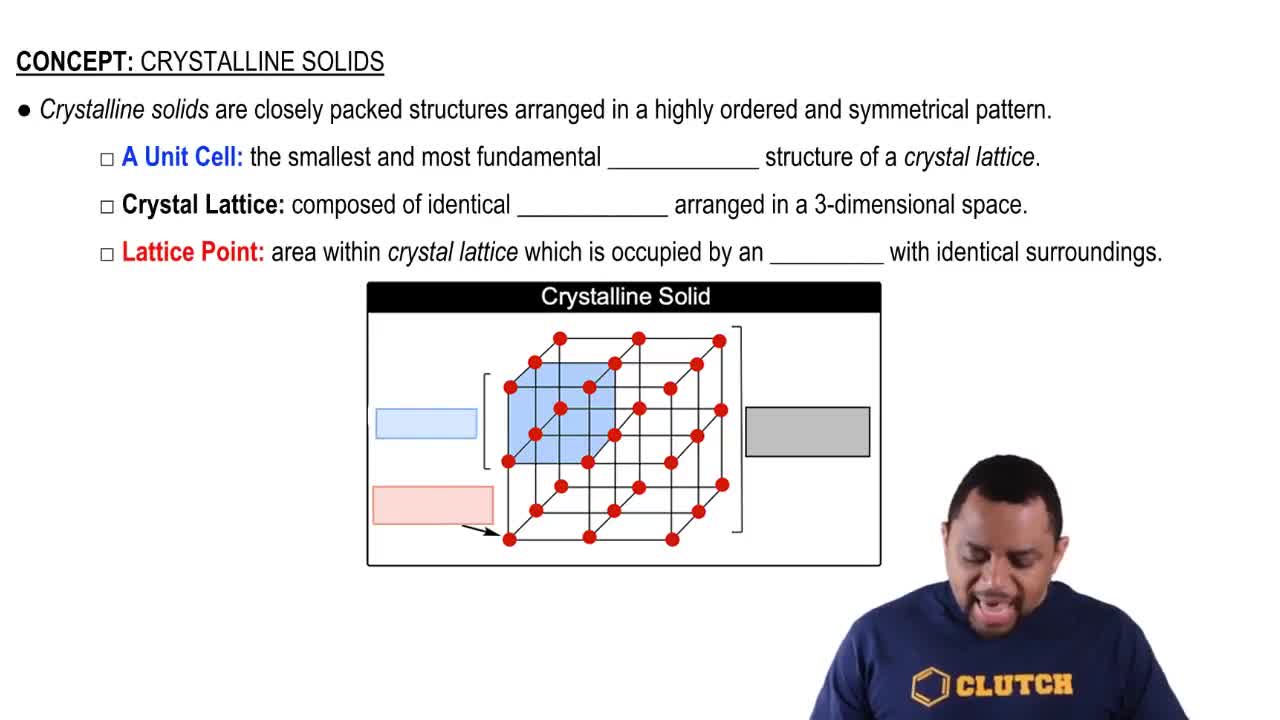
Crystalline Solids Structure

Ruthenium (Ru)

Ruthenium (Ru) is a transition metal that is part of the platinum group. It typically exists as a solid at room temperature and forms metallic bonds, which are characterized by a sea of delocalized electrons that allow for conductivity and malleability. Recognizing Ru as a metal is crucial for classifying it correctly among the types of solids.
추천 영상:
가이드 코스
00:46
Electron Configurations Of Transition Metals: Exceptions Example

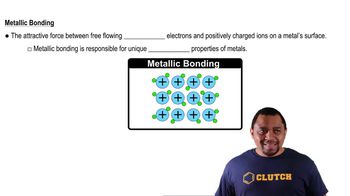
Metallic Bonding

Metallic bonding occurs in metals and is characterized by the attraction between positively charged metal ions and a sea of delocalized electrons. This type of bonding imparts unique properties to metals, such as electrical conductivity, ductility, and luster. Understanding metallic bonding is essential for identifying solid metals like Ru as atomic solids.
추천 영상: