Ch.13 - Solids & Modern Materials
Tro - Chemistry: A Molecular Approach 6th Edition
Tro6th EditionChemistry: A Molecular ApproachISBN: 9780137832217당신이 사용하는 게 아니라요?교과서 변경
13장, 문제 46

Which solid has the highest melting point? Why? C(s, diamond), Kr(s), NaCl(s), H2O(s)

검증된 단계별 안내
1
Step 1: Understand the types of bonding present in each solid.
Step 2: Analyze the structure and bonding of diamond, C(s).
Step 3: Consider the nature of Kr(s) as a solid.
Step 4: Examine the ionic bonding in NaCl(s).
Step 5: Evaluate the hydrogen bonding in H2O(s).

비슷한 문제에 대한 검증된 영상 답변:

이 영상 해법은 위 문제에 도움이 된다고 튜터들이 추천한 것입니다.
영상 길이:
7m
도움이 되었나요?

주요 개념

질문에 올바르게 답하기 위해 반드시 이해해야 하는 핵심 개념들은 다음과 같습니다.

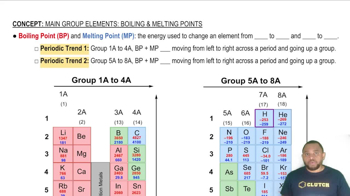
Melting Point

The melting point is the temperature at which a solid becomes a liquid. It is influenced by the strength of the intermolecular or ionic forces holding the solid together. Substances with strong bonds, such as ionic or covalent networks, typically have higher melting points compared to those with weaker van der Waals forces.
추천 영상:
가이드 코스
04:29
Boiling Point and Melting Point

Types of Solids

Solids can be categorized into different types, including ionic, covalent, molecular, and metallic solids. Ionic solids, like NaCl, consist of charged ions held together by strong electrostatic forces, while covalent solids, like diamond, have atoms connected by strong covalent bonds. Understanding the type of solid helps predict its melting behavior.
추천 영상:
가이드 코스
01:31
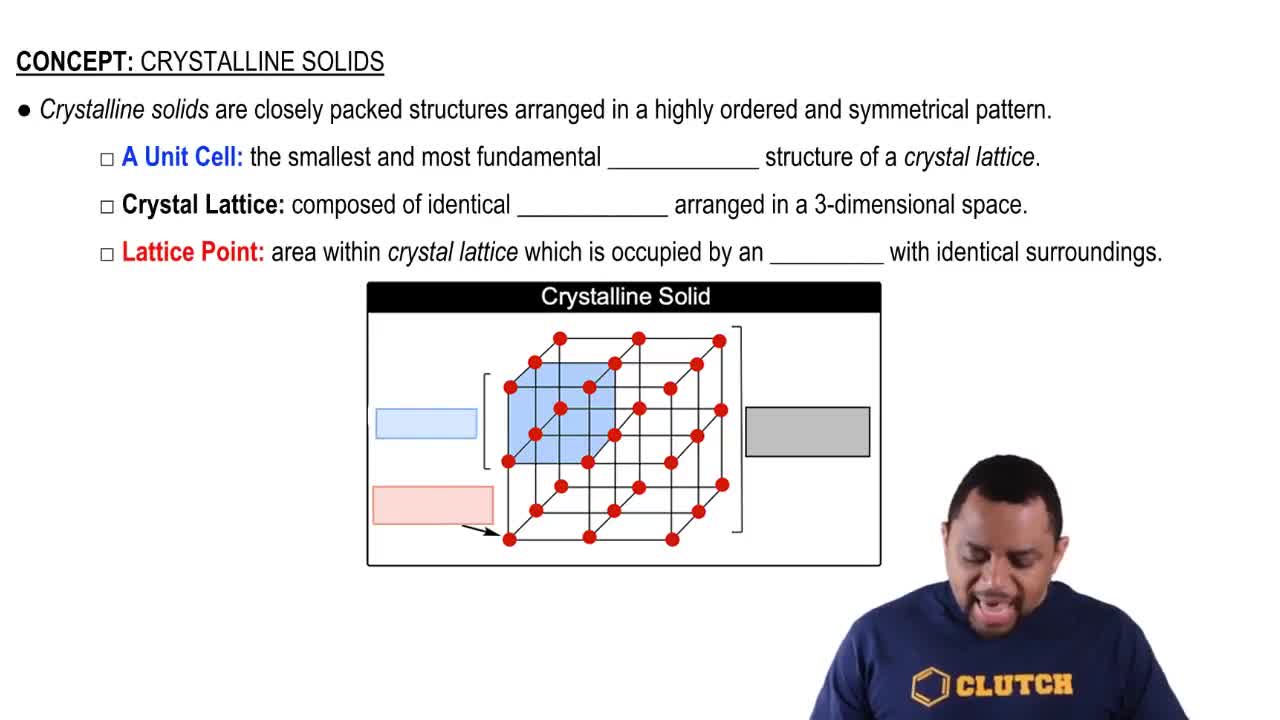
Crystalline Solids Structure

Crystal Structure

The arrangement of atoms in a solid, known as its crystal structure, plays a crucial role in determining its physical properties, including melting point. For example, diamond has a tetrahedral lattice structure that maximizes bond strength, leading to a very high melting point, while molecular solids like H2O have weaker hydrogen bonds, resulting in lower melting points.
추천 영상:
가이드 코스
01:42
Resonance Structures