Ch.10 - Chemical Bonding I: The Lewis Model
Tro - Chemistry: A Molecular Approach 6th Edition
Tro6th EditionChemistry: A Molecular ApproachISBN: 9780137832217당신이 사용하는 게 아니라요?교과서 변경
10장, 문제 37c

Write the Lewis symbol for each atom or ion. c. S

검증된 단계별 안내
1
Identify the number of valence electrons in a sulfur (S) atom. Sulfur is in Group 16 of the periodic table, which means it has 6 valence electrons.
Draw the symbol for sulfur (S) to represent the nucleus and inner electrons.
Place dots around the symbol to represent the valence electrons. Since sulfur has 6 valence electrons, you will place six dots around the symbol.
Arrange the dots to minimize repulsion between electrons. Typically, place one dot on each of the four sides (top, bottom, left, right) before pairing any electrons.
Since sulfur has 6 valence electrons, after placing one dot on each side, pair up the remaining two electrons on any side. This results in two single dots and two pairs of dots around the symbol.

비슷한 문제에 대한 검증된 영상 답변:

이 영상 해법은 위 문제에 도움이 된다고 튜터들이 추천한 것입니다.
영상 길이:
38s
도움이 되었나요?

주요 개념

질문에 올바르게 답하기 위해 반드시 이해해야 하는 핵심 개념들은 다음과 같습니다.

Lewis Symbols

Lewis symbols, also known as Lewis dot diagrams, represent the valence electrons of an atom or ion. Each dot corresponds to a valence electron, and the arrangement of these dots around the chemical symbol indicates how the atom can bond with others. This visual representation helps in understanding the bonding behavior and reactivity of elements.
추천 영상:
가이드 코스
00:52
Lewis Dot Symbols

Valence Electrons

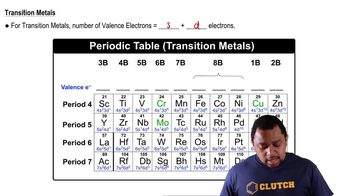
Valence electrons are the outermost electrons of an atom and play a crucial role in chemical bonding. The number of valence electrons determines how an atom interacts with others, including the formation of covalent or ionic bonds. For sulfur (S), which is in group 16 of the periodic table, there are six valence electrons that can be represented in its Lewis symbol.
추천 영상:
가이드 코스
02:12
Transition Metals Valence Electrons

Ionic vs. Neutral Atoms

Understanding the difference between ionic and neutral atoms is essential for drawing accurate Lewis symbols. A neutral atom has an equal number of protons and electrons, while an ion has gained or lost electrons, resulting in a charge. For example, the Lewis symbol for a neutral sulfur atom (S) will differ from that of a sulfide ion (S²⁻), which has gained two additional electrons.
추천 영상:
가이드 코스
04:13
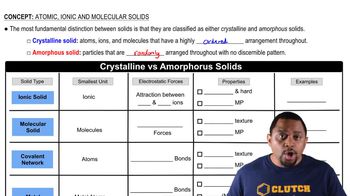
Crystalline vs Amorphous Solids