Ch.17 - Acids and Bases
Tro - Chemistry: A Molecular Approach 6th Edition
Tro6th EditionChemistry: A Molecular ApproachISBN: 9780137832217당신이 사용하는 게 아니라요?교과서 변경
17장, 문제 36c

Write the formula for the conjugate base of each acid. c. HI

검증된 단계별 안내
1
Identify the acid in the problem: HI (hydroiodic acid).
Recall that a conjugate base is formed by removing a proton (H⁺) from the acid.
Remove one hydrogen ion (H⁺) from HI, which leaves you with the iodide ion (I⁻).
Write the formula for the conjugate base: I⁻.
Understand that the conjugate base of an acid is the species that remains after the acid has donated a proton.

비슷한 문제에 대한 검증된 영상 답변:

이 영상 해법은 위 문제에 도움이 된다고 튜터들이 추천한 것입니다.
영상 길이:
33s
도움이 되었나요?

주요 개념

질문에 올바르게 답하기 위해 반드시 이해해야 하는 핵심 개념들은 다음과 같습니다.

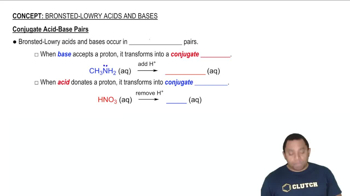
Conjugate Acid-Base Pairs

In acid-base chemistry, a conjugate acid-base pair consists of two species that differ by the presence of a proton (H+). When an acid donates a proton, it forms its conjugate base, while the base that accepts the proton becomes its conjugate acid. Understanding this relationship is crucial for identifying the conjugate base of any given acid.
추천 영상:
가이드 코스
01:30
Conjugate Acid-Base Pairs

Strong Acids and Their Conjugate Bases

Strong acids, such as hydroiodic acid (HI), completely dissociate in water, meaning they release all their protons. The conjugate base of a strong acid is typically a weak base, which does not readily accept protons. Recognizing the strength of the acid helps predict the properties of its conjugate base.
추천 영상:
가이드 코스
01:09
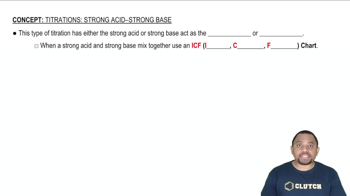
Strong Acid-Strong Base Titration

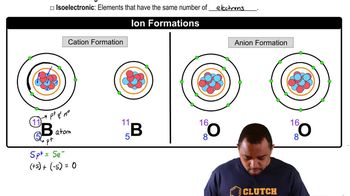
Chemical Formulas and Ion Representation

Chemical formulas represent the composition of substances, including ions. The conjugate base of an acid can be represented by removing a hydrogen ion (H+) from the acid's formula. For HI, the removal of H+ results in the iodide ion (I-), which is the conjugate base of hydroiodic acid.
추천 영상: