Ch.9 - Periodic Properties of the Elements
Tro - Chemistry: A Molecular Approach 6th Edition
Tro6th EditionChemistry: A Molecular ApproachISBN: 9780137832217당신이 사용하는 게 아니라요?교과서 변경
9장, 문제 85b

Choose the element with the more negative (more exothermic) electron affinity from each pair. b. C or F

검증된 단계별 안내
1
Understand the concept of electron affinity: Electron affinity is the energy change that occurs when an electron is added to a neutral atom in the gaseous state. A more negative electron affinity indicates a greater tendency to accept an electron.
Consider the periodic trend: Electron affinity generally becomes more negative across a period from left to right due to increasing nuclear charge, which attracts electrons more strongly.
Identify the position of the elements in the periodic table: Carbon (C) is in group 14 and period 2, while Fluorine (F) is in group 17 and period 2.
Compare the elements based on their positions: Since both elements are in the same period, the trend suggests that the element further to the right (Fluorine) will have a more negative electron affinity.
Conclude based on the trend: Fluorine, being to the right of Carbon in the same period, is expected to have a more negative (more exothermic) electron affinity.

비슷한 문제에 대한 검증된 영상 답변:

이 영상 해법은 위 문제에 도움이 된다고 튜터들이 추천한 것입니다.
영상 길이:
1m
도움이 되었나요?

주요 개념

질문에 올바르게 답하기 위해 반드시 이해해야 하는 핵심 개념들은 다음과 같습니다.

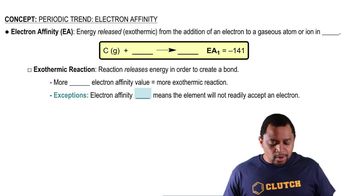
Electron Affinity

Electron affinity is the energy change that occurs when an electron is added to a neutral atom in the gas phase. A more negative electron affinity indicates that the process is more exothermic, meaning energy is released when the atom gains an electron. This property is crucial for understanding how easily an atom can accept an electron and form an anion.
추천 영상:
가이드 코스
01:34
Electron Affinity

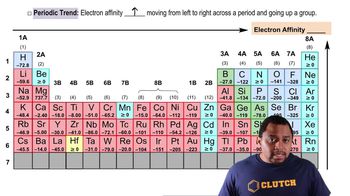
Trends in Electron Affinity

Electron affinity varies across the periodic table, generally increasing (becoming more negative) from left to right and decreasing from top to bottom. This trend is due to the increasing nuclear charge and decreasing atomic radius, which enhance the attraction between the nucleus and the added electron. Understanding these trends helps predict the electron affinity of different elements.
추천 영상:
가이드 코스
01:42
Electron Affinity Trends

Comparison of Carbon and Fluorine

When comparing carbon (C) and fluorine (F), fluorine has a significantly more negative electron affinity than carbon. This is because fluorine, being more electronegative, has a stronger tendency to attract additional electrons, resulting in a more exothermic process. This comparison illustrates the importance of electronegativity in determining electron affinity.
추천 영상:
가이드 코스
02:11
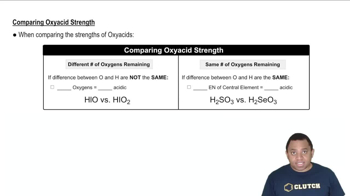
Oxyacid Strength Comparison