 뒤로
뒤로Human Genetic Variation and the Reduction of Racial Bias: A Humane Genetics Education Approach
스터디 가이드 - 스마트 노트
 자료에 맞춘 맞춤형 노트, 핵심 정의, 예시, 맥락을 확장해 제공합니다.
Genetic Variation and Human Populations
Introduction to Human Genetic Variation
Understanding genetic variation within and between human populations is essential for accurately interpreting the biological basis of human diversity. Misconceptions about genetic differences among racial groups have historically contributed to social biases and discrimination. Modern genetics demonstrates that most genetic variation occurs within, rather than between, socially defined racial groups.
Genetic Variation: Refers to differences in DNA sequences among individuals within a population.
Population Genetics: The study of genetic variation within and between populations, and the evolutionary forces that shape this variation.
Key Finding: Approximately 95.7% of human genetic variation occurs within populations, while only about 4.3% occurs between major continental groups (often associated with US census racial categories).
Implication: Racial groups are not genetically discrete; instead, there is substantial overlap in genetic variants across populations.
Example: Two individuals from the same population are nearly as genetically different as two individuals from different populations.
Misconceptions and Genetic Essentialism
Genetic Essentialism and Its Social Impact
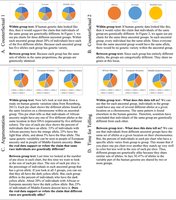
Genetic essentialism is the belief that members of a racial group are genetically uniform and that different racial groups are genetically discrete. This misconception can lead to stereotyping and the justification of social inequalities as natural or immutable.
Genetic Essentialism: The assumption that observable differences between groups are due to inherent, unchangeable genetic factors.
Consequences: Increases in racial bias, support for discriminatory policies, and the perpetuation of stereotypes.
Educational Role: Biology curricula that overemphasize genetic differences between races can unintentionally reinforce essentialist thinking.
Example: Teaching about the prevalence of certain genetic diseases in specific racial groups without context can lead students to overestimate genetic differences between races.
Humane Genetics Education: Theory and Practice
Principles of Humane Genetics Education
A humane genetics education aims to reduce racial bias by providing accurate information about human genetic variation and challenging essentialist beliefs. This approach is grounded in conceptual change theory, which emphasizes the importance of refuting misconceptions and providing alternative, scientifically accurate explanations.
Key Principles:
Refutational teaching: Elicit misconceptions, label them as incorrect, refute with evidence, and provide alternative explanations.
Use of contrasting cases: Present fictional and real genetic data to help students differentiate between essentialist and anti-essentialist models.
Argumentation scaffolds: Support students in critiquing essentialist claims using evidence.
Instructional Strategies: Visualization (e.g., pie charts, Venn diagrams), group discussions, and scaffolded argumentation.
Empirical Evidence: Reducing Racial Bias Through Genetics Education
Randomized Controlled Trials (RCTs) and Key Findings
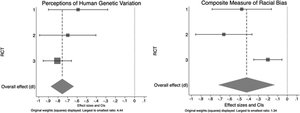
Three RCTs were conducted to test whether teaching scientifically accurate information about human genetic variation reduces racial bias. The interventions compared a genetics-focused curriculum with a control curriculum on climate variation.
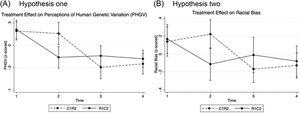
Hypothesis 1 (H1): Teaching about human genetic variation will reduce perceptions of genetic differences between races.
Hypothesis 2 (H2): Such teaching will reduce racial bias (measured as endorsement of genetic essentialism and racial stereotypes).
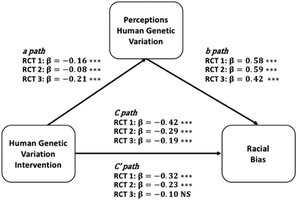
Hypothesis 3 (H3): The reduction in racial bias is mediated by changes in perceptions of human genetic variation.
Results:
All three RCTs showed significant reductions in perceived genetic differences between races and in racial bias after the genetics intervention.
The effect was consistent across adolescents and adults, though the magnitude varied by context and instructional method.
Mediation analysis confirmed that changes in perceptions of genetic variation explained a significant portion of the reduction in racial bias.
Quantitative Reasoning in Human Genetic Variation
Measuring Perceptions of Genetic Variation
Students' perceptions of genetic variation were measured using visual tools (dot matrices and Venn diagrams) and quantified as the proportion of perceived differences between races relative to total perceived variation.
Equation for Perceived Genetic Variation:
Interpretation: Higher values indicate a greater perception of between-group differences, which is associated with higher racial bias.
Implications for Genetics Education and Society
Educational and Social Implications
Accurate genetics education can play a critical role in reducing racial bias by correcting misconceptions about human genetic variation. However, the effectiveness of such interventions depends on instructional design, social context, and the presence of supportive classroom norms.
Key Takeaways:
Most human genetic variation is found within, not between, socially defined racial groups.
Racial categories are social constructs, not discrete biological entities.
Educational interventions that emphasize these facts can reduce genetic essentialism and racial bias.
Careful curriculum design is necessary to avoid reinforcing misconceptions or backfiring effects.
Example: When students learn that alleles associated with traits like skin color are present in all populations, and that most genetic differences are shared across groups, they are less likely to endorse racial stereotypes.
Summary Table: Key Concepts and Findings
Concept | Explanation | Educational Implication |
|---|---|---|
Within-group variation | Most genetic differences are found within populations | Emphasize in teaching to counteract essentialism |
Between-group variation | Small proportion of genetic differences between populations | Clarify that racial groups are not genetically discrete |
Genetic essentialism | Belief in inherent, immutable group differences | Refute with evidence and alternative explanations |
Humane genetics education | Curriculum designed to reduce bias by teaching accurate genetics | Use refutational texts, visualization, and argumentation |
Conclusion
Teaching scientifically accurate information about human genetic variation is a powerful tool for reducing racial bias. By emphasizing the overwhelming genetic similarity among humans and the social construction of racial categories, educators can help students develop a more nuanced and humane understanding of genetics and human diversity.
