 뒤로
뒤로Molecular Basis of Heredity: DNA Structure and Function
스터디 가이드 - 스마트 노트
 자료에 맞춘 맞춤형 노트, 핵심 정의, 예시, 맥락을 확장해 제공합니다.
The Molecular Basis of Heredity
Historical Foundations of Genetics
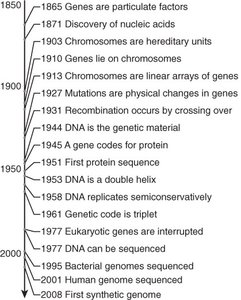
The field of genetics has evolved through a series of landmark discoveries, beginning with Mendel's work and culminating in the molecular understanding of DNA. Foundational experiments established DNA as the genetic material in both prokaryotes and eukaryotes.
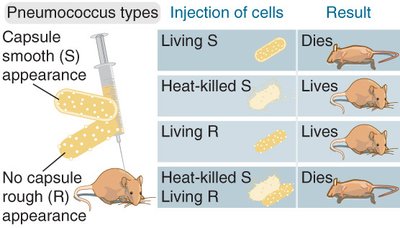
Griffith's Experiment (1928): Demonstrated transformation, where genetic properties can be transferred between bacterial strains.
Avery, MacLeod, McCarty (1944): Identified DNA as the transforming principle.
Hershey and Chase (1952): Used phage infection to show that DNA, not protein, is the genetic material of viruses.
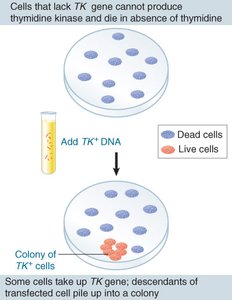
Transfection: Introduction of new genetic traits into eukaryotic cells by added DNA.
Selection: Use of chemicals (e.g., antibiotics) to select for transformed or transfected cells.
DNA and Chromosome Structure
Nucleotide Composition
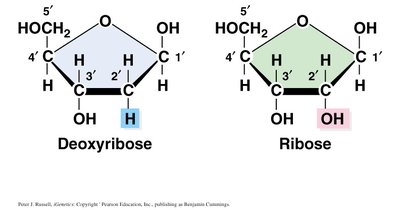
Nucleotides are the building blocks of DNA and RNA, each consisting of a pentose sugar, a nitrogenous base, and a phosphate group. The chemical differences between DNA and RNA are crucial for their distinct biological roles.
Pentose Sugar: DNA contains deoxyribose, RNA contains ribose.
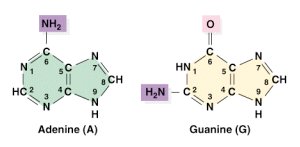
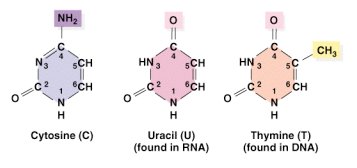
Nitrogenous Bases: Purines (adenine, guanine) and pyrimidines (cytosine, thymine in DNA, uracil in RNA).
Phosphate Group: Links nucleotides via phosphodiester bonds.
Polynucleotide Chains and Phosphodiester Bonds
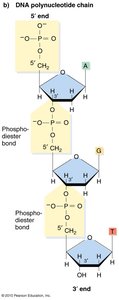
DNA strands are formed by linking nucleotides through strong covalent phosphodiester bonds, which provide stability and directionality to the molecule.
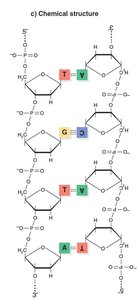
Phosphodiester Bond: Covalent bond between the 5' phosphate of one nucleotide and the 3' hydroxyl of another.
Directionality: DNA strands have polarity, with distinct 5' and 3' ends.
Stability: DNA's durability is essential for its function as the genetic material.
Chargaff's Rules and Base Composition
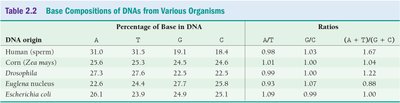
Chargaff's analysis revealed that in DNA, the amount of adenine equals thymine, and the amount of guanine equals cytosine. This base pairing is fundamental to the structure of DNA.
Chargaff's Ratio: A = T, G = C; purines equal pyrimidines.
Variation: A/T vs. G/C content varies among organisms.
DNA Origin | A (%) | T (%) | G (%) | C (%) | A/T | G/C | (A+T)/(G+C) |
|---|---|---|---|---|---|---|---|
Human (sperm) | 31.0 | 31.5 | 19.1 | 18.4 | 0.98 | 1.03 | 1.67 |
Corn (Zea mays) | 25.6 | 23.3 | 24.3 | 26.8 | 1.10 | 0.91 | 1.01 |
Drosophila | 27.3 | 27.6 | 22.3 | 22.5 | 0.99 | 1.00 | 1.22 |
Euglena nucleus | 22.0 | 24.0 | 27.7 | 25.8 | 0.88 | 1.07 | 0.88 |
Escherichia coli | 20.1 | 23.9 | 24.9 | 25.1 | 1.09 | 0.99 | 1.00 |
DNA Double Helix Structure
Base Pairing and Antiparallel Strands
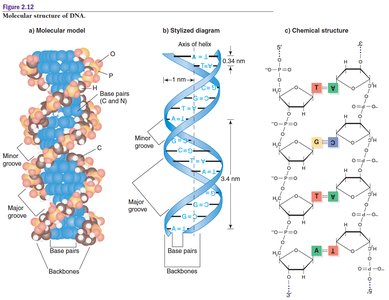
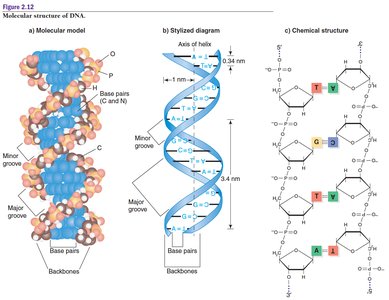
DNA is composed of two antiparallel polynucleotide chains wound into a right-handed double helix. The sugar-phosphate backbone is on the outside, and the bases are oriented toward the central axis.
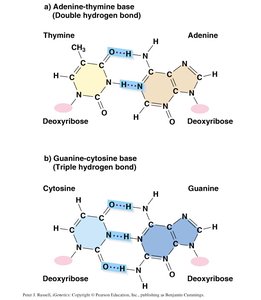
Base Pairing: A pairs with T (2 hydrogen bonds), G pairs with C (3 hydrogen bonds).
Antiparallel Strands: One strand runs 5' to 3', the other 3' to 5'.
Major and Minor Grooves: Unequal spacing of backbones creates grooves important for protein binding.
Helical Parameters: 0.34 nm between base pairs; 3.4 nm per turn (10 base pairs/turn).
Key Discoverers of DNA Structure
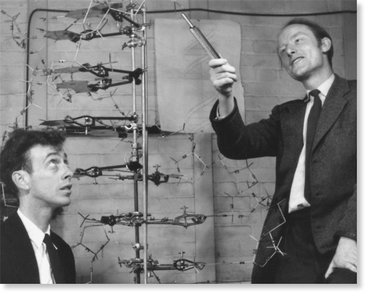
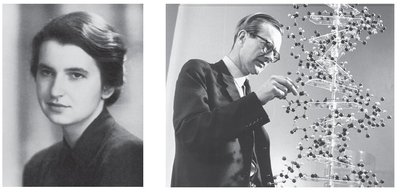
The double helix model was proposed by Watson and Crick in 1953, with critical contributions from Franklin and Wilkins.
Watson & Crick: Proposed the double helix structure.
Franklin & Wilkins: Provided X-ray diffraction data supporting the model.
Chromosomal Organization
Chromosomes and Genes
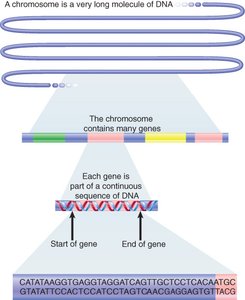
Each chromosome is a discrete unit of the genome, carrying many genes. Chromosomes consist of a long molecule of duplex DNA and associated proteins, visible only during cell division.
Chromosome: A unit of the genome carrying many genes.
Gene: A sequence of DNA encoding a functional product.
Organization: Genes are arranged linearly along the DNA molecule.
Summary Table: DNA Structure and Function
Feature | Description |
|---|---|
Nucleotide | Pentose sugar, nitrogenous base, phosphate group |
Phosphodiester Bond | Covalent bond linking nucleotides |
Base Pairing | A-T (2 H-bonds), G-C (3 H-bonds) |
Double Helix | Two antiparallel strands, right-handed helix |
Chromosome | Long DNA molecule with many genes |
Key Equations
Chargaff's Rule:
Helical Parameters:
Example: Forensic science uses DNA's stability for identification purposes.
