
교과서 질문
Several temperature-sensitive mutant strains of E. coli display the following characteristics. Predict what enzyme or function is being affected by each mutation.
Newly synthesized DNA contains many mismatched base pairs.
669
views
 검증된 단계별 안내
 11:59
11:59
 02:43 02:43
Several temperature-sensitive mutant strains of E. coli display the following characteristics. Predict what enzyme or function is being affected by each mutation.
Newly synthesized DNA contains many mismatched base pairs.
Several temperature-sensitive mutant strains of E. coli display the following characteristics. Predict what enzyme or function is being affected by each mutation.
Okazaki fragments accumulate, and DNA synthesis is never completed.
Define and indicate the significance of
(a) Okazaki fragments,
(b) DNA ligase, and
(c) primer RNA during DNA replication.
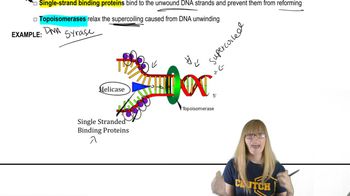
List the proteins that unwind DNA during in vivo DNA synthesis. How do they function?
Why is DNA synthesis expected to be more complex in eukaryotes than in bacteria? How is DNA synthesis similar in the two types of organisms?
Distinguish between
(a) unidirectional and bidirectional synthesis, and
(b) continuous and discontinuous synthesis of DNA.