Ch. 10 - DNA Structure and Analysis
Klug - Concepts of Genetics  12th Edition
Klug12th EditionConcepts of Genetics ISBN: 9780135564776당신이 사용하는 게 아니라요?교과서 변경
10장, 문제 24

What is the chemical basis of molecular hybridization?

검증된 단계별 안내
1
Understand that molecular hybridization refers to the process where two complementary strands of nucleic acids (DNA or RNA) form a double-stranded molecule by base pairing.
Recognize that the chemical basis of this process lies in the specific hydrogen bonding between complementary nitrogenous bases: adenine (A) pairs with thymine (T) in DNA or uracil (U) in RNA, and cytosine (C) pairs with guanine (G).
Recall that adenine and thymine/uracil form two hydrogen bonds, while cytosine and guanine form three hydrogen bonds, which stabilize the hybridized structure.
Note that the hybridization process depends on the complementarity and the ability of these bases to form hydrogen bonds, allowing the strands to anneal or re-anneal after denaturation.
Summarize that the chemical basis of molecular hybridization is the formation of specific hydrogen bonds between complementary nucleobases, enabling the pairing and stability of nucleic acid strands.

비슷한 문제에 대한 검증된 영상 답변:

이 영상 해법은 위 문제에 도움이 된다고 튜터들이 추천한 것입니다.
영상 길이:
1m
도움이 되었나요?

주요 개념

질문에 올바르게 답하기 위해 반드시 이해해야 하는 핵심 개념들은 다음과 같습니다.

Base Pairing Rules

Molecular hybridization relies on the specific pairing between complementary nucleotides: adenine pairs with thymine (or uracil in RNA), and cytosine pairs with guanine. This specificity is due to hydrogen bonding patterns, which enable strands of nucleic acids to recognize and bind to each other accurately.
추천 영상:
가이드 코스
03:49
Base Distortions

Hydrogen Bonding

Hydrogen bonds are weak, non-covalent interactions that form between complementary bases in nucleic acids. These bonds stabilize the hybridized double-stranded structure, allowing single strands of DNA or RNA to anneal based on sequence complementarity.
추천 영상:

Nucleic Acid Structure

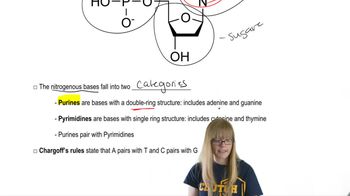
The chemical structure of nucleic acids, including the sugar-phosphate backbone and nitrogenous bases, facilitates hybridization. The linear arrangement and polarity of strands allow complementary sequences to align antiparallel and form stable duplexes through base pairing.
추천 영상:
가이드 코스
03:49
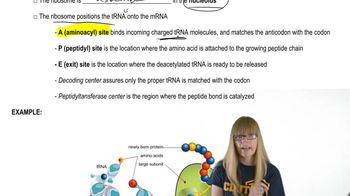
Ribosome Structure