Ch. 11 - DNA Replication and Recombination
Klug - Concepts of Genetics  12th Edition
Klug12th EditionConcepts of Genetics ISBN: 9780135564776당신이 사용하는 게 아니라요?교과서 변경
11장, 문제 1b

In the discussion, we focused on how DNA is replicated and synthesized. We also discussed recombination at the DNA level. Along the way, we encountered many opportunities to consider how this information was acquired. On the basis of these discussions, what answers would you propose to the following fundamental questions?
How was it demonstrated that DNA synthesis occurs under the direction of DNA polymerase III and not polymerase I?

검증된 단계별 안내
1
Understand the roles of DNA polymerase I and DNA polymerase III: DNA polymerase I was initially thought to be the primary enzyme responsible for DNA synthesis, but later research revealed that DNA polymerase III is the main enzyme involved in replication. DNA polymerase I primarily functions in DNA repair and processing Okazaki fragments during lagging strand synthesis.
Review experimental evidence: Researchers used mutant strains of bacteria (e.g., E. coli) that lacked functional DNA polymerase I. These mutants were still able to replicate their DNA, suggesting that another enzyme was responsible for DNA synthesis during replication.
Examine the purification and characterization of DNA polymerase III: Scientists isolated and purified DNA polymerase III from bacterial cells and demonstrated its high efficiency and fidelity in synthesizing DNA. This enzyme was shown to be capable of rapid and processive DNA synthesis, which is essential for replication.
Analyze in vitro replication experiments: In controlled laboratory experiments, DNA polymerase III was shown to replicate DNA templates effectively, while DNA polymerase I was unable to perform the same task at the required speed and efficiency. This provided direct evidence for the role of DNA polymerase III in replication.
Consider genetic and biochemical studies: Mutations in the gene encoding DNA polymerase III (dnaE) resulted in defective DNA replication, further confirming its essential role. Additionally, the presence of DNA polymerase III in the replication fork machinery, along with other proteins like helicase and primase, solidified its role in directing DNA synthesis.

비슷한 문제에 대한 검증된 영상 답변:

이 영상 해법은 위 문제에 도움이 된다고 튜터들이 추천한 것입니다.
영상 길이:
2m
도움이 되었나요?

주요 개념

질문에 올바르게 답하기 위해 반드시 이해해야 하는 핵심 개념들은 다음과 같습니다.

DNA Polymerases

DNA polymerases are enzymes responsible for synthesizing new DNA strands by adding nucleotides to a growing chain. In prokaryotes, DNA polymerase III is the primary enzyme for DNA replication, while DNA polymerase I plays a role in removing RNA primers and filling in gaps. Understanding the distinct functions of these polymerases is crucial for grasping how DNA synthesis is directed during replication.
추천 영상:
가이드 코스
01:45
DNA Proofreading

Experimental Evidence

Demonstrating the specific roles of DNA polymerases often involves experimental evidence, such as genetic mutations or biochemical assays. For instance, studies using temperature-sensitive mutants of E. coli have shown that when DNA polymerase III is inactive, DNA replication halts, indicating its essential role. This type of evidence is vital for distinguishing the functions of different polymerases in DNA synthesis.
추천 영상:

Replication Fork

The replication fork is the area where the DNA double helix unwinds and separates to allow for replication. At the replication fork, DNA polymerase III synthesizes the new DNA strand in a 5' to 3' direction, while other proteins assist in stabilizing the unwound DNA. Understanding the dynamics of the replication fork is essential for comprehending how DNA polymerase III directs the synthesis process during replication.
추천 영상:
가이드 코스
14:31
Semiconservative Replication
관련 실천
교과서 질문

In the discussion, we focused on how DNA is replicated and synthesized. We also discussed recombination at the DNA level. Along the way, we encountered many opportunities to consider how this information was acquired. On the basis of these discussions, what answers would you propose to the following fundamental questions?

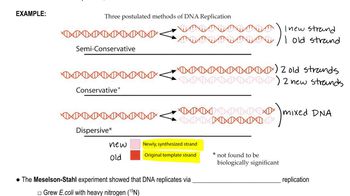
What is the experimental basis for concluding that DNA replicates semiconservatively in both bacteria and eukaryotes?

567
views
교과서 질문

In the discussion, we focused on how DNA is replicated and synthesized. We also discussed recombination at the DNA level. Along the way, we encountered many opportunities to consider how this information was acquired. On the basis of these discussions, what answers would you propose to the following fundamental questions?

How do we know that in vivo DNA synthesis occurs in the 5' to 3' direction?

660
views
교과서 질문

In the discussion, we focused on how DNA is replicated and synthesized. We also discussed recombination at the DNA level. Along the way, we encountered many opportunities to consider how this information was acquired. On the basis of these discussions, what answers would you propose to the following fundamental questions?

What observations reveal that a 'telomere problem' exists during eukaryotic DNA replication, and how did we learn of the solution to this problem?

558
views
교과서 질문

In the discussion, we focused on how DNA is replicated and synthesized. We also discussed recombination at the DNA level. Along the way, we encountered many opportunities to consider how this information was acquired. On the basis of these discussions, what answers would you propose to the following fundamental questions?

How do we know that DNA synthesis is discontinuous on one of the two template strands?

528
views