Ch. 13 - The Genetic Code and Transcription
Klug - Concepts of Genetics 12th Edition
Klug12th EditionConcepts of GeneticsISBN: 9780135564776당신이 사용하는 게 아니라요?교과서 변경
13장, 문제 23

One form of posttranscriptional modification of most eukaryotic pre-mRNAs is the addition of a poly-A sequence at the 3' end. The absence of a poly-A sequence leads to rapid degradation of the transcript. Poly-A sequences of various lengths are also added to many bacterial RNA transcripts where, instead of promoting stability, they enhance degradation. In both cases, RNA secondary structures, stabilizing proteins, or degrading enzymes interact with poly-A sequences. Considering the activities of RNAs, what might be general functions of 3'-polyadenylation?

검증된 단계별 안내
1
Step 1: Understand the context of 3'-polyadenylation by recognizing that it is a posttranscriptional modification where a sequence of adenine nucleotides (poly-A tail) is added to the 3' end of an RNA molecule.
Step 2: Note the contrasting roles of poly-A tails in eukaryotes and bacteria: in eukaryotes, the poly-A tail generally increases mRNA stability and aids in translation, while in bacteria, polyadenylation often marks RNA for degradation.
Step 3: Consider the molecular interactions involved, such as how RNA secondary structures, stabilizing proteins, or degrading enzymes bind to the poly-A tail, influencing the RNA's fate.
Step 4: Analyze how the poly-A tail can protect eukaryotic mRNA from rapid degradation by preventing exonuclease access and facilitating nuclear export and translation initiation.
Step 5: Contrast this with bacterial RNA, where polyadenylation can serve as a signal for degradation by recruiting enzymes that break down RNA, thus regulating RNA turnover.

비슷한 문제에 대한 검증된 영상 답변:

이 영상 해법은 위 문제에 도움이 된다고 튜터들이 추천한 것입니다.
영상 길이:
2m
도움이 되었나요?

주요 개념

질문에 올바르게 답하기 위해 반드시 이해해야 하는 핵심 개념들은 다음과 같습니다.

Posttranscriptional Modification and Polyadenylation

Posttranscriptional modification refers to changes made to RNA transcripts after synthesis. One common modification in eukaryotes is the addition of a poly-A tail at the 3' end, which protects mRNA from degradation and aids in nuclear export and translation. This modification is crucial for mRNA stability and function.
추천 영상:
가이드 코스
04:30
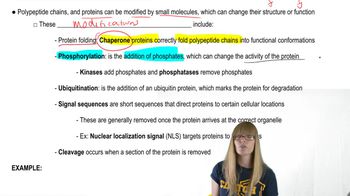
Post Translational Modifications

Differences in Polyadenylation between Eukaryotes and Prokaryotes

In eukaryotes, polyadenylation generally stabilizes mRNA, enhancing its lifespan and translation efficiency. In contrast, many bacterial RNAs receive poly-A tails that signal for degradation, marking transcripts for rapid breakdown. This highlights how the same modification can have opposite effects depending on the organism.
추천 영상:
가이드 코스
10:14
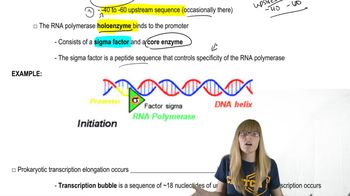
Prokaryotic Transcription

Role of RNA Secondary Structures and Protein Interactions

RNA secondary structures and associated proteins influence the fate of polyadenylated transcripts. Stabilizing proteins can bind poly-A tails to protect RNA, while degrading enzymes recognize these tails to initiate decay. These interactions determine whether polyadenylation leads to RNA stability or degradation.
추천 영상: