Ch. 13 - The Genetic Code and Transcription
Klug - Concepts of Genetics 12th Edition
Klug12th EditionConcepts of GeneticsISBN: 9780135564776당신이 사용하는 게 아니라요?교과서 변경
13장, 문제 32b

Recent observations indicate that alternative splicing is a common way for eukaryotes to expand their repertoire of gene functions. Studies indicate that approximately 50 percent of human genes exhibit alternative splicing and approximately 15 percent of disease-causing mutations involve aberrant alternative splicing. Different tissues show remarkably different frequencies of alternative splicing, with the brain accounting for approximately 18 percent of such events [Xu et al. (2002). Nucl. Acids Res. 30:3754–3766].
Why might some tissues engage in more alternative splicing than others?

검증된 단계별 안내
1
Understand that alternative splicing allows a single gene to produce multiple mRNA variants, leading to different protein isoforms with potentially diverse functions.
Recognize that tissues with complex functions, such as the brain, require a greater diversity of proteins to support specialized cellular activities and signaling pathways.
Consider that the regulation of alternative splicing is controlled by tissue-specific expression of splicing factors and regulatory proteins, which can vary widely between tissues.
Acknowledge that tissues with higher cellular complexity or functional demands may have evolved mechanisms to increase proteomic diversity through more frequent alternative splicing events.
Summarize that the variation in alternative splicing frequency among tissues reflects their differing biological roles and the need for tailored protein functions to meet those roles.

비슷한 문제에 대한 검증된 영상 답변:

이 영상 해법은 위 문제에 도움이 된다고 튜터들이 추천한 것입니다.
영상 길이:
1m
도움이 되었나요?

주요 개념

질문에 올바르게 답하기 위해 반드시 이해해야 하는 핵심 개념들은 다음과 같습니다.

Alternative Splicing Mechanism

Alternative splicing is a process during gene expression where a single pre-mRNA transcript can be spliced in multiple ways to produce different mature mRNA variants. This allows one gene to encode multiple protein isoforms, increasing proteomic diversity without increasing gene number.
추천 영상:
가이드 코스
01:57
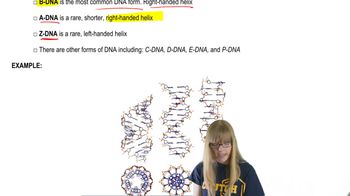
Alternative DNA Forms

Tissue-Specific Gene Expression

Different tissues express unique sets of splicing factors and regulatory proteins that influence how pre-mRNA is spliced. This tissue-specific regulation leads to variations in alternative splicing patterns, enabling cells to produce proteins tailored to their functional needs.
추천 영상:
가이드 코스
02:09
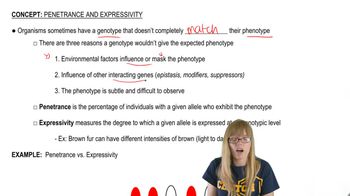
Penetrance and Expressivity

Functional Complexity and Cellular Demand

Tissues with complex functions, like the brain, require a diverse array of proteins to support specialized activities such as signaling and plasticity. Higher rates of alternative splicing in these tissues provide the necessary protein diversity to meet these complex physiological demands.
추천 영상:
가이드 코스
08:26
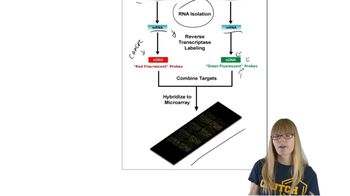
Functional Genomics
관련 실천
교과서 질문

M. Klemke et al. (2001) discovered an interesting coding phenomenon in which an exon within a neurologic hormone receptor gene in mammals appears to produce two different protein entities (and ALEX). The following is the DNA sequence of the exon's end derived from a rat.

 5'-gtcccaaccatgcccaccgatcttccgcctgcttctgaagATGCGGGCCCAG

The lowercase letters represent the initial coding portion for the protein, and the uppercase letters indicate the portion where the ALEX entity is initiated. (For simplicity, and to correspond with the RNA coding dictionary, it is customary to represent the coding (non-template) strand of the DNA segment.)

Locate the initiator codon within the ALEX segment. Are the two initiator codons in frame?

579
views
교과서 질문

M. Klemke et al. (2001) discovered an interesting coding phenomenon in which an exon within a neurologic hormone receptor gene in mammals appears to produce two different protein entities (and ALEX). The following is the DNA sequence of the exon's end derived from a rat.

 5'-gtcccaaccatgcccaccgatcttccgcctgcttctgaagATGCGGGCCCAG

The lowercase letters represent the initial coding portion for the protein, and the uppercase letters indicate the portion where the ALEX entity is initiated. (For simplicity, and to correspond with the RNA coding dictionary, it is customary to represent the coding (non-template) strand of the DNA segment.)

Provide the amino acid sequence for each coding sequence. In the region of overlap, are the two amino acid sequences the same?

503
views
교과서 질문

Isoginkgetin is a cell-permeable chemical isolated from the Ginkgo biloba tree that binds to and inhibits snRNPs.

Would this be most problematic for E. coli cells, yeast cells, or human cells? Why?

569
views
교과서 질문

Isoginkgetin is a cell-permeable chemical isolated from the Ginkgo biloba tree that binds to and inhibits snRNPs.

What types of problems would you anticipate in cells treated with isoginkgetin?

599
views
교과서 질문

M. Klemke et al. (2001) discovered an interesting coding phenomenon in which an exon within a neurologic hormone receptor gene in mammals appears to produce two different protein entities (and ALEX). The following is the DNA sequence of the exon's end derived from a rat.

 5'-gtcccaaccatgcccaccgatcttccgcctgcttctgaagATGCGGGCCCAG

The lowercase letters represent the initial coding portion for the protein, and the uppercase letters indicate the portion where the ALEX entity is initiated. (For simplicity, and to correspond with the RNA coding dictionary, it is customary to represent the coding (non-template) strand of the DNA segment.)

Are there any evolutionary advantages to having the same DNA sequence code for two protein products? Are there any disadvantages?

611
views