
The flow of genetic information from DNA to protein is mediated by messenger RNA. If you introduce short DNA strands (called antisense oligonucleotides) that are complementary to mRNAs, hydrogen bonding may occur and 'label' the DNA/RNA hybrid for ribonuclease-H degradation of the RNA. One study [Lloyd et al. (2001). Nucl. Acids Res. 29:3664–3673] compared the effect of different-length antisense oligonucleotides upon ribonuclease-H–mediated degradation of tumor necrosis factor (TNFα) mRNA. TNFα exhibits antitumor and pro-inflammatory activities. The following graph indicates the efficacy of various-sized antisense oligonucleotides in causing ribonuclease-H cleavage. Describe how antisense oligonucleotides interrupt the flow of genetic information in a cell.

- Ch. 1 - Introduction to Genetics17
- Ch. 2 - Mitosis and Meiosis36
- Ch. 3 - Mendelian Genetics51
- Ch. 4 - Extensions of Mendelian Genetics74
- Ch. 5 - Chromosome Mapping in Eukaryotes51
- Ch. 6 - Genetic Analysis and Mapping in Bacteria and Bacteriophages46
- Ch. 7 - Sex Determination and Sex Chromosomes33
- Ch. 8 - Chromosome Mutations: Variation in Number and Arrangement40
- Ch. 9 - Extranuclear Inheritance31
- Ch. 10 - DNA Structure and Analysis43
- Ch. 11 - DNA Replication and Recombination44
- Ch. 12 - DNA Organization in Chromosomes30
- Ch. 13 - The Genetic Code and Transcription54
- Ch. 14 - Translation and Proteins47
- Ch. 15 - Gene Mutation, DNA Repair, and Transposition41
- Ch. 16 - Regulation of Gene Expression in Bacteria29
- Ch. 17 - Transcriptional Regulation in Eukaryotes41
- Ch. 18 - Post-transcriptional Regulation in Eukaryotes33
- Ch. 19 - Epigenetics33
- Ch. 20 - Recombinant DNA Technology44
- Ch. 21 - Genomic Analysis36
- Ch. 22 - Applications of Genetic Engineering and Biotechnology36
- Ch. 23 - Developmental Genetics37
- Ch. 24 - Cancer Genetics34
- Ch. 25 - Quantitative Genetics and Multifactorial Traits54
- Ch. 26 - Population and Evolutionary Genetics45
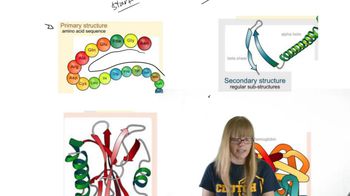
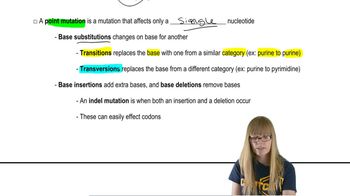
Infantile cardiomyopathy is a devastating disorder that is fatal during the first year of life due to defects in the function of heart muscles resulting from mitochondrial dysfunction. A study, performed by Götz et al. [(2011). Am. J. Hum. Genet. 88:635–642), identified two different causative mutations in the gene for mitochondrial alanyl-tRNA synthetase (mtAlaRS). One mutation changes a leucine residue at amino acid position 155 to arginine (p.Leu155Arg). The other mutation changes arginine at position 592 to tryptophan (p.Arg592Trp). The mtAlaRS enzyme has an N-terminal domain (amino acids 36–481) that catalyzes tRNA aminoacylation and an internal editing domain (amino acids 484–782) that catalyzes deacylation in the case that the tRNA is charged with the wrong amino acid.
Consider the position of the disease causing missense mutations in the mtAlaRS gene in the context of the known protein domains of this enzyme. What predictions can you make about how these mutations impair protein synthesis within mitochondria in different ways?
 검증된 단계별 안내
비슷한 문제에 대한 검증된 영상 답변:

주요 개념
Mitochondrial Function and Protein Synthesis
 05:05
05:05
Missense Mutations
 09:49
09:49Protein Domains and Functionality
05:05The flow of genetic information from DNA to protein is mediated by messenger RNA. If you introduce short DNA strands (called antisense oligonucleotides) that are complementary to mRNAs, hydrogen bonding may occur and 'label' the DNA/RNA hybrid for ribonuclease-H degradation of the RNA. One study [Lloyd et al. (2001). Nucl. Acids Res. 29:3664–3673] compared the effect of different-length antisense oligonucleotides upon ribonuclease-H–mediated degradation of tumor necrosis factor (TNFα) mRNA. TNFα exhibits antitumor and pro-inflammatory activities. The following graph indicates the efficacy of various-sized antisense oligonucleotides in causing ribonuclease-H cleavage. What factors other than oligonucleotide length are likely to influence antisense efficacy in vivo?
The flow of genetic information from DNA to protein is mediated by messenger RNA. If you introduce short DNA strands (called antisense oligonucleotides) that are complementary to mRNAs, hydrogen bonding may occur and 'label' the DNA/RNA hybrid for ribonuclease-H degradation of the RNA. One study [Lloyd et al. (2001). Nucl. Acids Res. 29:3664–3673] compared the effect of different-length antisense oligonucleotides upon ribonuclease-H–mediated degradation of tumor necrosis factor (TNFα) mRNA. TNFα exhibits antitumor and pro-inflammatory activities. The following graph indicates the efficacy of various-sized antisense oligonucleotides in causing ribonuclease-H cleavage. What general conclusion can be drawn from the graph?
Infantile cardiomyopathy is a devastating disorder that is fatal during the first year of life due to defects in the function of heart muscles resulting from mitochondrial dysfunction. A study, performed by Götz et al. [(2011). Am. J. Hum. Genet. 88:635–642), identified two different causative mutations in the gene for mitochondrial alanyl-tRNA synthetase (mtAlaRS). One mutation changes a leucine residue at amino acid position 155 to arginine (p.Leu155Arg). The other mutation changes arginine at position 592 to tryptophan (p.Arg592Trp). The mtAlaRS enzyme has an N-terminal domain (amino acids 36–481) that catalyzes tRNA aminoacylation and an internal editing domain (amino acids 484–782) that catalyzes deacylation in the case that the tRNA is charged with the wrong amino acid.
Which mutation would you predict has a more severe impairment of translation in mitochondria, and why?