Ch. 20 - Recombinant DNA Technology
Klug - Concepts of Genetics 12th Edition
Klug12th EditionConcepts of GeneticsISBN: 9780135564776당신이 사용하는 게 아니라요?교과서 변경
20장, 문제 4

The human insulin gene contains a number of sequences that are removed in the processing of the mRNA transcript. In spite of the fact that bacterial cells cannot excise these sequences from mRNA transcripts, explain how a gene like this can be cloned into a bacterial cell and produce insulin.

검증된 단계별 안내
1
Understand that the human insulin gene contains introns, which are non-coding sequences removed during mRNA processing in eukaryotic cells but not in bacteria, as bacteria lack the machinery to splice out introns.
Recognize that to express the insulin gene in bacteria, the gene must be in a form that bacteria can read directly, meaning it should not contain introns.
Use the mature mRNA transcript of the insulin gene, which has already had the introns removed, as a template to synthesize complementary DNA (cDNA) using the enzyme reverse transcriptase.
Clone this cDNA, which represents the intron-free coding sequence of the insulin gene, into a bacterial plasmid vector that contains the necessary regulatory sequences for bacterial expression.
Transform the recombinant plasmid into bacterial cells, which can then transcribe and translate the cDNA to produce functional insulin protein, since the bacterial machinery can now read the intron-free sequence.

비슷한 문제에 대한 검증된 영상 답변:

이 영상 해법은 위 문제에 도움이 된다고 튜터들이 추천한 것입니다.
영상 길이:
1m
도움이 되었나요?

주요 개념

질문에 올바르게 답하기 위해 반드시 이해해야 하는 핵심 개념들은 다음과 같습니다.

Gene Structure: Exons and Introns

Eukaryotic genes often contain exons (coding regions) and introns (non-coding regions). During mRNA processing, introns are removed through splicing to produce a mature mRNA that can be translated into protein. Bacteria lack the machinery to remove introns, so direct expression of eukaryotic genes with introns in bacteria is problematic.
추천 영상:
가이드 코스
03:49
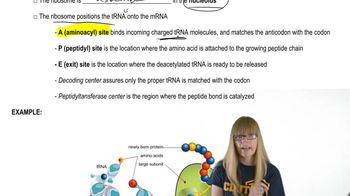
Ribosome Structure

cDNA and Reverse Transcription

Complementary DNA (cDNA) is synthesized from mature mRNA using reverse transcriptase. cDNA contains only exons, lacking introns, making it suitable for cloning into bacterial cells. Using cDNA ensures that bacteria can transcribe and translate the gene correctly to produce functional protein.
추천 영상:
가이드 코스
09:16
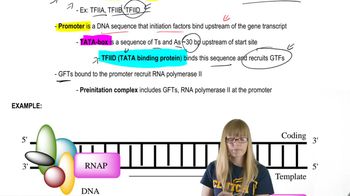
Eukaryotic Transcription

Recombinant DNA Technology and Cloning in Bacteria

Recombinant DNA technology allows insertion of cDNA into bacterial plasmids, which are then introduced into bacterial cells. Bacteria can transcribe and translate the inserted cDNA to produce the desired protein, such as insulin, despite lacking splicing mechanisms. This method enables production of eukaryotic proteins in prokaryotic hosts.
추천 영상:
가이드 코스
07:39
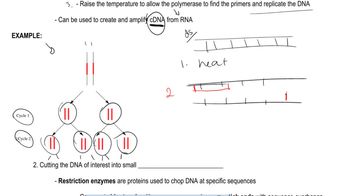
Genetic Cloning