Ch. 21 - Genomic Analysis
Klug - Concepts of Genetics  12th Edition
Klug12th EditionConcepts of Genetics ISBN: 9780135564776당신이 사용하는 게 아니라요?교과서 변경
21장, 문제 19

Annotation of the human genome sequence reveals a discrepancy between the number of protein-coding genes and the number of predicted proteins actually expressed by the genome. Proteomic analysis indicates that human cells are capable of synthesizing more than 100,000 different proteins and perhaps three times this number. What is the discrepancy, and how can it be reconciled?

검증된 단계별 안내
1
Step 1: Understand the discrepancy by recognizing that the human genome contains approximately 20,000-25,000 protein-coding genes, but proteomic analyses detect over 100,000 different proteins, indicating more proteins than genes.
Step 2: Explore the concept of alternative splicing, where a single gene can produce multiple mRNA variants by including or excluding certain exons, leading to different protein isoforms from the same gene.
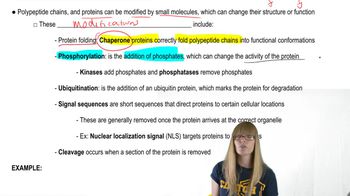
Step 3: Consider post-translational modifications (PTMs), such as phosphorylation, glycosylation, and ubiquitination, which chemically modify proteins after translation and increase protein diversity without changes in the gene sequence.
Step 4: Recognize other mechanisms contributing to protein diversity, including RNA editing, use of alternative promoters, and alternative translation start sites, all of which can generate multiple protein products from a single gene.
Step 5: Conclude that the discrepancy arises because the number of protein-coding genes does not directly equate to the number of distinct proteins expressed; instead, multiple molecular processes expand the proteome complexity beyond the gene count.

비슷한 문제에 대한 검증된 영상 답변:

이 영상 해법은 위 문제에 도움이 된다고 튜터들이 추천한 것입니다.
영상 길이:
2m
도움이 되었나요?

주요 개념

질문에 올바르게 답하기 위해 반드시 이해해야 하는 핵심 개념들은 다음과 같습니다.

Gene Number vs. Protein Diversity

The human genome contains approximately 20,000 protein-coding genes, but the number of distinct proteins expressed is much higher. This discrepancy arises because a single gene can give rise to multiple protein products, meaning gene count alone does not directly reflect protein diversity.
추천 영상:

Alternative Splicing

Alternative splicing is a process where different combinations of exons are joined from a single pre-mRNA transcript, producing multiple mRNA variants. This mechanism allows one gene to encode several distinct proteins, significantly increasing proteomic complexity beyond the gene count.
추천 영상:
가이드 코스
01:57
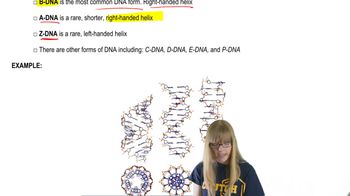
Alternative DNA Forms

Post-Translational Modifications

After translation, proteins can undergo chemical modifications such as phosphorylation, glycosylation, or ubiquitination. These post-translational modifications alter protein function and structure, further expanding the diversity of proteins derived from the genome.
추천 영상:
가이드 코스
04:30
Post Translational Modifications