
교과서 질문
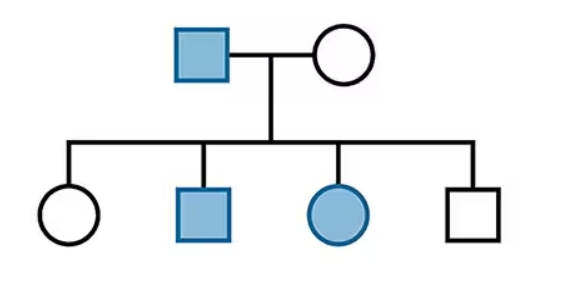
Draw all possible conclusions concerning the mode of inheritance of the trait portrayed in the following limited pedigree.
614
views

 검증된 단계별 안내
 01:59
01:59
 05:13
05:13 09:08
09:08Draw all possible conclusions concerning the mode of inheritance of the trait portrayed in the following limited pedigree.
In assessing data that fell into two phenotypic classes, a geneticist observed values of 250:150. She decided to perform a ² analysis by using the following two different null hypotheses:
(a) the data fit a 3:1 ratio, and
(b) the data fit a 1:1 ratio.
Calculate the ² values for each hypothesis. What can be concluded about each hypothesis?
Draw all possible conclusions concerning the mode of inheritance of the trait portrayed in the following limited pedigree.
Draw all possible conclusions concerning the mode of inheritance of the trait portrayed in the following limited pedigree.
The basis for rejecting any null hypothesis is arbitrary. The researcher can set more or less stringent standards by deciding to raise or lower the p value used to reject or not reject the hypothesis. In the case of the chi-square analysis of genetic crosses, would the use of a standard of p = 0.10 be more or less stringent about not rejecting the null hypothesis? Explain.
Consider the following pedigree.
Predict the mode of inheritance of the trait of interest and the most probable genotype of each individual. Assume that the alleles A and a control the expression.