Ch. 9 - Extranuclear Inheritance
Klug - Concepts of Genetics  12th Edition
Klug12th EditionConcepts of Genetics ISBN: 9780135564776당신이 사용하는 게 아니라요?교과서 변경
9장, 문제 11

Consider the case where a mutation occurs that disrupts translation in a single human mitochondrion found in the oocyte participating in fertilization. What is the likely impact of this mutation on the offspring arising from this oocyte?

검증된 단계별 안내
1
Understand that mitochondria are inherited maternally, meaning that all mitochondria in the offspring are derived from the oocyte provided by the mother during fertilization.
Recognize that a mutation disrupting translation in a single mitochondrion could impair its ability to produce proteins essential for mitochondrial function, such as those involved in oxidative phosphorylation.
Consider that the oocyte contains thousands of mitochondria, so the impact of a single mutated mitochondrion depends on whether the mutation is propagated to other mitochondria during cell division and development.
Evaluate the concept of heteroplasmy, where a mixture of normal and mutated mitochondria exists in a cell. If the proportion of mutated mitochondria is low, the impact on the offspring may be minimal. However, if the mutation spreads or dominates, it could lead to mitochondrial dysfunction and associated diseases.
Conclude that the severity of the impact on the offspring depends on the extent of the mutation's propagation and the functional threshold of mitochondria required for normal cellular energy production.

비슷한 문제에 대한 검증된 영상 답변:

이 영상 해법은 위 문제에 도움이 된다고 튜터들이 추천한 것입니다.
영상 길이:
1m
도움이 되었나요?

주요 개념

질문에 올바르게 답하기 위해 반드시 이해해야 하는 핵심 개념들은 다음과 같습니다.

Mitochondrial Inheritance

Mitochondrial inheritance refers to the transmission of genetic material found in mitochondria, which is passed exclusively from mother to offspring. Since mitochondria are inherited through the oocyte, any mutations in mitochondrial DNA can affect all offspring, leading to potential mitochondrial diseases or dysfunctions in energy production.
추천 영상:
가이드 코스
05:13
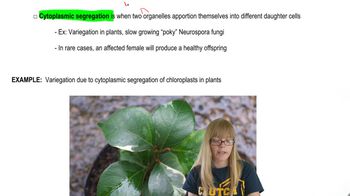
Organelle Inheritance

Translation Process

Translation is the process by which ribosomes synthesize proteins using messenger RNA (mRNA) as a template. Disruption in translation can lead to the production of nonfunctional or absent proteins, which are crucial for cellular functions, particularly in energy metabolism within mitochondria.
추천 영상:
가이드 코스
08:39
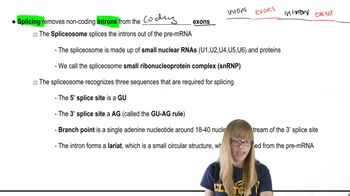
mRNA Processing

Impact of Mutations on Offspring

Mutations can have varying impacts on offspring, depending on their nature and location. In this case, a mutation disrupting translation in mitochondria could lead to reduced ATP production, affecting cellular energy levels and potentially resulting in developmental issues or metabolic disorders in the offspring.
추천 영상:
가이드 코스
09:49
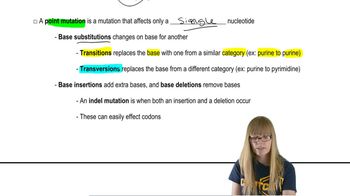
Point Mutations
관련 실천
교과서 질문

What is the endosymbiotic theory, and why is this theory relevant to the study of extranuclear DNA in eukaryotic organelles?

775
views
교과서 질문

In Drosophila subobscura, the presence of a recessive gene called grandchildless (gs) causes the offspring of homozygous females, but not those of homozygous males, to be sterile. Can you offer an explanation as to why females and not males are affected by the mutant gene?

450
views
교과서 질문

A male mouse from a true-breeding strain of hyperactive animals is crossed with a female mouse from a true-breeding strain of lethargic animals. (These are both hypothetical strains.) All the progeny are lethargic. In the F₂ generation, all offspring are lethargic. What is the best genetic explanation for these observations? Propose a cross to test your explanation.

462
views
교과서 질문

Earlier, we described CC, the cat created by nuclear transfer cloning, whereby a diploid nucleus from one cell is injected into an enucleated egg cell to create an embryo. Cattle, sheep, rats, dogs, and several other species have been cloned using nuclei from somatic cells. Embryos and adults produced by this approach often show a number of different mitochondrial defects. Explain possible reasons for the prevalence of mitochondrial defects in embryos created by nuclear transfer cloning.

462
views
교과서 질문

Mitochondrial replacement therapy (MRT) offers a potential solution for women with mtDNA-based diseases to have healthy children. Based on what you know about the importance of nuclear gene products to mitochondrial functions, will MRT ensure that children will not inherit or develop a mtDNA-based diseases?

536
views
교과서 질문

In a cross of Lymnaea, the snail contributing the eggs was dextral but of unknown genotype. Both the genotype and the phenotype of the other snail are unknown. All F₁ offspring exhibited dextral coiling. Ten of the F₁ snails were allowed to undergo self-fertilization. One-half produced only dextrally coiled offspring, whereas the other half produced only sinistrally coiled offspring. What were the genotypes of the original parents?

535
views