Skip to main content
GOB Chemistry
나의 코스
배우기
시험 준비
AI 튜터
학습 가이드
교과서적 해결책
플래시카드
탐험해 보세요
앱을 사용해 보세요
나의 코스
배우기
시험 준비
AI 튜터
학습 가이드
교과서적 해결책
플래시카드
탐험해 보세요
앱을 사용해 보세요
뒤로
Bonding Preferences definitions
카드를 뒤집기 위해 탭할 수 있습니다.
Bonding Preferences
카드를 뒤집기 위해 탭할 수 있습니다.
👆
Bonding Preferences
Tendency of elements to form a specific number of bonds based on group number or electrons needed for stability.
진행 상황 추적
컨트롤 버튼이 '내비게이션' 모드로 변경되었습니다.
1/13
관련 플래시카드
관련 실천
추천 영상
Bonding Preferences quiz
Bonding Preferences
15 용어
Bonding Preferences
4. Molecular Compounds
3 문제점
주제
Jules
Lewis Dot Structures: Neutral Compounds (Simplified)
4. Molecular Compounds
6 문제점
주제
Jules
4. Molecular Compounds - Part 1 of 3
8 주제
13 문제점
장
Jules
4. Molecular Compounds - Part 2 of 3
8 주제
14 문제점
장
Jules
4. Molecular Compounds - Part 3 of 3
1 주제
2 문제점
장
VideoThumbView.guidedCourse
03:16
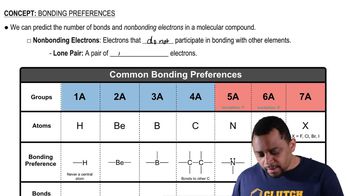
Bonding Preferences Concept 1
4661
views
25
rank
VideoThumbView.guidedCourse
00:56
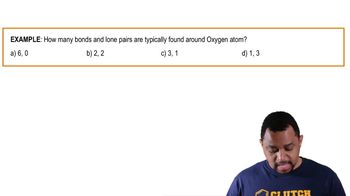
Bonding Preferences Example 1
4321
views
21
rank
이 집합의 용어 (13)
하이드의 정의
Bonding Preferences
Tendency of elements to form a specific number of bonds based on group number or electrons needed for stability.
Group Number
Numerical label for columns in the periodic table, indicating valence electron count for main group elements.
Valence Electrons
Electrons in the outermost shell that determine an element’s chemical bonding behavior.
Octet Rule
Guideline stating atoms tend to achieve eight electrons in their valence shell for stability.
Lone Pair
Pair of nonbonding electrons localized on an atom, not shared with other atoms.
Halogen
Element from group 7a, such as fluorine or chlorine, typically forming one bond and possessing three lone pairs.
Molecular Compound
Substance composed of two or more nonmetals bonded together, often following specific bonding preferences.
Nonbonding Electrons
Electrons not involved in forming chemical bonds, often found as lone pairs.
Central Atom
Atom located at the center of a molecular structure, never occupied by hydrogen.
Stable Electron Configuration
Arrangement of electrons that provides maximum stability, often achieved by following the octet rule.
Surrounding Element
Atom bonded to the central atom in a molecule, such as halogens or hydrogen.
Representative Element
Element from groups 1a to 7a, exhibiting predictable bonding patterns based on group number.
Variable X
Symbol used to represent any halogen element in chemical formulas or diagrams.
 뒤로뒤로
뒤로뒤로
 03:16
03:16