 뒤로
뒤로Fundamental Concepts in Chemistry: Measurements, Matter, and Atomic Structure
스터디 가이드 - 스마트 노트
 자료에 맞춘 맞춤형 노트, 핵심 정의, 예시, 맥락을 확장해 제공합니다.
Chemistry and Measurements
Scientific Notation
Scientific notation is a method used to express very large or very small numbers in a compact form. It is commonly used in chemistry to handle measurements that span many orders of magnitude.
Format: Numbers are written as X.YZ × 10N, where X.YZ is a number with only one nonzero digit to the left of the decimal point, and N is an integer.
Conversion Steps:
Start at the decimal point.
Move the decimal to create a number with one digit to its left.
Count the number of places moved (N).
If moved left, exponent is positive (10+N); if right, exponent is negative (10-N).
Examples:
National Debt: $31,500,000,000,000 = 3.15 × 10¹³
Size of a cell: 0.00000008 m = 8.0 × 10⁻⁸ m
110,000 = 1.1 × 10⁵
4.56 × 10⁻⁵ m = 0.0000456 m
Measurement Units and SI System
Chemistry relies on standardized units for accurate measurement and communication. The International System of Units (SI) is the global standard.
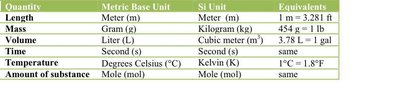
Base Units: The metric system uses base units for length (meter), mass (gram), volume (liter), time (second), temperature (Celsius), and amount of substance (mole).
SI Units: The SI system uses meter (m), kilogram (kg), cubic meter (m3), second (s), kelvin (K), and mole (mol).
Common Equivalents: For example, 1 m = 3.281 ft, 1 L = 1.057 qt, 1 kg = 2.205 lb.
SI Prefixes
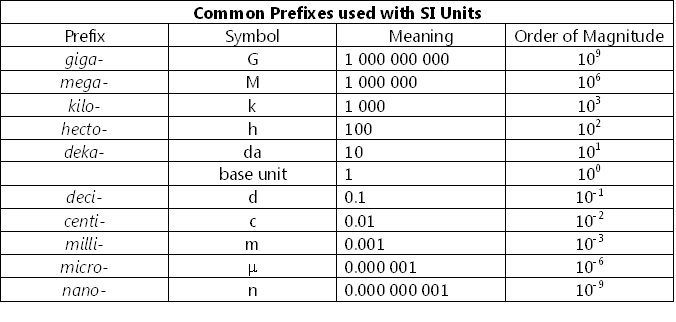
Prefixes are used to indicate multiples or fractions of base units, making it easier to express very large or small quantities.
Prefix | Symbol | Meaning | Order of Magnitude |
|---|---|---|---|
giga- | G | 1,000,000,000 | 109 |
mega- | M | 1,000,000 | 106 |
kilo- | k | 1,000 | 103 |
hecto- | h | 100 | 102 |
deka- | da | 10 | 101 |
base unit | - | 1 | 100 |
deci- | d | 0.1 | 10-1 |
centi- | c | 0.01 | 10-2 |
milli- | m | 0.001 | 10-3 |
micro- | μ | 0.000001 | 10-6 |
nano- | n | 0.000000001 | 10-9 |
Length Scale in Biology
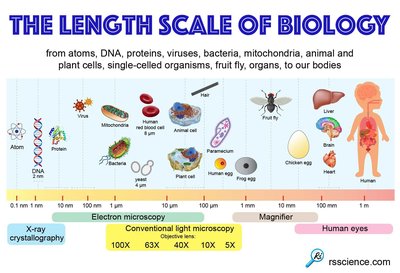
Understanding the scale of measurement is crucial in chemistry and biology, as it allows us to compare the sizes of atoms, molecules, cells, and organisms.
Examples: Atoms and DNA are measured in nanometers (nm), while cells and organelles are measured in micrometers (μm).
Applications: Different instruments are used to observe objects at various scales, such as X-ray crystallography for atoms and electron microscopy for viruses and organelles.
Conversion Factors and Dimensional Analysis
Conversion factors are ratios used to convert one unit to another. Dimensional analysis is the systematic approach to solving problems using conversion factors.
Common Conversions: 1 m = 100 cm, 1 cm = 10 mm, 1 L = 1000 mL, 1 g = 1000 mg, 1 g = 0.001 kg.
Medical Applications: Blood glucose is measured in mg/dL; syringes use mL or cc (1 mL = 1 cm3).
Applied Measurement in Medicine
Dosage calculations and unit conversions are essential in healthcare settings.
Example: Children's acetaminophen contains 160 mg per 5 mL. Maximum dosage for a child (6-12 years) is 1.625 g/day for up to 5 days.
Practice: Calculate the maximum mL of solution per day using conversion factors.

Matter and Energy
Density and Specific Gravity
Density is a physical property defined as mass per unit volume. It is used to identify substances and assess purity.
Formula:
Units: g/mL or g/cm3 (1 cm3 = 1 mL)
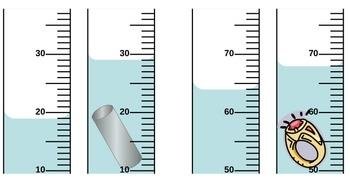
Example: Water has a density of 1 g/mL; gold has a density of 19.32 g/mL.
Floating Objects: An object floats if it displaces a volume of water that weighs more than the object itself.

Specific Gravity
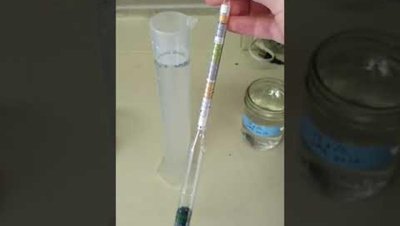
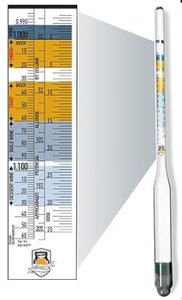
Specific gravity is the ratio of the density of a substance to the density of water (1 g/mL at 4°C). It is dimensionless and commonly used for liquids.
Applications: Used to measure salt content in water, ethanol concentration in beverages, and to check saline solutions in medical settings.
Medical Example: Isotonic saline solution (0.9% NaCl) has a density of 1.0046 g/mL.
Energy: Kinetic, Potential, and Heat
Energy is the capacity to do work or produce heat. In chemistry, energy is classified as kinetic (motion) or potential (stored).
Kinetic Energy: Energy of motion (e.g., moving molecules).
Potential Energy: Stored energy due to position or chemical bonds.
Heat: Thermal energy transferred due to temperature difference.
Units: 1 calorie (cal) = energy to raise 1 g of water by 1°C; 1 Joule (J) = 4.184 cal; 1 food Calorie (kcal) = 1000 cal.
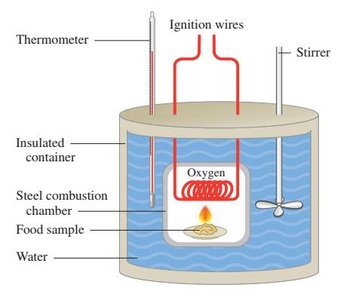
Food Energy: Determined by combusting food in oxygen and measuring heat released.
Specific Heat
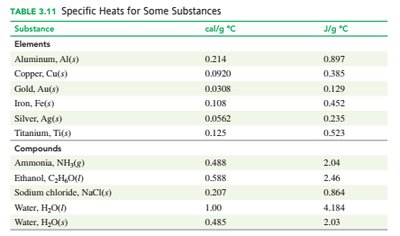
Specific heat is the amount of heat required to raise the temperature of 1 g of a substance by 1°C.
Formula: where q = heat (cal or J), m = mass (g), c = specific heat, ΔT = temperature change (°C)
Units: cal/g°C or J/g°C
Endothermic Process: Heat is absorbed (temperature increases).
Exothermic Process: Heat is released (temperature decreases).
Matter and Its Changes
Changes of State
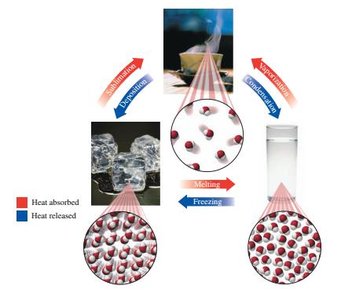
Matter can change between solid, liquid, and gas states through physical processes involving energy changes.
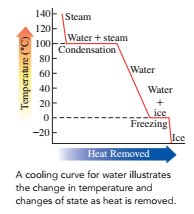
Melting: Solid to liquid at the melting point; heat of fusion is the energy required to melt 1 g of solid (for ice, 80 cal/g).
Freezing: Liquid to solid at the same temperature as melting.
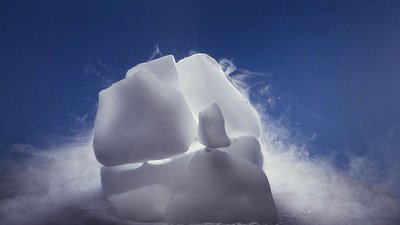
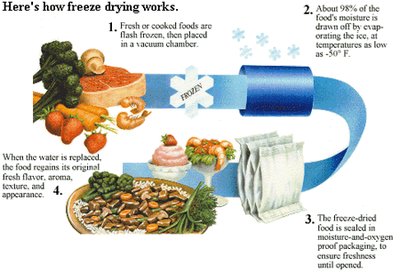
Sublimation: Solid to gas without becoming liquid (e.g., dry ice).
Deposition: Gas to solid without becoming liquid.
Evaporation, Boiling, and Condensation
Liquids can become gases through evaporation or boiling, and gases can become liquids through condensation.
Boiling Point: Temperature at which a liquid becomes a gas.
Heat of Vaporization: Energy required to convert 1 g of liquid to gas (for water, 540 cal/g).
Condensation: Gas to liquid; heat is released.
Heating and Cooling Curves
Heating and cooling curves show how temperature changes as heat is added or removed, including phase changes where temperature remains constant.
Heating Curve: Shows temperature increase and plateaus during melting and boiling.
Cooling Curve: Shows temperature decrease and plateaus during freezing and condensation.
Atoms and Elements
Classification of Elements
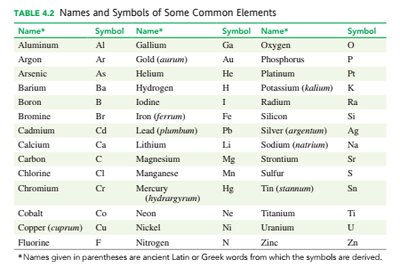
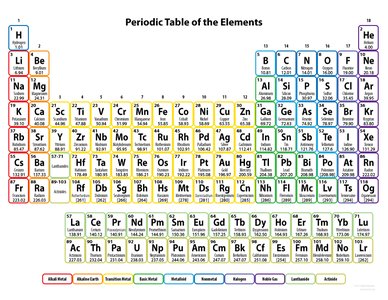
Elements are classified based on their properties and position in the periodic table.
Alkali Metals: Group 1 elements, highly reactive.
Alkaline Earth Metals: Group 2 elements, reactive but less so than alkali metals.
Transition Metals: Groups 3-12, variable properties, often form colored compounds.
Main Group Elements: Groups 1, 2, and 13-18, include metals, nonmetals, and metalloids.
Halogens: Group 17, very reactive nonmetals.
Noble Gases: Group 18, inert gases.
Metals, Nonmetals, and Metalloids
Elements are further classified by their physical and chemical properties.
Metals: Good conductors of heat and electricity, malleable, ductile, shiny.
Nonmetals: Poor conductors, brittle, dull.
Metalloids: Properties intermediate between metals and nonmetals; semiconductors.
Atomic Structure and Symbolism
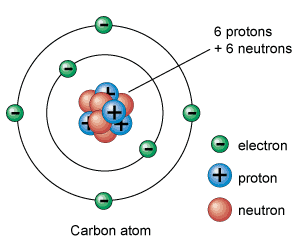
Atoms consist of a nucleus (protons and neutrons) and electrons in orbitals. The nucleus contains most of the mass, while electrons occupy most of the volume.
Atomic Number (Z): Number of protons in the nucleus; determines the element.
Mass Number (A): Total number of protons and neutrons.
Diameter: Atom ~10-10 m; nucleus ~10-15 m.
Depicting the Atom
Atoms are often represented with a central nucleus and electrons in surrounding shells. The arrangement of electrons determines chemical behavior.
Example: Carbon atom has 6 protons, 6 neutrons, and 6 electrons.
