 뒤로
뒤로GOB Chemistry: Measurement, Significant Figures, and Problem Solving
스터디 가이드 - 스마트 노트
 자료에 맞춘 맞춤형 노트, 핵심 정의, 예시, 맥락을 확장해 제공합니다.
1. Chemistry in Our Lives
1.3 Studying and Learning Chemistry
Success in chemistry requires effective study strategies and active engagement with the material. Collaborative learning and self-testing are proven methods to enhance understanding and retention.
Active Reading: Pause to answer questions and work through sample problems as you read.
Self-Testing: Regularly quiz yourself and relate new concepts to prior knowledge.
Study Habits: Study consistently, avoid cramming, and use chapter reviews and concept maps to reinforce learning.

2. Chemistry and Measurements
2.1 Units of Measurement
Chemistry relies on the metric system and the International System of Units (SI) for standardized measurements of length, mass, volume, temperature, and time.
SI Units: Meter (m) for length, kilogram (kg) for mass, cubic meter (m3) for volume, kelvin (K) for temperature, and second (s) for time.
Metric Units: Commonly used units include liter (L) for volume and gram (g) for mass.
2.2 Measured Numbers and Significant Figures
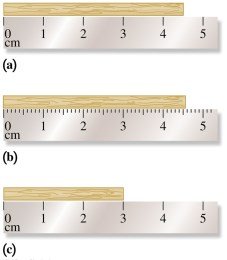
Measured numbers are obtained through observation and estimation, and their precision is communicated through significant figures (SFs).
Significant Figures: All nonzero digits, zeros between nonzero digits, and zeros at the end of a decimal number are significant.
Exact Numbers: Obtained by counting or defined equalities (e.g., 1 kg = 1000 g) and have infinite significant figures.
2.3 Significant Figures in Calculations
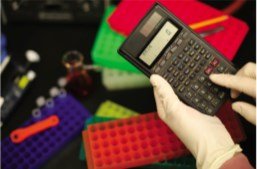
Rules for significant figures ensure that calculated results reflect the precision of the measurements used.
Multiplication/Division: The answer has the same number of SFs as the measurement with the fewest SFs.
Addition/Subtraction: The answer has the same number of decimal places as the measurement with the fewest decimal places.
Rounding: If the first digit to be dropped is 5 or greater, increase the last retained digit by 1.
3. Math Skills for Chemistry
3.1 Place Values and Scientific Notation
Understanding place values and scientific notation is essential for expressing very large or small numbers in chemistry.
Place Value: Each digit in a number has a specific value depending on its position (e.g., thousands, hundreds, tens, ones).
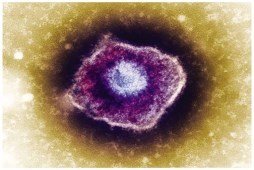
Scientific Notation: Numbers are written as the product of a coefficient (between 1 and 10) and a power of 10.
Example:

3.2 Calculating Percentages
Percentages are calculated by dividing the part by the whole and multiplying by 100%.
Formula:
3.3 Solving Equations
Solving equations involves isolating the unknown variable using algebraic operations.
Example:
Subtract 8:
Divide by 2:
3.4 Interpreting Graphs
Graphs visually represent the relationship between variables, such as the direct relationship between the volume of a gas and its temperature.
X-axis: Independent variable (e.g., temperature)
Y-axis: Dependent variable (e.g., volume)
3.5 Writing Numbers in Scientific Notation
Scientific notation is used to express very large or very small numbers efficiently.
General Form: where and is an integer.
4. Prefixes and Equalities
4.1 Metric and SI Prefixes
Prefixes are used to indicate multiples or fractions of units in the metric system.
Prefix | Symbol | Value | Scientific Notation |
|---|---|---|---|
kilo | k | 1,000 | |
centi | c | 0.01 | |
milli | m | 0.001 | |
micro | μ | 0.000001 |
4.2 The Cubic Centimeter and Milliliter
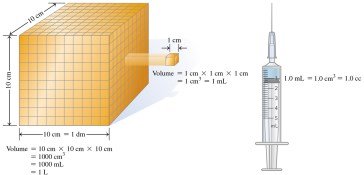
The cubic centimeter (cm3 or cc) is a unit of volume equal to one milliliter (mL). These units are often used interchangeably in laboratory settings.
1 cm3 = 1 mL
1000 cm3 = 1000 mL = 1 L
5. Conversion Factors and Problem Solving
5.1 Writing Conversion Factors
Conversion factors are fractions derived from equalities that relate two units. They are used to convert measurements from one unit to another.
Example: gives and

5.2 Dosage and Clinical Conversion Factors
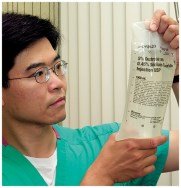
In healthcare, conversion factors are used to calculate medication dosages and concentrations.
Example: 1 capsule = 250 mg of medication

6. Density and Specific Gravity
6.1 Density
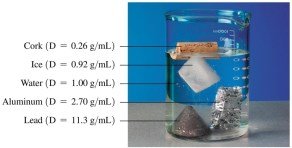
Density is a physical property that compares the mass of a substance to its volume. It is commonly used to identify substances and assess purity.
Formula:
Units: g/cm3 (solids), g/mL (liquids), g/L (gases)
6.2 Determining Density by Volume Displacement
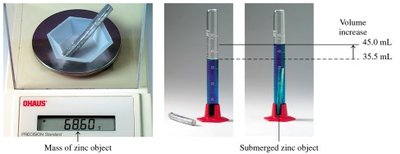
The density of irregular solids can be determined by measuring the volume of water displaced when the object is submerged.
Example Calculation: If a zinc object has a mass of 68.60 g and displaces 9.5 mL of water, its density is .
6.3 Specific Gravity
Specific gravity is the ratio of the density of a substance to the density of water (1.00 g/mL at 4°C). It is a unitless quantity and is used in clinical and laboratory settings.
Formula:
