 뒤로
뒤로GOB Chemistry Study Guide: Organic Molecules, Isomers, and Functional Groups
스터디 가이드 - 스마트 노트
 자료에 맞춘 맞춤형 노트, 핵심 정의, 예시, 맥락을 확장해 제공합니다.
Q1. What is the condensed chemical formula for the following molecules?
Background
Topic: Organic Chemistry – Hydrocarbons
This question tests your understanding of how to write condensed formulas for alkanes, alkenes, and alkynes based on the number of carbon atoms and the type of bonds present.
Key Terms and Formulas:
Alkane: Saturated hydrocarbon (single bonds only), general formula
Alkene: Unsaturated hydrocarbon (one double bond), general formula
Alkyne: Unsaturated hydrocarbon (one triple bond), general formula
Step-by-Step Guidance
For each molecule, identify the number of carbons () and the type of bond (single, double, triple).
Apply the correct general formula for the hydrocarbon type.
Write the condensed formula using the values for and the appropriate formula.
Check your formula for accuracy based on the bond type and carbon count.
Try solving on your own before revealing the answer!
Final Answer:
a) Alkane with 7 carbons: C7H16
b) Alkene with 8 carbons (one double bond): C8H16
c) Alkyne with 9 carbons (one triple bond): C9H16
Each formula follows the general rule for its hydrocarbon class.
Q2. Draw three isomers of C6H14.
Background
Topic: Isomerism in Organic Chemistry
This question tests your ability to recognize and draw structural isomers for a given molecular formula.
Key Terms:
Isomers: Molecules with the same molecular formula but different structural arrangements.
Structural isomers: Differ in the connectivity of atoms.
Step-by-Step Guidance
Start with the straight-chain (normal) hexane structure.
Consider branching by moving methyl groups to different positions along the chain.
Draw each unique structure, ensuring each has 6 carbons and 14 hydrogens.
Check that no two structures are identical (no duplicates).
Try solving on your own before revealing the answer!
Final Answer:
n-Hexane
2-Methylpentane
3-Methylpentane
2,3-Dimethylbutane
2,2-Dimethylbutane
Any three of these are valid isomers for C6H14.
Q3. Draw three isomers of C7H14.
Background
Topic: Isomerism in Alkenes
This question tests your ability to draw structural isomers for an alkene with seven carbons.
Key Terms:
Alkene: Contains at least one double bond.
Isomers: Same formula, different structure.
Step-by-Step Guidance
Start with a straight-chain heptene (7 carbons, one double bond).
Move the double bond to different positions along the chain.
Consider branching (methyl groups) to create additional isomers.
Draw each structure, ensuring it matches C7H14.
Try solving on your own before revealing the answer!
Final Answer:
1-Heptene
2-Heptene
3-Methyl-1-hexene
These are three possible isomers for C7H14.
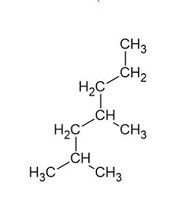
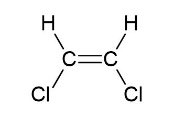
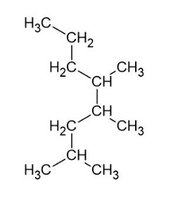
Q4. Name the following structures.
Background
Topic: IUPAC Nomenclature of Organic Molecules
This question tests your ability to apply systematic naming rules to organic structures.
Key Terms:
IUPAC Naming: Systematic method for naming organic compounds.
Parent chain: Longest continuous carbon chain.
Substituents: Groups attached to the parent chain.
Step-by-Step Guidance
Identify the longest carbon chain in each structure.
Number the chain to give substituents the lowest possible numbers.
Name and locate each substituent (e.g., methyl, ethyl).
Combine the names into the correct IUPAC format.
Try solving on your own before revealing the answer!
Final Answer:
a) 2,3,4-Trimethylpentane
b) 1,2-Dichloroethene
c) 2,3,4,5-Tetramethylhexane
Each name follows IUPAC rules for the given structure.
Q5. Draw the following compounds.
Background
Topic: Drawing Organic Structures
This question tests your ability to translate a compound's name into its structural formula.
Key Terms:
Alcohol: Contains an -OH group.
Amine: Contains a nitrogen atom.
Ether: Contains an oxygen atom between two alkyl groups.
Ketone: Contains a carbonyl group (C=O) within the carbon chain.
Step-by-Step Guidance
Identify the main carbon chain and functional group for each compound.
Place the functional group at the correct position (e.g., 3-pentanol: OH on the third carbon).
Draw the structure, showing all atoms and bonds.
Check for correct connectivity and group placement.
Try solving on your own before revealing the answer!
Final Answer:
a) 3-pentanol: CH3-CH2-CH(OH)-CH2-CH3
b) methyl propyl amine: CH3-NH-CH2-CH2-CH3
c) ethyl methyl ether: CH3-O-CH2-CH3
d) butyl ethyl ketone: CH3-CO-CH2-CH2-CH2-CH2-CH2-CH3
Each structure matches the compound's name and functional group.
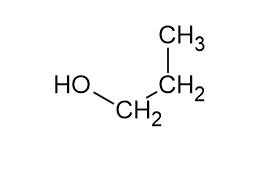
Q6. Name the following structures using the naming rules from class.
Background
Topic: IUPAC Nomenclature of Functional Groups
This question tests your ability to name organic compounds with various functional groups.
Key Terms:
Functional group: Specific group of atoms responsible for characteristic reactions.
IUPAC rules: Systematic naming conventions.
Step-by-Step Guidance
Identify the functional group present in each structure.
Find the longest carbon chain containing the functional group.
Number the chain to give the functional group the lowest possible number.
Name the compound according to IUPAC rules, including substituents.
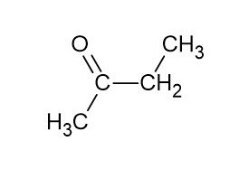
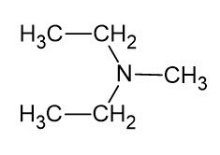
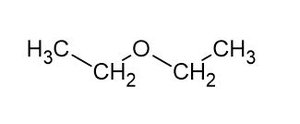
Try solving on your own before revealing the answer!
Final Answer:
a) 2-Butanone
b) 2-Propanol
c) Ethyl methyl ether
d) N,N-Diethylmethylamine
Each name follows the correct IUPAC conventions for the functional group and structure.
Q7. Circle the functional group in each structure. Match the type of functional group for each structure by writing the corresponding letter on the line.
Background
Topic: Functional Groups in Organic Chemistry
This question tests your ability to identify and classify functional groups in organic molecules.
Key Terms:
Functional group: Specific atom or group of atoms in a molecule responsible for its chemical properties.
Common functional groups: alcohol, aldehyde, amide, amine, carboxylic acid, ester, ether, ketone.
Step-by-Step Guidance
Examine each structure and locate the functional group (e.g., -OH, -COOH, -NH2, -C=O).
Circle the functional group in the structure.
Match the functional group to the correct letter from the list provided.
Write the corresponding letter next to each structure number.
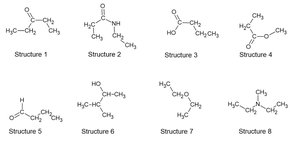
Try solving on your own before revealing the answer!
Final Answer:
1: F (ester)
2: C (amide)
3: A (alcohol)
4: G (ether)
5: B (aldehyde)
6: E (carboxylic acid)
7: H (ketone)
8: D (amine)
Each structure contains a distinct functional group, matched to its correct classification.
