 뒤로
뒤로Properties and Laws of Gases: GOB Chemistry Study Guide
스터디 가이드 - 스마트 노트
 자료에 맞춘 맞춤형 노트, 핵심 정의, 예시, 맥락을 확장해 제공합니다.
Properties of Gases
Key Properties and Their Definitions
Gases are characterized by several measurable properties that are essential for understanding their behavior in chemical and biological systems.
Temperature: The measure of the average kinetic energy of gas particles. Increasing temperature increases kinetic energy.
Pressure: The force exerted by gas particles colliding with the walls of their container.
Volume: The space occupied by a gas.
Amount (Mass): The quantity of gas, often measured in grams or moles.
Example: Medical Application
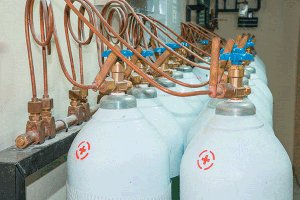
Oxygen tanks are used in hospitals to provide supplemental oxygen to patients with respiratory conditions such as COPD.

Gas Laws and Calculations
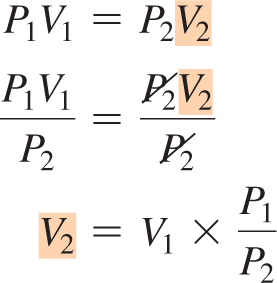
Boyle's Law: Pressure-Volume Relationship
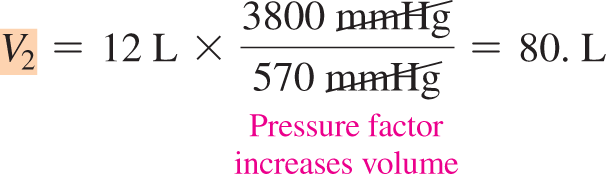
Boyle's law describes the inverse relationship between the pressure and volume of a gas when temperature and amount of gas are constant.
Formula:
Application: If pressure decreases, volume increases, and vice versa.


Charles's Law: Temperature-Volume Relationship
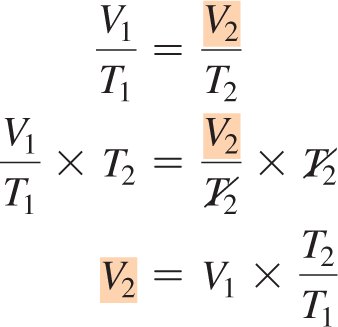
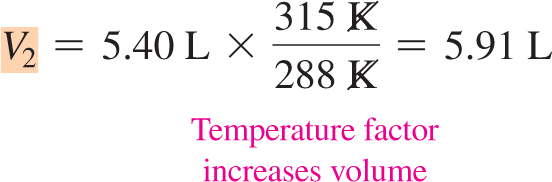
Charles's law states that the volume of a gas is directly proportional to its temperature (in Kelvin) when pressure and amount of gas are constant.
Formula:
Application: If temperature increases, volume increases.

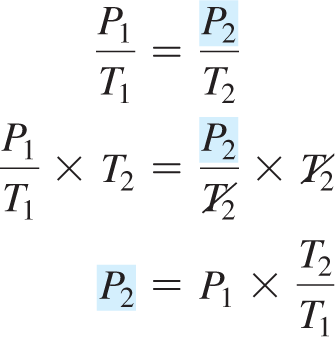
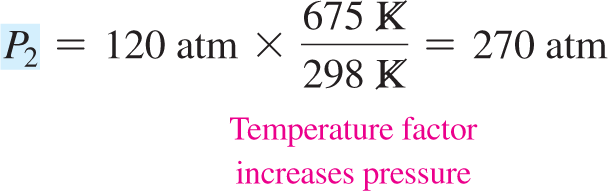
Gay-Lussac's Law: Pressure-Temperature Relationship
Gay-Lussac's law describes the direct relationship between the pressure and temperature of a gas when volume and amount of gas are constant.
Formula:
Application: If temperature increases, pressure increases.


Combined Gas Law
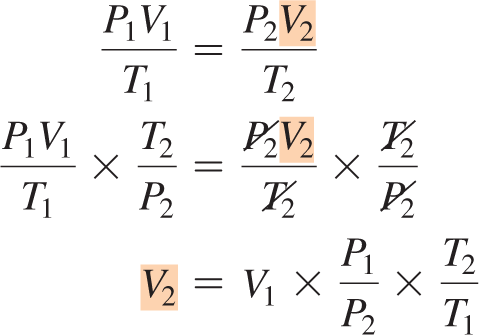
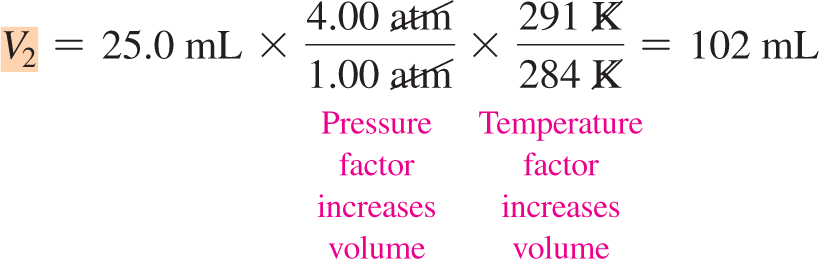
The combined gas law integrates Boyle's, Charles's, and Gay-Lussac's laws to relate pressure, volume, and temperature when the amount of gas is constant.
Formula:
Application: Used when more than one property changes.

Avogadro's Law: Volume-Mole Relationship
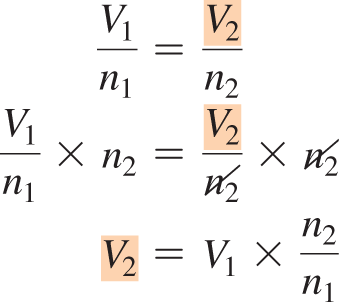
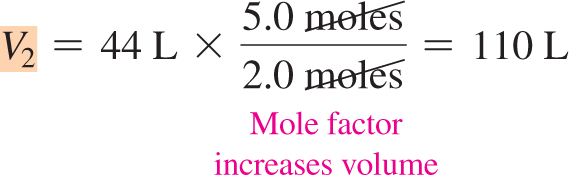
Avogadro's law states that the volume of a gas is directly proportional to the number of moles of gas when pressure and temperature are constant.
Formula:
Application: If the number of moles increases, volume increases.

Molar Volume at STP
At standard temperature and pressure (STP), one mole of any ideal gas occupies 22.4 L.
STP Conditions: 0°C (273 K) and 1 atm pressure.
Conversion Factors: (at STP)


Partial Pressure and Dalton's Law
Dalton's Law of Partial Pressures
Dalton's law states that the total pressure of a gas mixture is the sum of the partial pressures of each individual gas.
Formula:
Application: Used to calculate the partial pressure of a component in a gas mixture.


Summary Table: Gas Laws and Their Relationships
Law | Relationship | Formula | Constant Factors |
|---|---|---|---|
Boyle's Law | Pressure & Volume (inverse) | Temperature, Amount | |
Charles's Law | Volume & Temperature (direct) | Pressure, Amount | |
Gay-Lussac's Law | Pressure & Temperature (direct) | Volume, Amount | |
Combined Gas Law | Pressure, Volume, Temperature | Amount | |
Avogadro's Law | Volume & Moles (direct) | Pressure, Temperature | |
Dalton's Law | Total & Partial Pressures | None |
Applications in Medicine and Biology
Medical Use of Gases
Understanding gas laws is crucial in medical settings, such as oxygen therapy for patients with respiratory diseases, and in the safe storage and handling of medical gases.
