Ch.12 Food as Fuel An Overview of Metabolism
Frost - General, Organic and Biological Chemistry 4th Edition
Frost4th EditionGeneral, Organic and Biological ChemistryISBN: 9780134988696당신이 사용하는 게 아니라요?교과서 변경
8장, 문제 32

Explain how the catabolism of fructose differs from that of glucose.

검증된 단계별 안내
1
Fructose and glucose are both monosaccharides, but they enter glycolysis through different pathways due to their structural differences. Begin by understanding that fructose is primarily metabolized in the liver, while glucose is metabolized in most cells of the body.
Fructose is phosphorylated by the enzyme fructokinase in the liver to form fructose-1-phosphate. This step bypasses the regulatory enzyme hexokinase, which is used in glucose metabolism. Hexokinase phosphorylates glucose to form glucose-6-phosphate.
Fructose-1-phosphate is then cleaved by the enzyme aldolase B into two three-carbon molecules: dihydroxyacetone phosphate (DHAP) and glyceraldehyde. In contrast, glucose-6-phosphate enters glycolysis directly and is converted into fructose-6-phosphate before being split into DHAP and glyceraldehyde-3-phosphate.
Glyceraldehyde from fructose metabolism is phosphorylated by triose kinase to form glyceraldehyde-3-phosphate, which then enters the glycolysis pathway. DHAP also directly enters glycolysis. For glucose, both DHAP and glyceraldehyde-3-phosphate are produced from fructose-1,6-bisphosphate during glycolysis.
The key difference is that fructose metabolism bypasses the regulatory step controlled by phosphofructokinase-1 (PFK-1), which is a major control point in glucose metabolism. This can lead to unregulated entry of fructose into glycolysis, potentially contributing to metabolic imbalances.

비슷한 문제에 대한 검증된 영상 답변:

이 영상 해법은 위 문제에 도움이 된다고 튜터들이 추천한 것입니다.
영상 길이:
5m

주요 개념

질문에 올바르게 답하기 위해 반드시 이해해야 하는 핵심 개념들은 다음과 같습니다.

Catabolism

Catabolism refers to the metabolic pathways that break down molecules into smaller units, releasing energy in the process. This is essential for understanding how different sugars, like fructose and glucose, are processed in the body. The energy released during catabolism is used for various cellular functions, making it a critical aspect of metabolism.
추천 영상:
가이드 코스
2:06
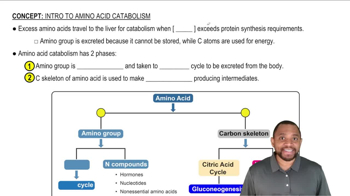
Intro to Amino Acid Catabolism Concept 1

Fructose Metabolism

Fructose metabolism primarily occurs in the liver, where fructose is phosphorylated by fructokinase to form fructose-1-phosphate. This pathway bypasses the key regulatory step of glycolysis, leading to a rapid conversion to intermediates that can enter the glycolytic pathway. This unique route can result in different metabolic effects compared to glucose, particularly in terms of energy production and fat synthesis.
추천 영상:
가이드 코스
0:52
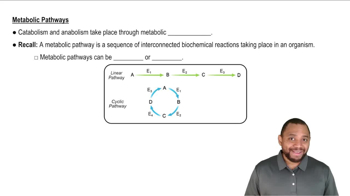
Metabolic Pathways Concept 2

Glucose Metabolism

Glucose metabolism involves a series of well-regulated steps, primarily through glycolysis, where glucose is converted into pyruvate, producing ATP and NADH. This process is tightly controlled by various enzymes, ensuring that energy production is matched to the cell's needs. Unlike fructose, glucose metabolism is influenced by insulin, which plays a significant role in regulating blood sugar levels.
추천 영상:
가이드 코스
2:07
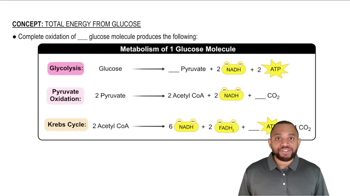
Total Energy From Glucose Concept 1