Ch.21 The Generation of Biochemical Energy
McMurry - Fundamentals of General, Organic, and Biological Chemistry 8th Edition
McMurry8th EditionFundamentals of General, Organic, and Biological ChemistryISBN: 9780134015187당신이 사용하는 게 아니라요?교과서 변경
21장, 문제 21b

Each of these reactions is involved in one of the four stages of metabolism shown in Figure 21.4. Identify the stage in which each reaction occurs.
<IMAGE>
b. Oxidation of NADH coupled with synthesis of ATP

검증된 단계별 안내
1
Understand the four stages of metabolism: (1) Digestion, (2) Acetyl-CoA production, (3) Citric acid cycle, and (4) Electron transport chain and oxidative phosphorylation. Each stage has specific chemical processes associated with it.
Recognize that the oxidation of NADH is a key process in the electron transport chain, which is part of the fourth stage of metabolism: oxidative phosphorylation.
Recall that during the electron transport chain, NADH is oxidized to NAD⁺, and the electrons released are transferred through a series of protein complexes in the mitochondrial membrane.
Understand that the energy released during the transfer of electrons is used to pump protons (H⁺) across the mitochondrial membrane, creating a proton gradient. This gradient drives the synthesis of ATP by ATP synthase.
Conclude that the oxidation of NADH coupled with the synthesis of ATP occurs during the fourth stage of metabolism: the electron transport chain and oxidative phosphorylation.

비슷한 문제에 대한 검증된 영상 답변:

이 영상 해법은 위 문제에 도움이 된다고 튜터들이 추천한 것입니다.
영상 길이:
52s

주요 개념

질문에 올바르게 답하기 위해 반드시 이해해야 하는 핵심 개념들은 다음과 같습니다.

Metabolism

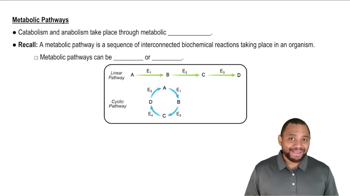
Metabolism refers to the set of life-sustaining chemical reactions in organisms. It is divided into two main categories: catabolism, which breaks down molecules to produce energy, and anabolism, which uses energy to construct components of cells. Understanding metabolism is crucial for identifying how different biochemical reactions contribute to energy production and utilization in living organisms.
추천 영상:
가이드 코스
0:52
Metabolic Pathways Concept 2

NADH and ATP

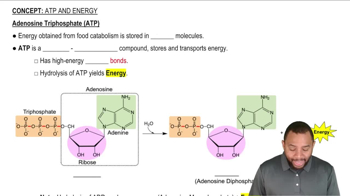
NADH (Nicotinamide adenine dinucleotide) is a key electron carrier in cellular respiration, playing a vital role in the transfer of electrons during metabolic reactions. ATP (Adenosine triphosphate) is the primary energy currency of the cell, providing energy for various cellular processes. The oxidation of NADH is coupled with ATP synthesis, highlighting the interconnectedness of electron transport and energy production.
추천 영상:
가이드 코스
2:20
Adenosine Triphosphate (ATP) Concept 2

Oxidative Phosphorylation

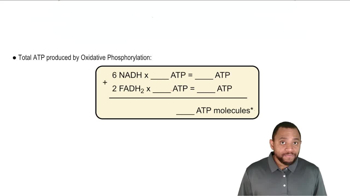
Oxidative phosphorylation is the final stage of cellular respiration, occurring in the mitochondria. It involves the transfer of electrons through the electron transport chain, leading to the pumping of protons across the mitochondrial membrane and creating a proton gradient. This gradient drives ATP synthesis via ATP synthase, making it essential for understanding how energy is produced in cells.
추천 영상:
가이드 코스
0:51
Oxidative Phosphorylation Concept 2