Ch.11 Introduction to Organic Chemistry: Hydrocarbons
Timberlake - Chemistry: An Introduction to General, Organic, and Biological Chemistry 14th Edition
Timberlake14th EditionChemistry: An Introduction to General, Organic, and Biological ChemistryISBN: 9781292472249당신이 사용하는 게 아니라요?교과서 변경
11장, 문제 17d

Draw the line-angle formula for each of the following:
d. 2,3-dichlorohexane

검증된 단계별 안내
1
Step 1: Understand the structure of the compound. The name '2,3-dichlorohexane' indicates that the parent chain is hexane, which consists of six carbon atoms connected in a straight chain with single bonds (alkane).
Step 2: Identify the substituents. The '2,3-dichloro' prefix means there are two chlorine (Cl) atoms attached to the second and third carbon atoms of the hexane chain.
Step 3: Draw the backbone of the molecule. Represent the six carbon atoms in a zigzag pattern, which is the standard way to depict a straight-chain alkane in a line-angle formula. Each vertex represents a carbon atom, and the ends of the chain also represent carbon atoms.
Step 4: Add the substituents. Place a chlorine atom (Cl) on the second and third carbon atoms of the chain. Remember that each carbon atom can form four bonds, so ensure the remaining bonds are satisfied with hydrogen atoms (not explicitly shown in line-angle formulas).
Step 5: Verify the structure. Double-check that the molecule has six carbon atoms in the main chain, two chlorine atoms on the correct carbons, and that all carbons have four bonds in total. This ensures the structure is correct and follows the rules of organic chemistry.

비슷한 문제에 대한 검증된 영상 답변:

이 영상 해법은 위 문제에 도움이 된다고 튜터들이 추천한 것입니다.

주요 개념

질문에 올바르게 답하기 위해 반드시 이해해야 하는 핵심 개념들은 다음과 같습니다.

Line-Angle Formula

The line-angle formula, also known as the skeletal formula, is a shorthand representation of organic molecules. In this format, vertices represent carbon atoms, and lines represent bonds between them. Hydrogen atoms are typically omitted for carbon atoms, as they are implied by the tetravalency of carbon. This method simplifies the visualization of complex structures, making it easier to identify functional groups and molecular connectivity.
추천 영상:
가이드 코스
01:24
Bond Angles (Simplified) Concept 1

Dichloro Compounds

Dichloro compounds are organic molecules that contain two chlorine atoms substituting hydrogen atoms in a hydrocarbon chain. The position of these chlorine atoms is crucial for understanding the compound's reactivity and properties. In the case of 2,3-dichlorohexane, the chlorines are located on the second and third carbon atoms of a six-carbon chain, which influences the molecule's stereochemistry and potential isomers.
추천 영상:
가이드 코스
02:11
Naming Ionic Compounds

Hexane Structure

Hexane is a straight-chain alkane with six carbon atoms, represented by the molecular formula C6H14. Its structure serves as the backbone for derivatives like dichlorohexane. Understanding the hexane structure is essential for accurately drawing its derivatives, as it provides the framework upon which substituents, such as chlorine atoms, are added. The linear arrangement of hexane allows for various substitution patterns, affecting the compound's physical and chemical properties.
추천 영상:
가이드 코스
1:01
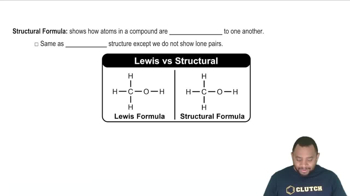
Structural Formula Concept 2