Ch.15 Lipids
Timberlake - Chemistry: An Introduction to General, Organic, and Biological Chemistry 14th Edition
Timberlake14th EditionChemistry: An Introduction to General, Organic, and Biological ChemistryISBN: 9781292472249당신이 사용하는 게 아니라요?교과서 변경
15장, 문제 81d

 Identify the components (1 to 6) contained in each of the following lipids (a to d):
1. glycerol
2. fatty acid
3. phosphate
4. amino alcohol
5. steroid nucleus
6. sphingosine
d. triacylglycerol

검증된 단계별 안내
1
Step 1: Understand the structure of triacylglycerol. Triacylglycerols are lipids composed of one glycerol molecule and three fatty acid molecules. They are formed through esterification reactions where the hydroxyl groups of glycerol react with the carboxyl groups of fatty acids.
Step 2: Identify the components of triacylglycerol. Based on its structure, triacylglycerol contains the following components: (1) glycerol and (2) fatty acids. These are the key building blocks of this lipid.
Step 3: Eliminate components that are not part of triacylglycerol. Triacylglycerol does not contain (3) phosphate, (4) amino alcohol, (5) steroid nucleus, or (6) sphingosine. These components are found in other types of lipids, such as phospholipids, sphingolipids, or steroids.
Step 4: Summarize the components of triacylglycerol. The components present in triacylglycerol are glycerol and fatty acids. These are the only two components required to form this type of lipid.
Step 5: Relate the components to the lipid's function. Triacylglycerols serve as energy storage molecules in the body. The fatty acid chains provide a dense source of energy, while the glycerol backbone helps in the structural organization of the molecule.

비슷한 문제에 대한 검증된 영상 답변:

이 영상 해법은 위 문제에 도움이 된다고 튜터들이 추천한 것입니다.
영상 길이:
3m

주요 개념

질문에 올바르게 답하기 위해 반드시 이해해야 하는 핵심 개념들은 다음과 같습니다.

Lipids

Lipids are a diverse group of hydrophobic organic molecules that play crucial roles in biological systems. They include fats, oils, waxes, and steroids, and are primarily composed of carbon, hydrogen, and oxygen. Their functions range from energy storage and structural components of cell membranes to signaling molecules. Understanding the structure and function of different lipids is essential for analyzing their components.
추천 영상:
가이드 코스
1:28
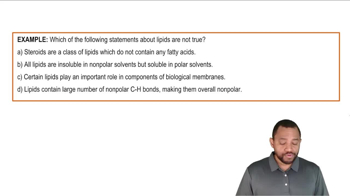
Intro to Lipids Example 1

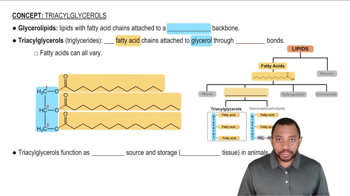
Triacylglycerol

Triacylglycerol, also known as triglyceride, is a type of lipid formed by the esterification of three fatty acids to a glycerol molecule. It serves as a major form of energy storage in animals and plants. The structure of triacylglycerol allows for efficient energy storage and insulation, making it a key component in metabolism and nutrition. Identifying its components is crucial for understanding its biological significance.
추천 영상:
가이드 코스
1:52
Triacylglycerols Concept 1

Glycerol and Fatty Acids

Glycerol is a three-carbon alcohol that serves as the backbone for many lipids, including triacylglycerols and phospholipids. Fatty acids are long hydrocarbon chains that can be saturated or unsaturated, influencing the properties of the lipids they form. Together, glycerol and fatty acids create the structural foundation of many lipids, and their specific arrangements determine the lipid's function and characteristics.
추천 영상:
가이드 코스
1:20
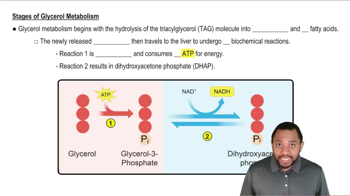
Glycerol Metabolism Concept 2