Ch.16 Amino Acids, Proteins, and Enzymes
Timberlake - Chemistry: An Introduction to General, Organic, and Biological Chemistry 14th Edition
Timberlake14th EditionChemistry: An Introduction to General, Organic, and Biological ChemistryISBN: 9781292472249당신이 사용하는 게 아니라요?교과서 변경
16장, 문제 23c

A portion of a polypeptide chain contains the following sequence of amino acids:
—Leu—Val—Cys—Asp—
c. How does the primary structure of a protein affect its tertiary structure?

검증된 단계별 안내
1
The primary structure of a protein refers to the specific sequence of amino acids in the polypeptide chain. This sequence is determined by the genetic code and is unique to each protein.
The sequence of amino acids in the primary structure determines the chemical properties of the side chains (R groups), such as whether they are hydrophobic, hydrophilic, acidic, or basic.
These chemical properties influence how the polypeptide chain folds into its three-dimensional shape (tertiary structure). For example, hydrophobic side chains tend to cluster together in the interior of the protein, while hydrophilic side chains are often exposed to the aqueous environment.
Interactions between side chains, such as hydrogen bonding, ionic interactions, disulfide bonds (e.g., between cysteine residues), and van der Waals forces, further stabilize the tertiary structure.
In summary, the primary structure acts as a blueprint that dictates the folding and final three-dimensional shape of the protein, which is critical for its biological function.

비슷한 문제에 대한 검증된 영상 답변:

이 영상 해법은 위 문제에 도움이 된다고 튜터들이 추천한 것입니다.
영상 길이:
5m

주요 개념

질문에 올바르게 답하기 위해 반드시 이해해야 하는 핵심 개념들은 다음과 같습니다.

Primary Structure of Proteins

The primary structure of a protein refers to the specific sequence of amino acids in a polypeptide chain. This sequence is determined by the genetic code and dictates how the protein will fold and function. Each amino acid has unique properties that influence the overall structure and stability of the protein.
추천 영상:
가이드 코스
1:11
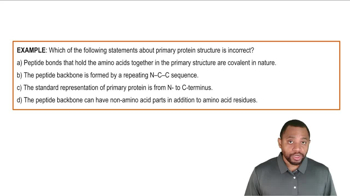
Primary Protein Structure Example 1

Tertiary Structure of Proteins

The tertiary structure of a protein is the three-dimensional shape formed by the folding and interactions of the polypeptide chain. This structure is stabilized by various interactions, including hydrogen bonds, ionic bonds, hydrophobic interactions, and disulfide bridges. The tertiary structure is crucial for the protein's functionality, as it determines the active sites and overall shape.
추천 영상:
가이드 코스
2:07
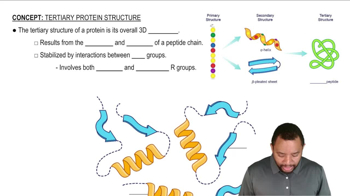
Tertiary Protein Structure Concept 1

Structure-Function Relationship

The structure-function relationship in proteins highlights how the specific arrangement of amino acids (primary structure) influences the protein's final shape (tertiary structure) and, consequently, its biological function. Changes in the primary structure can lead to alterations in the tertiary structure, potentially affecting the protein's ability to perform its intended role in biological processes.
추천 영상:
가이드 코스
04:56
Logarithmic Relationships