Ch.16 Amino Acids, Proteins, and Enzymes
Timberlake - Chemistry: An Introduction to General, Organic, and Biological Chemistry 14th Edition
Timberlake14th EditionChemistry: An Introduction to General, Organic, and Biological ChemistryISBN: 9781292472249당신이 사용하는 게 아니라요?교과서 변경
16장, 문제 22a

What type of interaction would you expect between the R groups of the following amino acids in a quaternary structure?
a. phenylalanine and isoleucine

검증된 단계별 안내
1
Identify the nature of the R groups for both amino acids. Phenylalanine has a nonpolar, aromatic R group (a benzyl group), while isoleucine has a nonpolar, aliphatic R group (a branched hydrocarbon chain).
Recall that nonpolar R groups tend to interact through hydrophobic interactions. These interactions occur because nonpolar groups avoid water and aggregate together in the interior of a protein structure.
Understand that in a quaternary structure, the hydrophobic interactions between nonpolar R groups help stabilize the overall protein structure by minimizing their exposure to the aqueous environment.
Conclude that the interaction between the R groups of phenylalanine and isoleucine in a quaternary structure would primarily be hydrophobic interactions.
Note that these hydrophobic interactions are critical for maintaining the three-dimensional structure of proteins, especially in environments where water is present.

비슷한 문제에 대한 검증된 영상 답변:

이 영상 해법은 위 문제에 도움이 된다고 튜터들이 추천한 것입니다.
영상 길이:
1m

주요 개념

질문에 올바르게 답하기 위해 반드시 이해해야 하는 핵심 개념들은 다음과 같습니다.

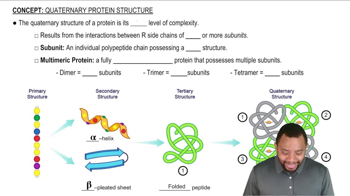
Quaternary Structure of Proteins

The quaternary structure of proteins refers to the assembly of multiple polypeptide chains into a single functional unit. This structure is stabilized by various interactions between the R groups of the amino acids in the different chains. Understanding this concept is crucial for predicting how specific amino acids will interact in a protein complex.
추천 영상:
가이드 코스
3:26
Quaternary Protein Structure Concept 1

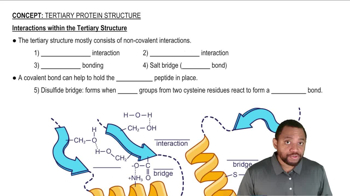
Hydrophobic Interactions

Hydrophobic interactions occur when nonpolar R groups of amino acids, such as phenylalanine and isoleucine, come together to avoid contact with water. These interactions are a key driving force in the folding and stability of proteins, particularly in quaternary structures where multiple subunits aggregate. Recognizing these interactions helps in understanding the overall stability of protein complexes.
추천 영상:
가이드 코스
2:41
Interactions within the Tertiary Structure Concept 2

Amino Acid Properties

The properties of amino acids, determined by their R groups, influence how they interact with one another. For instance, phenylalanine has a large, nonpolar aromatic side chain, while isoleucine has a branched aliphatic side chain. These properties dictate the nature of interactions—whether they are hydrophobic, polar, or ionic—affecting the protein's structure and function.
추천 영상:
가이드 코스
3:03
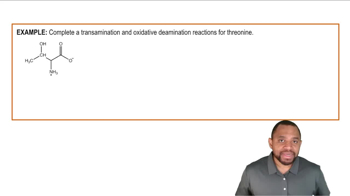
Amino Acid Catabolism: Amino Group Example 2