Ch.16 Amino Acids, Proteins, and Enzymes
Timberlake - Chemistry: An Introduction to General, Organic, and Biological Chemistry 14th Edition
Timberlake14th EditionChemistry: An Introduction to General, Organic, and Biological ChemistryISBN: 9781292472249당신이 사용하는 게 아니라요?교과서 변경
16장, 문제 7

Classify each of the amino acids in problem 16.5 as polar or nonpolar. If polar, indicate if the R group is neutral, acidic, or basic. Indicate if each is hydrophobic or hydrophilic.

검증된 단계별 안내
1
Step 1: Recall the structure of amino acids. Each amino acid has a central carbon atom (α-carbon) bonded to an amino group (-NH₂), a carboxyl group (-COOH), a hydrogen atom, and a unique R group (side chain). The properties of the R group determine whether the amino acid is polar or nonpolar, and if polar, whether it is neutral, acidic, or basic.
Step 2: Classify the amino acid as polar or nonpolar based on the nature of its R group. Nonpolar amino acids have R groups that are primarily hydrocarbons (e.g., alkyl or aromatic groups), while polar amino acids have R groups containing electronegative atoms like oxygen, nitrogen, or sulfur.
Step 3: For polar amino acids, determine if the R group is neutral, acidic, or basic. Neutral polar amino acids have R groups with polar functional groups (e.g., hydroxyl, amide) but no charge at physiological pH. Acidic amino acids have R groups with carboxylic acid groups that can donate protons, while basic amino acids have R groups with amine groups that can accept protons.
Step 4: Assess whether the amino acid is hydrophobic or hydrophilic. Nonpolar amino acids are generally hydrophobic because their R groups do not interact well with water. Polar amino acids are hydrophilic because their R groups can form hydrogen bonds or ionic interactions with water.
Step 5: Apply these classifications to each amino acid in problem 16.5. For each amino acid, identify the R group, classify it as polar or nonpolar, determine if it is neutral, acidic, or basic (if polar), and indicate whether it is hydrophobic or hydrophilic.

비슷한 문제에 대한 검증된 영상 답변:

이 영상 해법은 위 문제에 도움이 된다고 튜터들이 추천한 것입니다.
영상 길이:
2m

주요 개념

질문에 올바르게 답하기 위해 반드시 이해해야 하는 핵심 개념들은 다음과 같습니다.

Amino Acid Classification

Amino acids can be classified based on the properties of their side chains (R groups). They are categorized as polar or nonpolar, which affects their interactions with water. Polar amino acids tend to be hydrophilic, while nonpolar amino acids are generally hydrophobic. Understanding this classification is essential for predicting the behavior of proteins in different environments.
추천 영상:
가이드 코스
1:33
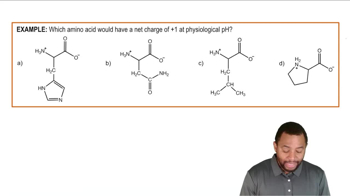
Amino Acid Classifications Example 3

Polar vs. Nonpolar

Polar amino acids have side chains that can form hydrogen bonds with water, making them soluble in aqueous environments. Nonpolar amino acids, on the other hand, have hydrophobic side chains that do not interact favorably with water. This distinction is crucial for understanding protein folding and function, as the distribution of polar and nonpolar residues influences the overall structure of proteins.
추천 영상:
가이드 코스
01:34
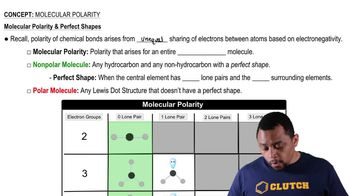
Molecular Polarity (Simplified) Concept 1

Acidic, Basic, and Neutral R Groups

The R groups of polar amino acids can be further classified as acidic, basic, or neutral. Acidic amino acids have side chains that can donate protons (H+), while basic amino acids can accept protons. Neutral amino acids do not have a charge at physiological pH. This classification impacts the amino acids' roles in enzyme activity, protein stability, and interactions with other biomolecules.
추천 영상:
가이드 코스
3:03
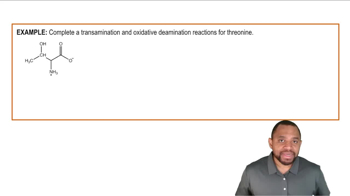
Amino Acid Catabolism: Amino Group Example 2