Ch.17 Nucleic Acids and Protein Synthesis
Timberlake - Chemistry: An Introduction to General, Organic, and Biological Chemistry 14th Edition
Timberlake14th EditionChemistry: An Introduction to General, Organic, and Biological ChemistryISBN: 9781292472249당신이 사용하는 게 아니라요?교과서 변경
17장, 문제 124(1)

Match each of the following processes (1 to 5) with one of the items (a to e):
1. replication of DNA
a. amino acids are linked together
b. RNA template is used to synthesize DNA
c. helicase unwinds DNA
d. genetic information is transferred from DNA
e. sticky ends join new DNA segment

검증된 단계별 안내
1
Step 1: Understand the processes and items provided in the problem. The processes involve biological mechanisms related to DNA and RNA, such as replication, transcription, and translation. The items describe specific actions or outcomes of these processes.
Step 2: Match the process 'replication of DNA' with the correct item. Replication involves the unwinding of the DNA double helix by the enzyme helicase, allowing the DNA to be copied. Therefore, match this process with item 'c. helicase unwinds DNA'.
Step 3: Match the process 'transcription' (not explicitly mentioned but implied in the problem) with the correct item. Transcription is the process where genetic information is transferred from DNA to RNA. Match this with item 'd. genetic information is transferred from DNA'.
Step 4: Match the process 'translation' (also implied) with the correct item. Translation is the process where amino acids are linked together to form proteins. Match this with item 'a. amino acids are linked together'.
Step 5: Match the process 'recombinant DNA technology' with the correct item. This involves joining new DNA segments, often using sticky ends. Match this with item 'e. sticky ends join new DNA segment'.

비슷한 문제에 대한 검증된 영상 답변:

이 영상 해법은 위 문제에 도움이 된다고 튜터들이 추천한 것입니다.
영상 길이:
4m

주요 개념

질문에 올바르게 답하기 위해 반드시 이해해야 하는 핵심 개념들은 다음과 같습니다.

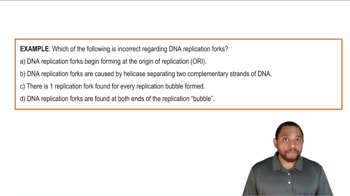
DNA Replication

DNA replication is the biological process through which a cell duplicates its DNA, ensuring that each new cell receives an exact copy of the genetic material. This process involves several key enzymes, including helicase, which unwinds the DNA double helix, and DNA polymerase, which synthesizes the new strands by adding nucleotides complementary to the template strands.
추천 영상:
가이드 코스
1:40
Intro to DNA Replication Example 2

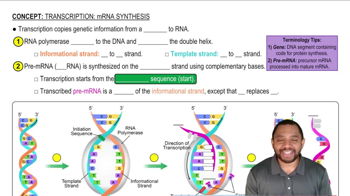
Transcription and Translation

Transcription is the process by which genetic information from DNA is copied into messenger RNA (mRNA), which then serves as a template for translation. During translation, ribosomes read the mRNA sequence to synthesize proteins by linking together the appropriate amino acids in the correct order, a process essential for cellular function and structure.
추천 영상:
가이드 코스
6:37
Transcription: mRNA Synthesis Concept 1

Genetic Engineering Techniques

Genetic engineering techniques, such as the use of sticky ends, allow scientists to manipulate DNA by cutting and joining different DNA segments. This is often achieved using restriction enzymes that create sticky ends, which facilitate the joining of DNA fragments from different sources, enabling the creation of recombinant DNA for various applications in research and medicine.
추천 영상:
가이드 코스
03:25
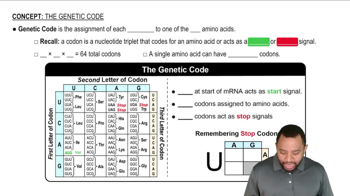
The Genetic Code Concept 1