 뒤로
뒤로Introduction to Biology: Properties of Life, Cell Structure, and Biological Organization
스터디 가이드 - 스마트 노트
 자료에 맞춘 맞춤형 노트, 핵심 정의, 예시, 맥락을 확장해 제공합니다.
Introduction to Biology
Properties of Life
All living organisms share several fundamental characteristics that distinguish them from non-living matter. These properties define what it means to be alive and are used by biologists to identify and classify living things.
Order: Living organisms are highly organized, with cells as their basic building blocks. This organization extends from molecules to entire organisms.
Sensitivity or Response to the Environment: Organisms can detect and respond to environmental stimuli, such as light, temperature, or touch.
Reproduction: All living things have the ability to reproduce, passing genetic information to their offspring.
Growth and Development: Organisms grow and develop according to specific instructions coded in their DNA.
Regulation: Organisms have regulatory mechanisms that coordinate internal functions, such as nutrient transport and response to stimuli.
Homeostasis: The ability to maintain a stable internal environment despite changes in external conditions.
Energy Processing: All organisms use energy for metabolic activities, either by producing it (photosynthesis) or consuming it (cellular respiration).
Order
Order refers to the complex but highly organized structure of living organisms, from the cellular level to the whole organism.
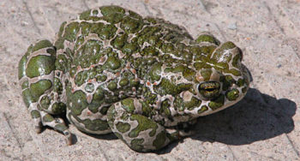
Sensitivity or Response to the Environment
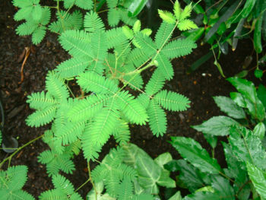
Living organisms can sense and respond to various environmental stimuli. For example, plants may move toward light, and animals may react to sound or touch.
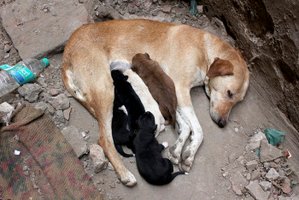
Reproduction
Reproduction is the process by which organisms produce new individuals, ensuring the continuation of their species. This can occur sexually or asexually.
Growth and Development
Growth involves an increase in size and mass, while development refers to the progression through a life cycle, including differentiation and maturation.
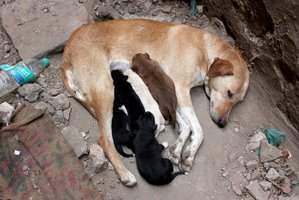
Regulation
Regulation involves various mechanisms that organisms use to coordinate internal processes and maintain balance in response to environmental changes.
Homeostasis
Homeostasis is the maintenance of a stable internal environment, such as temperature or pH, despite external fluctuations. This is essential for the survival of all living organisms.
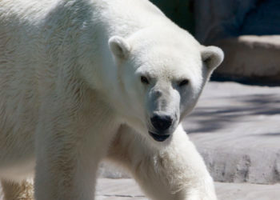
Energy Processing
All organisms require energy to power their activities. Plants, algae, and some bacteria capture energy from sunlight through photosynthesis, while other organisms obtain energy by consuming food and breaking it down via cellular respiration.

Organization of Matter and Life
Levels of Biological Organization
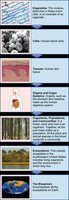
Living organisms are organized in a hierarchy, from the smallest chemical units to the entire biosphere. This organization allows for increasing complexity and specialization at each level.
Atoms: The fundamental units of matter.
Molecules: Atoms bonded together; many are biologically important macromolecules.
Organelles: Aggregates of macromolecules that perform specialized functions within cells.
Cells: The basic unit of life; all living things are composed of one or more cells.
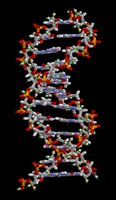
Organization of Life
From a single organelle to the entire biosphere, living organisms are part of a highly structured hierarchy. This includes cells, tissues, organs, organ systems, organisms, populations, communities, ecosystems, and the biosphere.
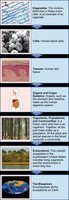
Cell Structure and Types
Features of All Cells
All cells, regardless of type, share four essential components:
Plasma Membrane: A selective barrier that encloses the cell.
Cytoplasm: The jelly-like fluid inside the cell where organelles are suspended.
DNA: The genetic material that contains instructions for cellular processes.
Ribosomes: Structures responsible for protein synthesis.
Prokaryotic Cells
Prokaryotic cells are simpler and smaller than eukaryotic cells. They lack a true nucleus and membrane-bound organelles. Their DNA is located in a region called the nucleoid. Many prokaryotes have a cell wall, and some possess flagella or pili for movement and attachment.
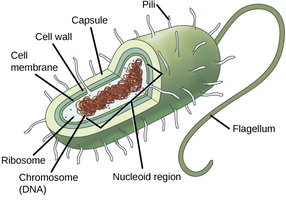
Practice Question: Hierarchy Chart for Blood Cells
Consider how the hierarchy of biological organization would differ for a prokaryotic cell compared to a eukaryotic blood cell. Prokaryotic cells lack organelles and complex structures found in eukaryotes.
Eukaryotic Cells
Eukaryotic cells are typically larger and more complex than prokaryotic cells. They have a true nucleus, where DNA is enclosed by a membrane, and possess various membrane-bound organelles that perform specialized functions.
Relative Sizes of Cells
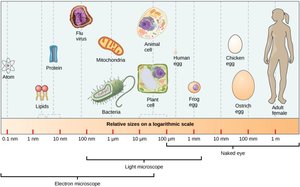
Cells and their components vary greatly in size, from tiny atoms and molecules to large cells visible to the naked eye. Understanding these size differences is important for studying cell structure and function.
Biodiversity, Phylogeny, and Taxonomy
Biodiversity
Biodiversity refers to the variety of life and its processes, including the diversity among different living organisms and within populations. It is essential for ecosystem stability and resilience.
Phylogeny
Phylogeny is the study of evolutionary relationships among organisms. Phylogenetic trees illustrate the relationships between the three domains of life: Bacteria, Archaea, and Eukarya.
Taxonomy
Taxonomy is the science of classifying organisms. It uses a hierarchical system and binomial nomenclature to assign scientific names to species. For example, the scientific name for the common dog is Canis lupus familiaris.
Branches of Biology
Biology is a broad field with many branches, including zoology, botany, microbiology, genetics, ecology, and more. Each branch focuses on specific aspects of living organisms and their interactions.
Scientific Inquiry
The Scientific Method
Biology is a science that relies on systematic inquiry and experimentation. The scientific method involves several key steps:
Forming a Hypothesis: Hypotheses must be testable and falsifiable.
Experimental Design: Consider sample size, selection, and how to avoid bias.
Experimental Variables: Identify independent and dependent variables, and control other variables.
Interpreting Results: Gather data by measuring the dependent variable and assess statistical significance.
Quick Review
What are the defining characteristics of biological life?
What are the different kinds of cells that make up different kinds of organisms?
What are the classification and organizational tools biologists use, including modern taxonomy?
Describe biology as a science.
What are the key components of scientific inquiry?
