 뒤로
뒤로Phylum Echinodermata: Structure, Development, and Diversity
스터디 가이드 - 스마트 노트
 자료에 맞춘 맞춤형 노트, 핵심 정의, 예시, 맥락을 확장해 제공합니다.
Phylum Echinodermata
Overview
The phylum Echinodermata includes marine animals such as starfish, sea urchins, sand dollars, brittle stars, feather stars, and sea cucumbers. Echinoderms are exclusively marine and are known for their unique pentaradial symmetry, water-vascular system, and calcareous endoskeleton. They are important for understanding animal evolution, especially as deuterostomes, a group that also includes chordates.
10.1 Deuterostomes and Protostomes
Developmental Differences
Protostomes (e.g., molluscs, annelids):
Spiral and determinate cleavage during embryonic development.
Coelom forms by splitting of solid mesoderm masses (schizocoely).
Blastopore develops into the mouth.
Deuterostomes (e.g., echinoderms, chordates):
Radial and indeterminate cleavage.
Coelom forms from mesodermal outpocketings of the archenteron (enterocoely).
Blastopore develops into the anus.
Indeterminate cleavage allows each early embryonic cell to develop into a complete organism, making identical twins and embryonic stem cells possible.
Summary Table: Protostome vs. Deuterostome Development
Feature | Protostome | Deuterostome |
|---|---|---|
Cleavage | Spiral, determinate | Radial, indeterminate |
Coelom Formation | Schizocoely (splitting of mesoderm) | Enterocoely (outpocketing of archenteron) |
Fate of Blastopore | Mouth | Anus |
10.2 Habitat
Echinoderms are exclusively marine and are found in a variety of oceanic environments, from shallow coastal waters to deep sea trenches. However, they have not exploited a wide range of habitats and niches compared to other animal phyla, possibly due to their unique body plan and mode of locomotion.
10.3 Structure
Pentaradiate symmetry: Most adult echinoderms have body parts arranged in multiples of five around a central axis.
Oral-aboral surfaces: The mouth is located on the oral surface, while the opposite side is the aboral surface.
Tube feet: Extensions of the water-vascular system used for locomotion, feeding, and respiration.
Internal skeleton: Composed of calcareous plates (ossicles) that may bear spines.
10.4 Echinoderm Classes
Echinoderms are divided into several classes, each with distinct structural and ecological features.
10.4.1 Class Asteroidea (Starfish)
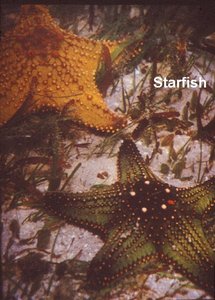
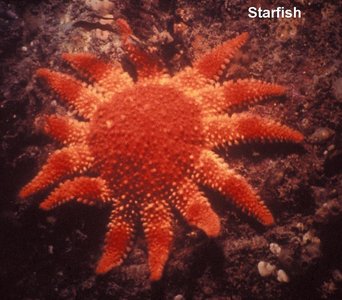
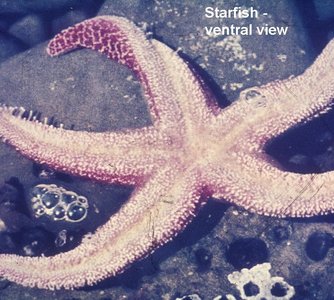
Starfish are the most familiar echinoderms, characterized by a central disc and radiating arms.
10.4.1.1 Structure
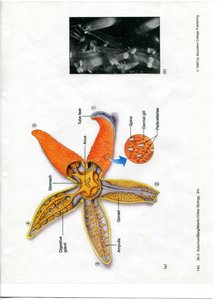
Water-vascular system: A network of hydraulic canals unique to echinoderms, ending in tube feet that function in movement and feeding.
Tube feet: Located on the oral surface, these structures allow for slow, coordinated movement and prey manipulation.
10.4.1.2 Feeding
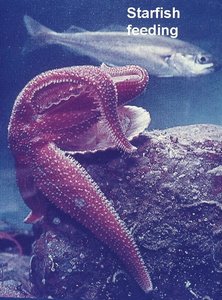
Starfish are mostly carnivorous, feeding on mollusks such as clams and oysters.
They use their tube feet to pry open shells and evert their stomachs to digest prey externally.
10.4.1.3 Circulation, Gaseous Exchange & Excretion
Circulation is primarily via the water-vascular system and coelomic fluid.
Gaseous exchange occurs across tube feet and dermal gills.
Excretion of nitrogenous wastes is mainly by diffusion through body surfaces.
10.4.1.4 Nervous System
Echinoderms have a decentralized nervous system with a nerve ring and radial nerves.
They lack a true brain, which limits complex behaviors.
10.4.1.5 Regeneration
Starfish can regenerate lost arms, and in some cases, an entire individual can regrow from a single arm if part of the central disc is attached.
10.4.1.6 Reproduction
Most starfish have separate sexes and reproduce by external fertilization.
Larvae are bilaterally symmetrical, undergoing metamorphosis to become radially symmetrical adults.
10.4.2 Class Echinoidea (Sea Urchins and Sand Dollars)
Members of this class have a globular or flattened body without arms, covered with movable spines.
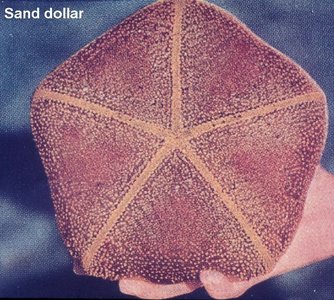
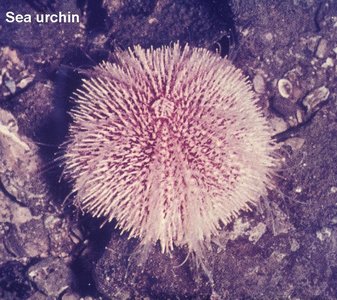
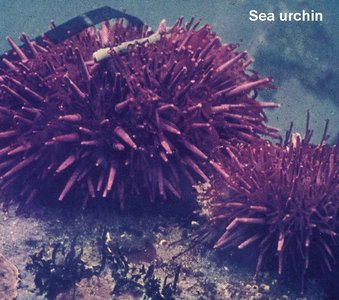
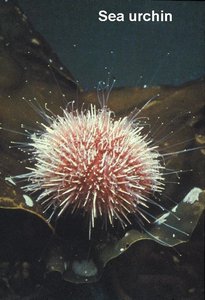
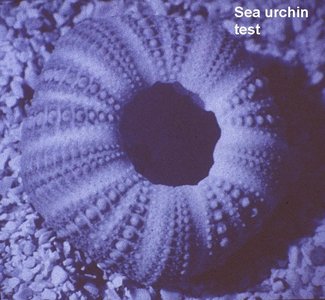
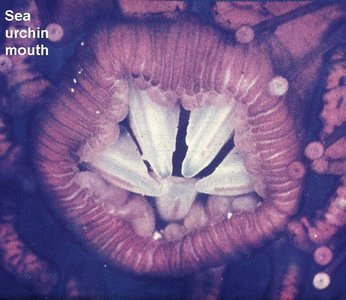
Feeding: Sea urchins are grazers, feeding mainly on algae using a specialized jaw structure called Aristotle's lantern.
Movement: They move using tube feet and spines.
10.4.3 Class Holothuroidea (Sea Cucumbers)
Sea cucumbers have an elongated, leathery body and lack the prominent spines of other echinoderms.
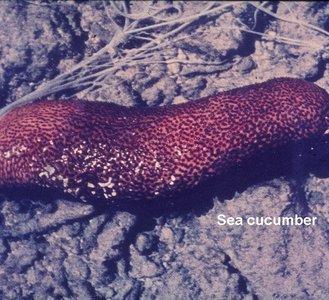
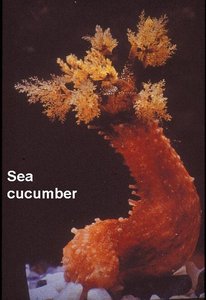
Feeding: Most are deposit or suspension feeders, using tentacles around the mouth to collect food particles.
Movement: They move by peristaltic contractions and tube feet.
Other Echinoderm Classes
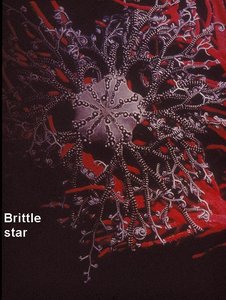
Class Ophiuroidea (Brittle Stars): Characterized by slender, flexible arms distinct from the central disc. They are mostly scavengers or detritivores.
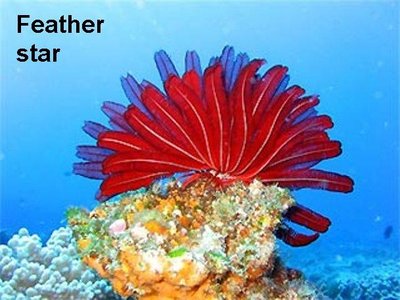
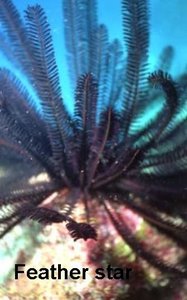
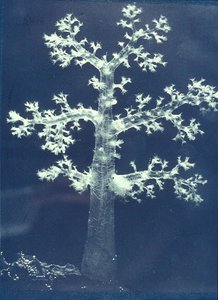
Class Crinoidea (Feather Stars and Sea Lilies): These have feathery arms used for suspension feeding.
Summary Table: Major Echinoderm Classes
Class | Common Name | Body Form | Feeding | Movement |
|---|---|---|---|---|
Asteroidea | Starfish | Central disc with arms | Carnivorous | Tube feet |
Echinoidea | Sea urchins, sand dollars | Globular/flattened, no arms | Herbivorous/grazers | Tube feet, spines |
Holothuroidea | Sea cucumbers | Elongated, soft body | Deposit/suspension feeders | Tube feet, body contractions |
Ophiuroidea | Brittle stars | Distinct central disc, slender arms | Scavengers/detritivores | Arm movement |
Crinoidea | Feather stars, sea lilies | Feathery arms | Suspension feeders | Limited movement (some sessile) |
Concept: Why Have Echinoderms Not Exploited a Wide Range of Habitats and Niches?
Their unique pentaradial symmetry and water-vascular system are highly specialized for marine environments but may limit adaptability to other habitats.
Lack of a sophisticated nervous system restricts complex behaviors and responses to environmental changes.
Slow movement and reliance on external fertilization may also limit their ecological range.
Challenge Questions
Describe in detail the relationship between the diet, structure, and movement in each of the three main classes of echinoderms (Asteroidea, Echinoidea, Holothuroidea).
Despite their system grade of organization, echinoderms do not have a sophisticated nervous system. Can you provide reasons for this anomaly?
Key Terms
Pentaradiate symmetry: Body plan with five or more radiating parts.
Water-vascular system: Hydraulic system unique to echinoderms, used for movement and feeding.
Tube feet: Small, flexible, hollow appendages used for locomotion and feeding.
Ossicles: Calcareous plates forming the internal skeleton.
Indeterminate cleavage: Early embryonic cells retain the ability to develop into a complete organism.
Blastopore: The opening formed during gastrulation, which becomes the mouth in protostomes and the anus in deuterostomes.
