Which of the following equations are balanced? Balance those that need it.
a. CaC₂+2 H₂O→Ca(OH)₂+C₂H₂
b. C₂H₈N₂+2 N₂O₄→2 N₂+2 CO₂+4 H₂O
c. 3 MgO +2 Fe→Fe₂O₃+3 Mg
d. N₂O→N₂+O₂
검증된 단계별 안내
1
Identify the number of each type of atom on both sides of each equation.
For equation (a), count the atoms: Ca, C, H, and O on both sides. Check if they are equal.
For equation (b), count the atoms: C, H, N, and O on both sides. Check if they are equal.
For equation (c), count the atoms: Mg, O, and Fe on both sides. Check if they are equal.
For equation (d), count the atoms: N and O on both sides. Check if they are equal.
비슷한 문제에 대한 검증된 영상 답변:
이 영상 해법은 위 문제에 도움이 된다고 튜터들이 추천한 것입니다.
영상 길이:
3m
영상 재생:
0 댓글
주요 개념
질문에 올바르게 답하기 위해 반드시 이해해야 하는 핵심 개념들은 다음과 같습니다.
Balancing Chemical Equations
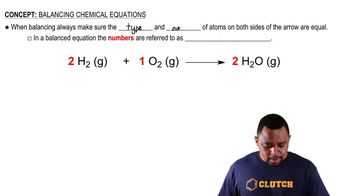
Balancing chemical equations involves ensuring that the number of atoms for each element is the same on both sides of the equation. This is based on the law of conservation of mass, which states that matter cannot be created or destroyed in a chemical reaction. To balance an equation, coefficients are adjusted in front of the chemical formulas, rather than changing the formulas themselves.
Balancing Chemical Equations (Simplified) Concept 1
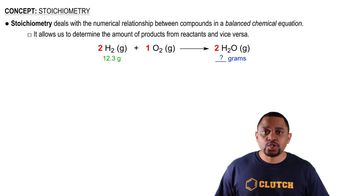
Stoichiometry
Stoichiometry is the quantitative relationship between the reactants and products in a chemical reaction. It allows chemists to predict the amounts of substances consumed and produced in a reaction based on balanced equations. Understanding stoichiometry is essential for calculating yields, determining limiting reactants, and performing conversions between moles, mass, and volume.
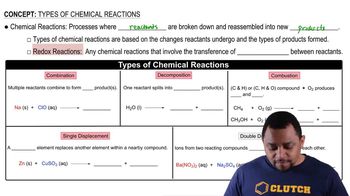
Chemical reactions can be classified into several types, including synthesis, decomposition, single replacement, and double replacement reactions. Each type has distinct characteristics and patterns that can help in predicting the products of a reaction. Recognizing the type of reaction can aid in balancing equations and understanding the underlying chemical processes.

 3:22분
3:22분 검증된 단계별 안내
 01:32
01:32