A patient receives 3.2 L of intravenous (IV) glucose solution. If 100. mL of the solution contains 5.0 g of glucose (carbohydrate), how many kilocalories did the patient obtain from the glucose solution?
검증된 단계별 안내
1
Determine the total volume of the glucose solution in milliliters by converting 3.2 L to mL. (1 L = 1000 mL)
Calculate the total mass of glucose in the entire solution using the concentration given (5.0 g of glucose per 100 mL of solution).
Use the conversion factor for glucose to convert grams to kilocalories. The conversion factor is 4 kilocalories per gram of glucose.
Multiply the total mass of glucose by the conversion factor to find the total kilocalories obtained from the glucose solution.
Summarize the steps to ensure understanding of the process used to determine the kilocalories from the glucose solution.
비슷한 문제에 대한 검증된 영상 답변:
이 영상 해법은 위 문제에 도움이 된다고 튜터들이 추천한 것입니다.
영상 길이:
4m
영상 재생:
0 댓글
주요 개념
질문에 올바르게 답하기 위해 반드시 이해해야 하는 핵심 개념들은 다음과 같습니다.
Concentration and Dilution
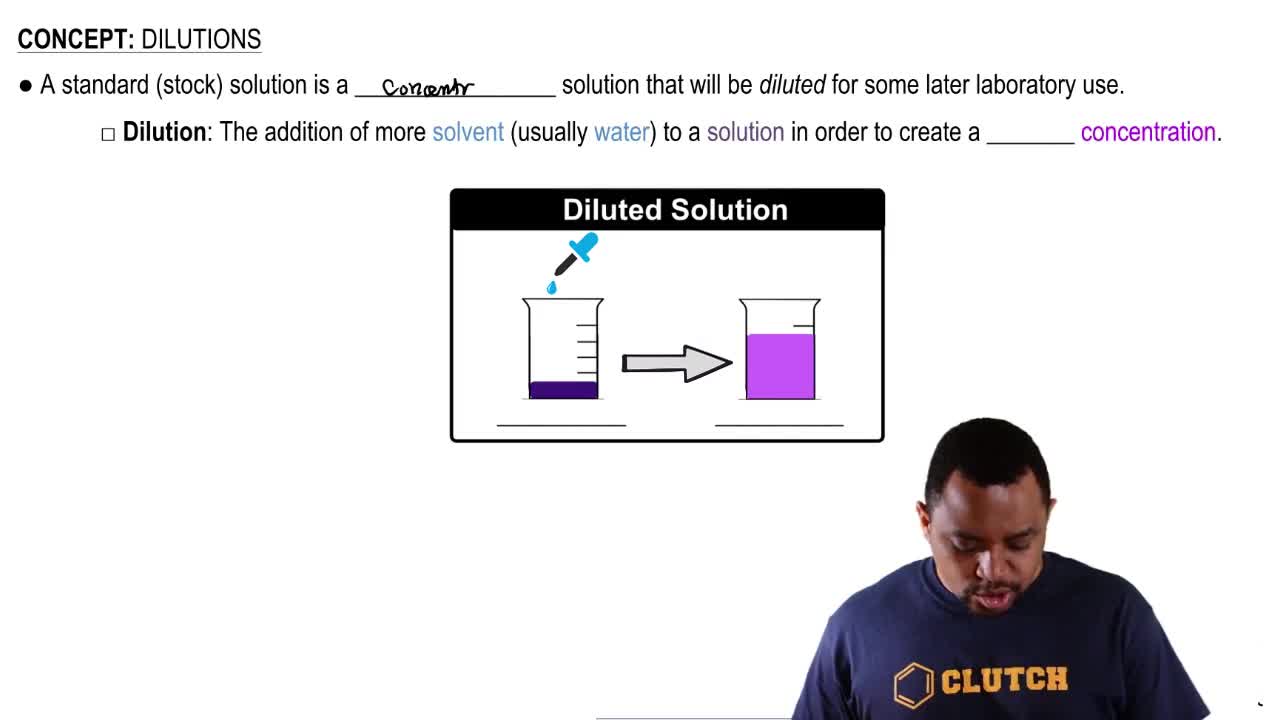
Concentration refers to the amount of a substance (solute) present in a given volume of solution. In this case, the concentration of glucose in the IV solution is given as 5.0 g per 100 mL. Understanding how to calculate total amounts from concentration is essential for determining how much glucose is in the entire 3.2 L of solution.
Carbohydrates, such as glucose, provide energy measured in kilocalories. Each gram of glucose yields approximately 4 kilocalories of energy. To find the total energy obtained from the glucose solution, one must multiply the total grams of glucose by this caloric value, which is crucial for understanding the patient's energy intake.
Unit Conversion
Unit conversion is the process of converting one unit of measurement to another. In this question, it is necessary to convert liters to milliliters to match the concentration units provided. Additionally, converting grams of glucose to kilocalories involves understanding the relationship between these units, which is vital for accurate calculations.

 4:26분
4:26분 검증된 단계별 안내
 01:03
01:03