Identify each of the following changes of state as melting, freezing, sublimation, or deposition:
b. Snow on the ground turns to liquid water.
검증된 단계별 안내
1
Identify the initial state of the substance: Snow is in the solid state.
Determine the final state of the substance: Liquid water is in the liquid state.
Recall the process that describes the change from solid to liquid: This process is called melting.
Understand that melting occurs when a solid absorbs heat and changes into a liquid.
Conclude that the change of state from snow to liquid water is an example of melting.
비슷한 문제에 대한 검증된 영상 답변:
이 영상 해법은 위 문제에 도움이 된다고 튜터들이 추천한 것입니다.
영상 길이:
1m
영상 재생:
0 댓글
주요 개념
질문에 올바르게 답하기 위해 반드시 이해해야 하는 핵심 개념들은 다음과 같습니다.
Melting
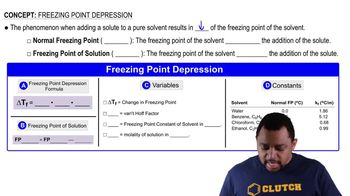
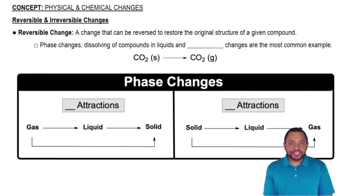
Melting is the process where a solid turns into a liquid as it absorbs heat. This occurs when the temperature of the solid reaches its melting point, allowing the particles to gain enough energy to overcome the forces holding them in a fixed position. In the context of the question, melting is relevant as it describes the transition of snow (solid) to water (liquid).
Freezing is the reverse process of melting, where a liquid turns into a solid as it loses heat. This occurs when the temperature of the liquid drops to its freezing point, causing the particles to lose energy and arrange themselves into a fixed structure. While freezing is not the process described in the question, understanding it helps clarify the relationship between solid and liquid states.
Phase changes refer to the transitions between different states of matter: solid, liquid, and gas. These changes occur due to variations in temperature and pressure, affecting the energy and arrangement of particles. In the question, the change from snow to liquid water exemplifies a phase change, specifically melting, highlighting the dynamic nature of matter.

 1:분
1:분 검증된 단계별 안내
 02:10
02:10