 뒤로
뒤로Atomic Combinations & Molecular Structure: Step-by-Step Chemistry Guidance
스터디 가이드 - 스마트 노트
 자료에 맞춘 맞춤형 노트, 핵심 정의, 예시, 맥락을 확장해 제공합니다.
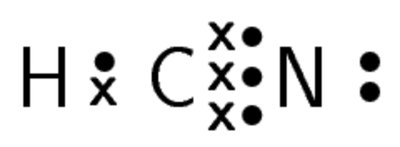
Q1. Based on VSEPR Theory, what molecular shape does hydrogen cyanide (HCN) have?
Background
Topic: VSEPR Theory and Molecular Geometry
This question tests your understanding of how to use the Valence Shell Electron Pair Repulsion (VSEPR) theory to predict the shape of a molecule based on the arrangement of electron pairs around the central atom.
Key Terms and Formulas
VSEPR Theory: Predicts molecular shapes based on repulsion between electron pairs.
Bonding regions: Areas where atoms are bonded to the central atom.
Lone pairs: Non-bonding pairs of electrons on the central atom.
AXE notation: A = central atom, X = bonded atoms, E = lone pairs.
Step-by-Step Guidance
Identify the central atom in HCN. In this molecule, carbon (C) is the central atom.
Count the number of bonding regions around the central atom. Carbon is bonded to hydrogen (H) and nitrogen (N), so there are 2 bonding regions.
Determine the number of lone pairs on the central atom. Carbon in HCN has zero lone pairs.
Apply the AXE notation: AX2E0 (2 bonded atoms, 0 lone pairs).
Use VSEPR theory to predict the shape based on AX2E0. What shape does this correspond to?
Try solving on your own before revealing the answer!
Final Answer: Linear
According to VSEPR theory, AX2E0 corresponds to a linear molecular shape. HCN is linear because the central carbon atom has two bonding regions and no lone pairs, resulting in a straight arrangement.
Q4. BCl3 can form a dative covalent bond with NH3
Background
Topic: Lewis Structures, Molecular Shape, and Dative Covalent Bonds
This question tests your ability to draw Lewis structures, determine molecular shapes, and explain the concept of dative (coordinate) covalent bonding.
Key Terms and Formulas
Lewis Structure: Diagram showing valence electrons and bonds.
Dative Covalent Bond: A bond where both electrons come from the same atom.
Trigonal Planar: Shape with three atoms bonded to a central atom in a flat triangle.
Step-by-Step Guidance
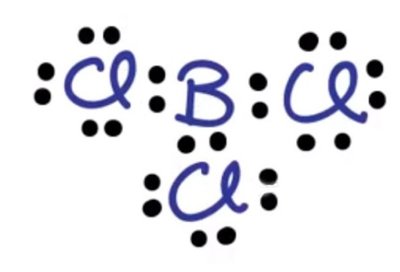
Draw the Lewis structure for BCl3. Place boron in the center and arrange three chlorine atoms around it, showing all valence electrons.
Count the number of bonding regions and lone pairs on the central atom (boron) to determine the molecular shape.
Apply VSEPR theory to deduce the shape (AX3E0).
Consider the electron configuration of NH3. Does it have a lone pair available for bonding?
Think about why BCl3 can accept a lone pair from NH3. What feature of BCl3 makes this possible?
Try solving on your own before revealing the answer!
Final Answer:
1. The Lewis structure for BCl3 shows boron in the center with three chlorine atoms, each sharing a pair of electrons with boron.
2. BCl3 is trigonal planar (AX3E0).
3. NH3 can form a dative covalent bond with BCl3 because NH3 has a lone pair of electrons, and BCl3 has an empty orbital (boron is electron-deficient), allowing it to accept the lone pair.
Q5. Explain why the bonds in CO2 are polar but the molecule is non-polar
Background
Topic: Bond Polarity vs. Molecular Polarity
This question tests your understanding of how individual bond polarities can result in a non-polar molecule due to molecular symmetry.
Key Terms and Formulas
Electronegativity (): Difference in electronegativity between atoms.
Polar Covalent Bond: Bond with unequal sharing of electrons.
Linear Shape: AX2E0, no lone pairs on central atom.
Dipole Moment: Measure of charge separation in a molecule.
Step-by-Step Guidance
Calculate the electronegativity difference between carbon and oxygen ().
Determine if the C=O bonds are polar based on .
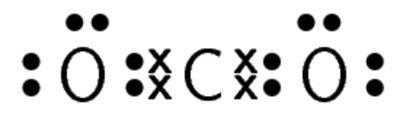
Draw the Lewis structure for CO2 and identify the molecular shape using VSEPR theory.
Consider the symmetry of the molecule. How does the linear shape affect the overall dipole moment?
Think about whether the dipoles cancel out or reinforce each other.
Try solving on your own before revealing the answer!
Final Answer:
The C=O bonds are polar due to a significant electronegativity difference, but CO2 is linear and symmetrical. The bond dipoles are equal and opposite, so they cancel out, resulting in a non-polar molecule overall.
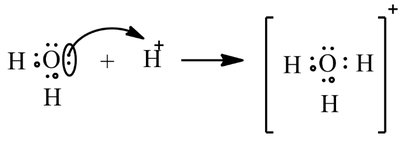
Q6. Give the name of the compound in the reaction below that can form a dative covalent bond when reacting with an acid (H+)
Background
Topic: Dative Covalent Bond Formation
This question tests your ability to identify which compound can donate a lone pair to form a dative covalent bond with a proton (H+).
Key Terms and Formulas
Dative Covalent Bond: Both electrons in the bond come from the same atom.
Lone Pair: Pair of valence electrons not involved in bonding.
Acid (H+): Proton that can accept a lone pair.
Step-by-Step Guidance
Examine the Lewis structures of the compounds involved in the reaction.
Identify which compound has lone pairs available for donation.
Consider which compound can react with H+ to form a new bond.
Think about the role of lone pairs in dative bonding.
Try solving on your own before revealing the answer!
Final Answer: Water (H2O)
Water has lone pairs on the oxygen atom, which can be donated to H+ to form a dative covalent bond. The other molecules do not have lone pairs on the central atom.
Q7. What shape is an H2O molecule?
Background
Topic: VSEPR Theory and Molecular Geometry
This question tests your ability to use VSEPR theory to determine the shape of a water molecule based on the number of bonding regions and lone pairs.
Key Terms and Formulas
AXE notation: AX2E2 (2 bonded atoms, 2 lone pairs).
Bent/Angular Shape: Result of lone pairs repelling bonded atoms.
Step-by-Step Guidance
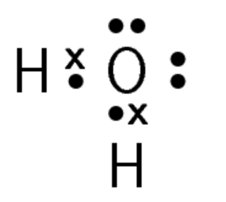
Draw the Lewis structure for H2O, showing two hydrogen atoms bonded to oxygen and two lone pairs on oxygen.
Count the number of bonding regions (2) and lone pairs (2) on the central atom (oxygen).
Apply the AXE notation: AX2E2.
Use VSEPR theory to predict the shape based on AX2E2.
Try solving on your own before revealing the answer!
Final Answer: Bent/Angular
H2O is bent or angular because the two lone pairs on oxygen repel the hydrogen atoms, resulting in a non-linear shape.
