뒤로
뒤로Introduction to Chemistry: Matter and Measurements
스터디 가이드 - 스마트 노트
 자료에 맞춘 맞춤형 노트, 핵심 정의, 예시, 맥락을 확장해 제공합니다.
Introduction to Chemistry: Matter and Measurements
1. The Scientific Approach to Knowledge
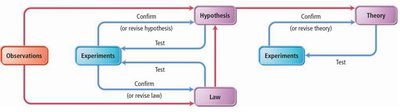
The scientific method is a systematic approach used in chemistry to acquire knowledge and explain natural phenomena. It involves making observations, forming hypotheses, conducting experiments, and developing laws and theories based on experimental evidence.
Observation: Gathering data, both qualitative (descriptive) and quantitative (numerical).
Hypothesis: A tentative explanation for an observation, which can be tested by experiments.
Experiment: A controlled procedure to test the validity of a hypothesis, always producing new information.
Law: A statement that summarizes a series of related observations and predicts future ones.
Theory: A well-substantiated explanation of some aspect of the natural world that can incorporate laws, hypotheses, and facts.
Key Distinctions:
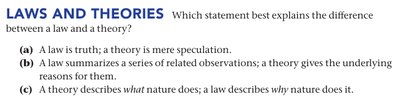
A law summarizes a series of related observations; a theory gives the underlying reasons for them.
A theory describes why nature does something; a law describes what nature does.
2. Classification of Matter
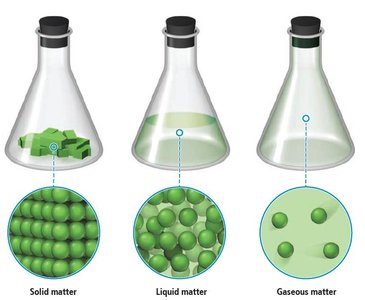
Matter is anything that has mass and occupies space. It exists in three physical states: solid, liquid, and gas, each with distinct properties.
Solid: Definite shape and volume; particles are closely packed in a fixed arrangement.
Liquid: Definite volume but no definite shape; particles are close but can move past one another.
Gas: No definite shape or volume; particles are far apart and move freely.
Classification by Composition
Matter can be classified based on its composition as pure substances or mixtures:
Pure Substance: Composed of only one type of particle; composition is invariant. Examples: Helium (element), water (compound).
Mixture: Composed of two or more substances in variable proportions. Can be homogeneous (uniform throughout) or heterogeneous (composition varies).
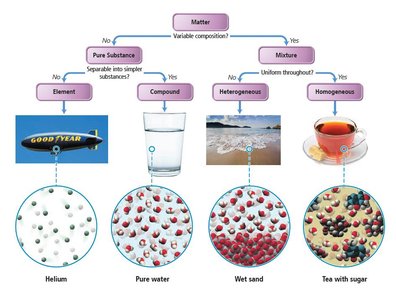
Elements, Compounds, and Mixtures
Element: A pure substance that cannot be broken down into simpler substances by chemical means.
Compound: A pure substance composed of two or more elements chemically combined in fixed proportions.
Homogeneous Mixture (Solution): Uniform composition throughout (e.g., tea with sugar).
Heterogeneous Mixture: Composition varies from one region to another (e.g., wet sand).
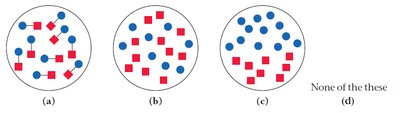
Visualizing Pure Substances and Mixtures
3. Separation of Mixtures
Mixtures can be separated into their components by exploiting differences in physical or chemical properties.
Decanting: Separating liquid from solid by carefully pouring off the liquid.
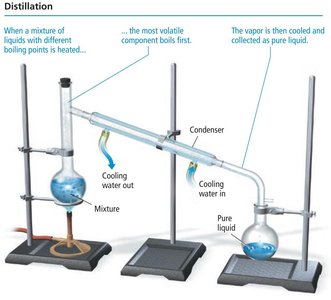
Distillation: Separating components based on differences in boiling points; the more volatile component vaporizes first and is then condensed and collected.
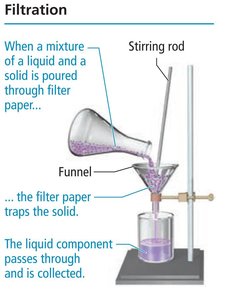
Filtration: Separating a solid from a liquid by passing the mixture through filter paper, which traps the solid.
4. Physical and Chemical Changes
Changes in matter can be classified as physical or chemical:
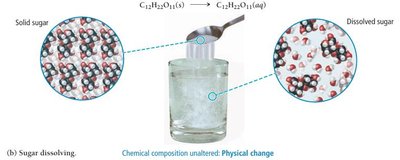
Physical Change: Alters only the state or appearance; the composition remains unchanged. Examples: boiling, melting, dissolving.
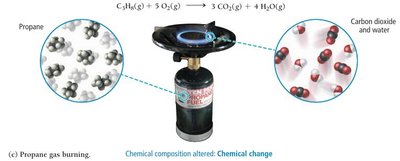
Chemical Change: Alters the composition; atoms rearrange to form new substances. Examples: rusting, burning.
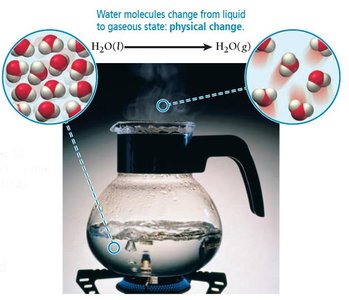
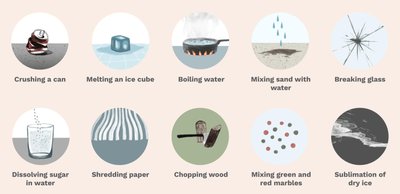
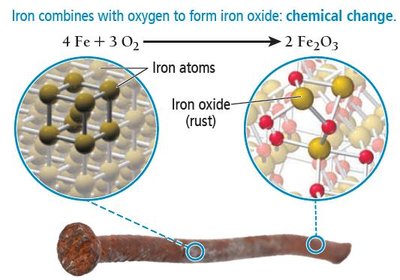
Comparing Physical and Chemical Changes
Physical Properties: Observed without changing composition (e.g., odor, color, melting point, density).
Chemical Properties: Observed only by changing composition (e.g., flammability, acidity, toxicity).
Visual Examples of Changes
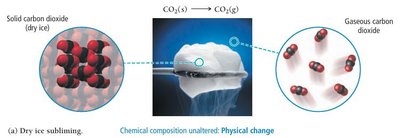
5. Phase Changes
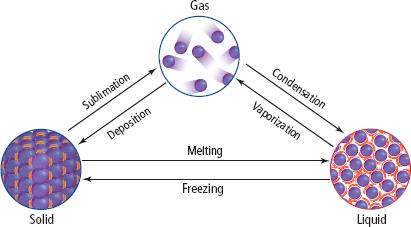
A phase change is a transition from one state of matter to another, such as melting, freezing, vaporization, condensation, sublimation, and deposition.
Melting: Solid to liquid
Freezing: Liquid to solid
Vaporization: Liquid to gas
Condensation: Gas to liquid
Sublimation: Solid to gas
Deposition: Gas to solid
6. Energy in Physical and Chemical Changes
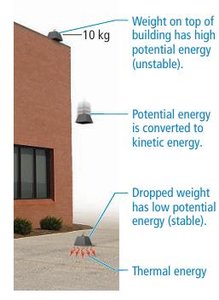
Energy is the capacity to do work. Physical and chemical changes involve energy transformations.
Kinetic Energy (KE): Energy of motion.
Potential Energy (PE): Energy due to position or composition.
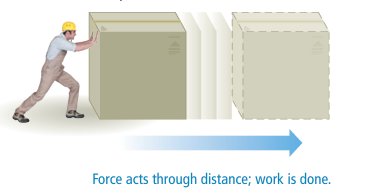
Work: Defined as force acting through a distance.
Equation for work:
7. Units of Measurement and SI Units
Chemistry uses the International System of Units (SI) for consistency in measurements. The main SI base units are:
Quantity | Unit | Symbol |
|---|---|---|
Length | meter | m |
Mass | kilogram | kg |
Time | second | s |
Temperature | kelvin | K |
Amount of substance | mole | mol |
Electric current | ampere | A |
Luminous intensity | candela | cd |
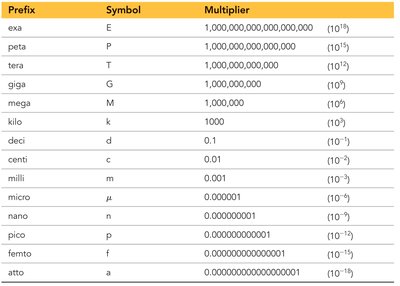
Prefix Multipliers
Prefix multipliers are used to express units in powers of ten.
8. Density
Density is the ratio of mass to volume and is a key property for identifying substances.
Formula for density:
Common units: g/mL, g/cm3, kg/m3
Density determines whether a substance will sink or float in another substance.
9. Significant Figures and Measurement Reliability
Significant figures reflect the precision of a measurement. The rules for counting significant figures are:
All nonzero digits are significant.
Interior zeroes (between nonzero digits) are significant.
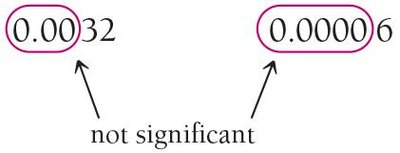
Leading zeroes (before the first nonzero digit) are not significant.
Trailing zeroes after a decimal point are significant; before a decimal point, they are ambiguous unless specified by scientific notation.
Significant Figures in Calculations
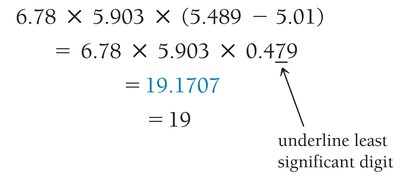
Multiplication/Division: Result has the same number of significant figures as the factor with the fewest significant figures.
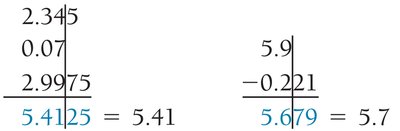
Addition/Subtraction: Result has the same number of decimal places as the quantity with the fewest decimal places.

10. Accuracy and Precision
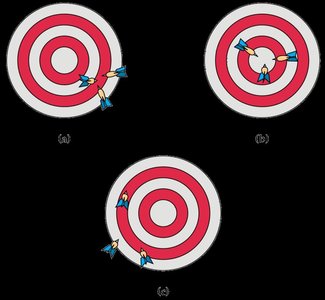
Accuracy refers to how close a measurement is to the true value, while precision refers to how close repeated measurements are to each other.
Accurate: Measurements are close to the true value.
Precise: Measurements are close to each other, regardless of accuracy.
Examples
If measurements are 2.3 kg, 2.4 kg, and 2.2 kg for a 1.0 kg ball, they are precise but not accurate.